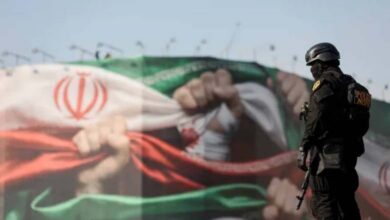
How does the Iranian regime buy the loyalty of its supporters?
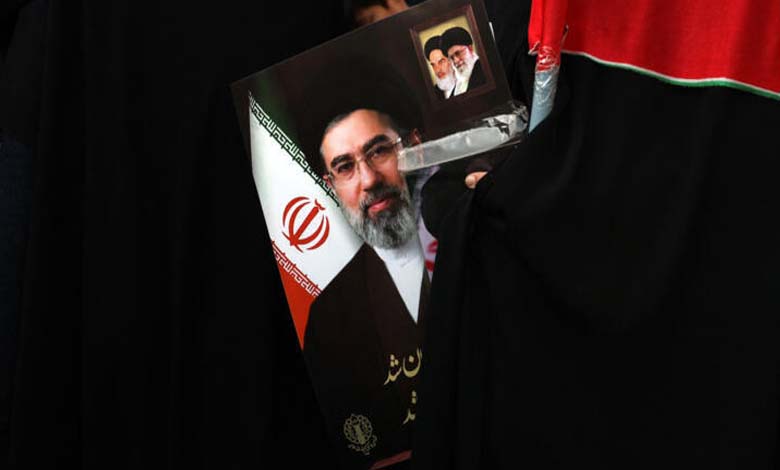
The security apparatus in Iran does not rely solely on ideology, but depends heavily on a vast system of disguised bribery.
These bribes, privileges, or economic incentives are used to secure the loyalty of a limited segment of society, while the majority is deprived of any real benefit from the country’s resources, according to a report in the American newspaper The Wall Street Journal.
The newspaper, citing academics and analysts who study the Iranian regime, says that since its establishment, Iran “has worked to build a closed system that controls more than half of the country’s economy, yet does not operate in the service of the general public, but rather as a tool to protect power, consolidate its influence, and suppress opposition,” turning the economy into a means of control rather than development.
Recent opinion polls indicate that only 20% of Iranians support the regime. This percentage receives a disproportionate share of resources and opportunities, deepening the gap between this minority and the rest of the population.
Observers confirm that this system is based on “buying loyalties,” as beneficiaries fear losing the privileges they receive.
This was explained by Ali Vaez, director of the Iran Project at the International Crisis Group, a conflict-resolution organization, who noted that this group “receives benefits in exchange for its loyalty to the regime and does not want to lose them.”
This minority linked to the regime enjoys various advantages, including guaranteed jobs, priority in education and employment, access to foreign currency at preferential rates, or soft loans, while ordinary citizens face severe economic crises.
The Islamic Revolutionary Guard Corps
Among these groups, the Islamic Revolutionary Guard Corps stands out as the force established to protect the regime, comprising 125,000 members.
The Corps is not limited to a military role, but also plays a major role in the economy.
In this regard, The Wall Street Journal explains that the Corps “operates like a quasi-governmental entity, trades in consumer goods, and controls key infrastructure sectors such as oil and gas, construction, and telecommunications.”
Its companies are also awarded large government contracts to build dams, highways, metro lines, hospitals, hotels, and cafés without real competition, depriving the private sector and independent investors of fair opportunities.
Khatam al-Anbiya, the largest conglomerate affiliated with the Corps, estimates the total long-term value of its contracts at about $50 billion, equivalent to around 14% of Iran’s gross domestic product, according to what the newspaper reported from a 2023 report by the Washington Institute for Near East Policy, a U.S. think tank.
Conservative clerics allied with the Corps also control major religious institutions known as “bonyads,” which, along with the Corps’ companies, control more than 50% of the economy, according to a report published in December 2025 by the Clingendael Institute, a Dutch geopolitical research center.
Under Iranian law, religious institutions and the Corps’ companies are exempt from taxes.
These actors, along with traders who join the Basij forces, gain access to foreign currency at preferential rates to import goods and receive priority in state contracts.
The Basij
Alongside the Corps, the Basij forces form an important part of this system. It is a volunteer force of 700,000 people, considered among the regime’s most ardent defenders.
Basij members enroll in Iranian universities and hold positions in most state-owned and regime-linked companies, according to official Basij social media accounts and Iranian government employees.
This was also highlighted by Saeid Golkar, an academic based in the state of Tennessee and a leading expert on Iranian security institutions, in his interview with the newspaper, noting that many within the Corps and the Basij have financially benefited from this system.
One of them, a member of the Corps, obtained loans to purchase two apartments in northern Tehran. He was able to live off rental income after returning from a mission assembling missiles in Yemen and Syria on behalf of Iran’s allies.
Golkar added that when protests erupted in January, this individual joined Basij forces to beat protesters with batons in busy neighborhoods in the east of the capital.