Iran and Al-Qaeda: a long-standing relationship, a safe haven, and a questionable leverage
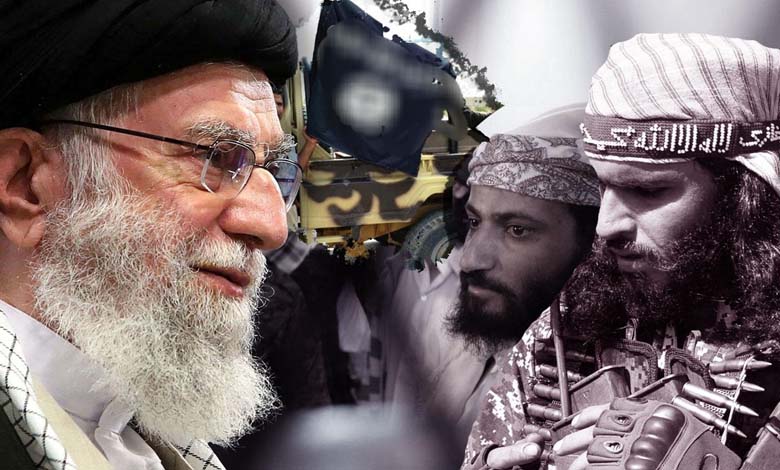
Intelligence reports have revealed the existence of an undeclared understanding between Iran and the Al-Qaeda organization, dating back to the years following the September 11 attacks in 2001.
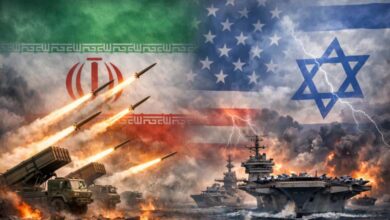
This unexpected rapprochement between a Shiite regime and a Sunni extremist organization gradually evolved into a tool within Tehran’s broader strategy to manage its confrontation with the United States and Israel, as part of a complex regional balance of power, according to the British newspaper The Sun.
Despite the deep ideological differences between the two sides, counterterrorism experts believe the relationship was not based on ideological alliance but rather on mutual interests. Iran reportedly viewed the hosting of certain leaders of the organization as an additional pressure card against its adversaries, while those leaders found in Iranian territory a relatively safe refuge amid the international manhunt that followed the global war on terror.
A mysterious prisoner exchange
One of the most notable episodes of this rapprochement dates back to a secret prisoner exchange carried out more than a decade ago. As part of this arrangement, Iran released five senior Al-Qaeda leaders who had been detained on its territory in exchange for the release of an Iranian diplomat kidnapped in Yemen by the organization’s local branch.
After their release, three of those leaders traveled to Syria to join the fighting against the government of Bashar al-Assad, but they were killed in succession within a few years. The prominent leader Abu al-Khayr al-Masri was killed in a U.S. missile strike in the Idlib province, while Sari Shihab died in a mysterious explosion in the same area. Later, Khaled al-Arouri was also killed in a drone strike.
The two remaining leaders, both Egyptians, chose a different path that puzzled counterterrorism experts: they decided to remain in Iran rather than return to traditional conflict zones.
A safe haven for the organization’s leadership
These two figures are Abu Mohammed al-Masri and Saif al-Adel, both among the most prominent leaders of Al-Qaeda.
Saif al-Adel is considered one of the organization’s historical leaders and previously ranked third in its command structure after Osama bin Laden and his deputy Ayman al-Zawahiri.
According to security assessments, the two men regarded Iran as a safer environment compared with Afghanistan or Syria, where American drones and Western intelligence agencies were aggressively targeting Al-Qaeda leaders.
They also believed that their shared hostility toward the United States and Israel might create space for a pragmatic form of understanding with Tehran.
For its part, Iran saw the presence of these leaders as a multi-dimensional strategic advantage. On the one hand, it gave Tehran a means to exert pressure on the organization to prevent attacks inside Iranian territory. On the other hand, it provided a potential bargaining chip in its confrontation with Washington.
A “chess piece” in the regional struggle
Aaron Zelin, a researcher specializing in extremist groups at the Washington Institute for Near East Policy, describes the relationship as part of a broader regional strategic game.
According to Zelin, Iran treated Al-Qaeda as a “chess piece” in its confrontation with the United States. Hosting some of the group’s leaders served as an implicit message to the West that Tehran possesses unconventional leverage that could be used in any political or military confrontation.
Despite this relative protection, the organization’s leaders were not completely safe inside Iran. In 2020, agents linked to Israel’s intelligence agency Mossad carried out an assassination operation targeting Abu Mohammed al-Masri on a street in Tehran. Several reports attributed the operation to intelligence cooperation with the United States.
The rise of Saif al-Adel
Following the killing of Osama bin Laden in 2011 and the assassination of Ayman al-Zawahiri in Kabul in 2022, Saif al-Adel emerged as the de facto leader of Al-Qaeda. Intelligence reports suggest that he continued managing the organization’s affairs from inside Iran, further deepening the ambiguity surrounding the relationship between the two sides.
Some analysts believe Saif al-Adel’s presence in Iran reflects a combination of protection and restriction: it allows him to remain relatively shielded from direct targeting while simultaneously placing him under the monitoring of Iranian security services.
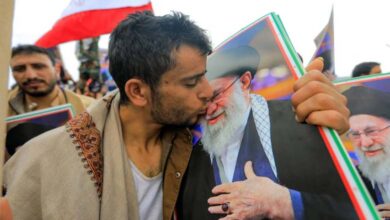
In recent years, there have also been indications of new forms of indirect cooperation between Al-Qaeda and some of Iran’s regional allies. Intelligence reports point to increasing coordination in Yemen between elements of the organization and the Iran-backed Houthi movement. In addition, messages expressing support for Iran have appeared on some platforms linked to the group.
Debate over the value of the “extremism card”
Nevertheless, many experts believe that Al-Qaeda no longer possesses the operational capabilities it had two decades ago. Its ranks have diminished, and many of its branches have evolved into localized insurgent movements rather than a centralized transnational organization.
Iranian researcher Farzan Sabet of the Geneva Graduate Institute argues that Tehran could theoretically attempt to activate its old connections with certain extremist groups. However, he believes the more likely scenario is that Iran will continue relying on its traditional network of Shiite militias across the region.
He suggests that Iran may employ a mixture of unconventional tools, including local armed groups, criminal networks, or radicalized individuals, particularly amid rising regional tensions fueled by crises such as the war in Gaza.
However, this card, which may appear useful for Tehran in the broader strategic balance, carries significant risks. A relationship with a transnational extremist organization may provide additional leverage, but it could also become a burden—or even a potential threat—if such groups were ever to move beyond control.