Iran Offers Nuclear Concessions and Sets Condition for Any Agreement
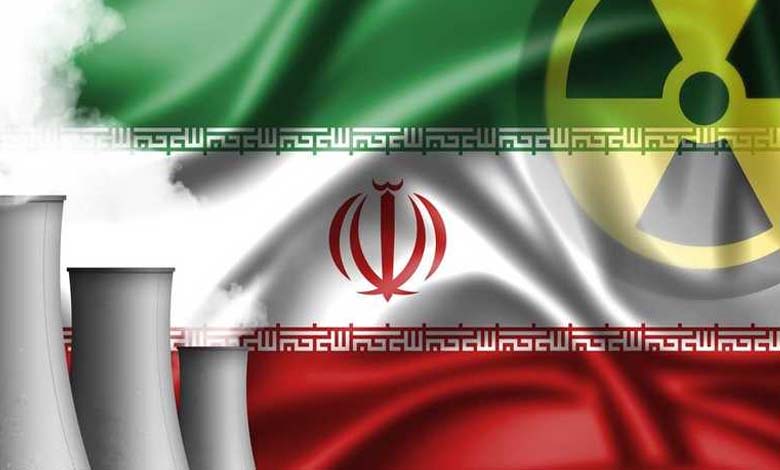
Iran has announced its readiness to consider “concessions” in its nuclear program in order to reach a new agreement, on the condition that any potential understanding include the lifting of sanctions imposed on it.
-
Iranian Revolutionary Guard drills in the Strait of Hormuz: readiness assessment and confrontation scenarios
-
Israel and the Last Hour Scenario: Iran Will Launch All Its Missiles
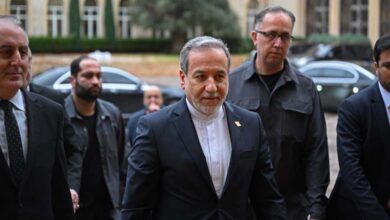
Iranian Deputy Foreign Minister Majid Takht-Ravanchi said in an interview with the BBC from Tehran that “the ball is in the United States’ court to prove that it wants to reach an agreement,” adding, “If they are sincere, I am certain that we will be on the path toward a deal.”
The remarks come as US officials repeatedly state that Iran is hindering progress in the negotiations. US Secretary of State Marco Rubio said President Donald Trump prefers to reach an agreement, while acknowledging that it is “extremely difficult.”
Meanwhile, Trump has threatened military strikes if no agreement is reached to curb Iran’s nuclear program, as Washington has strengthened its military presence in the region.
-
US Military Prepares for Prolonged Military Operation Against Iran
-
Washington continues military build-up to pressure Iran
Indirect Talks Between Oman and Geneva
The United States and Iran held indirect talks in Oman in early February. Takht-Ravanchi confirmed that a second round will take place next Tuesday in Geneva, describing the first round as “somewhat positive, though it is too early to judge.”
The Iranian official indicated that Tehran has proposed reducing its uranium enrichment level, currently at 60 percent, as a sign of its willingness to make concessions.
This level is close to weapons-grade enrichment, raising increasing doubts about Iran’s intentions, although Tehran denies seeking to acquire nuclear weapons.
-
Second Aircraft Carrier Headed to the Middle East… U.S. Pressure Ahead of a Decision on Iran
-
Iran reaffirms its red lines in nuclear talks.. second round expected soon
Regarding the possibility of transferring Iran’s stockpile of more than 400 kilograms of highly enriched uranium abroad, as occurred under the 2015 agreement, Takht-Ravanchi said it is “far too early to say what will happen during the negotiations.”
Russia had received approximately 11,000 kilograms of low-enriched uranium under the 2015 agreement and has expressed readiness to do so again.
Red Lines and Potential Escalation
Takht-Ravanchi stressed that the talks must be limited to the nuclear file, stating that a demand for “zero enrichment” is a red line and a violation of Iran’s rights under the Nuclear Non-Proliferation Treaty. “Zero enrichment is not on the table for us,” he said.
-
On the eve of the Muscat talks, five milestones paved the way for Iran and Washington’s return to negotiations
-
Trump and Iran: three military paths on the decision table
He also reiterated his country’s refusal to discuss its ballistic missile program, despite Israeli calls to include it in negotiations, asserting that Iran’s defensive capabilities are “non-negotiable.”
He warned that any new war would be “shocking and harmful for everyone,” adding, “If we feel an existential threat, we will respond accordingly.”
Role of Mediators and Mutual Distrust
Oman continues its mediation efforts under the leadership of its Foreign Minister Badr bin Hamad Al Busaidi, alongside other regional actors, including Qatar.
-
Iran offers nuclear concessions under conditions while holding firm on missiles
-
Iran arms itself with 1,000 new drones as Washington steps up its military buildup
Tehran accuses Israel of attempting to derail the negotiation track amid rising tensions following reciprocal strikes in recent months.
Takht-Ravanchi concluded that Iran will head to Geneva “with hope” of reaching an agreement, while stressing that “the other side must also prove its sincerity.”
These statements reflect a sensitive stage in the negotiations, as Tehran and Washington test the limits of possible concessions amid military escalation and reciprocal deterrent messaging.
-
With major powers backing the move, Europe edges closer to designating Iran’s Revolutionary Guard as a terrorist organization
-
Lincoln at the forefront… an overwhelming U.S. force off Iran