Iran war enters day 21: bombardment and leadership bleeding
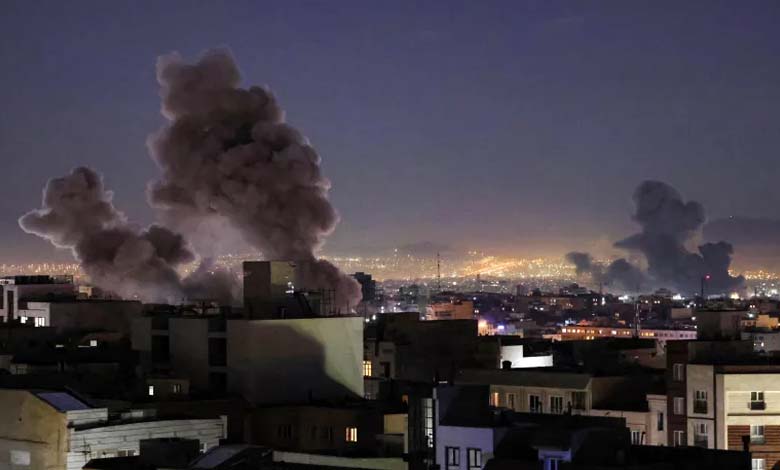
Israel continues to carry out strikes against Iran, whose leadership is being “wiped out,” according to Benjamin Netanyahu, while Tehran insists it is continuing missile production despite the war.
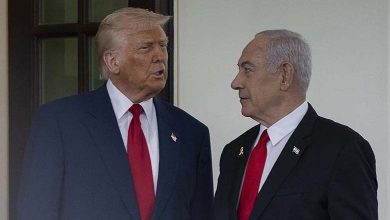
During a televised press conference, the Israeli Prime Minister stated that his country “is winning while Iran is being destroyed,” asserting that Iran no longer possesses any capability to enrich uranium or produce ballistic missiles.
-
How Iran’s Revolutionary Guard reorganized Hezbollah’s ranks
-
The people are stronger than our leaders: Iranian president’s son reveals secrets of a strategy-less war
He also expressed his belief that “this war will end sooner than people expect,” without providing a specific timeline.
However, Iran’s Revolutionary Guard stated on Friday that Tehran continues to produce missiles despite the ongoing conflict.
The Fars News Agency quoted the Revolutionary Guard as saying: “Our missile industry is performing exceptionally well… there is no concern in this regard, as even during wartime, we continue to produce missiles.”
On the same day, the Revolutionary Guard announced the killing of its spokesperson, Ali Mohammad Naeini, in U.S.-Israeli strikes.
-
Repeated launches from Iran: Israel responds with deep strikes
-
Iran between absence and presence: no proof of life for Mojtaba Khamenei
A statement published on its official website indicated that Naeini was killed in a dawn attack carried out by Israel and the United States.
On the twenty-first day of the war, Netanyahu’s remarks contributed to reassuring the markets.
Bombardments continue across multiple fronts in a conflict that has taken on a regional dimension, having escalated on a Friday marked both by the celebration of Nowruz, the Persian New Year in Iran, and Eid al-Fitr across most Muslim-majority countries.
For its part, Iran announced that Saturday would mark the first day of Eid al-Fitr.
-
Natanz under fire again: escalation targeting Iran’s nuclear program
-
Iran escalates by targeting energy facilities in five Gulf states
A “UN framework” for the Strait of Hormuz
Amid developments casting a heavy shadow over the global economy, European Union leaders called on Thursday evening, following a summit in Brussels, for a halt to strikes on energy and water infrastructure, urging all parties to exercise “maximum restraint.”
Following a U.S. call that failed to gain sufficient traction, France, the United Kingdom, Germany, Italy, the Netherlands, and Japan announced on Thursday their “readiness to contribute,” at the appropriate time, to efforts aimed at securing navigation in the strategic Strait of Hormuz, a vital route for global oil and gas supplies, where shipping has been disrupted by Iran since the outbreak of the war.
However, such contributions would only be considered after hostilities cease. French President Emmanuel Macron referred to the establishment of a “UN framework” for such a mission.
-
Protection gap in Iran: leadership in shelters while civilians remain under bombardment
-
Total destruction of South Pars: Trump threatens Iran over any renewed targeting of gas facilities in Qatar
-
Reinforcements and thousands of troops: the United States considers expanding its military deployment against Iran.
-
Rafah crossing reopens for the first time since the Iran war
-
Trump and Iranian nuclear fuel: a strategic move to decide the war
-
Iran proposes a new framework to regulate navigation in the Strait of Hormuz after the war