Iraq’s religious authority enters the negotiations over the selection of a new prime minister
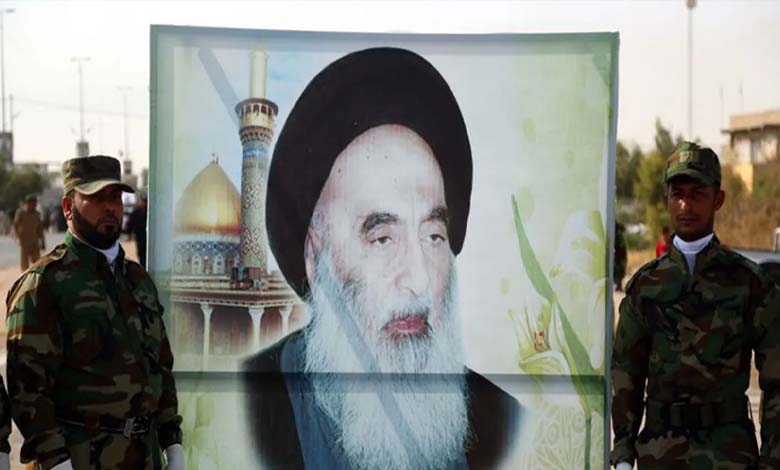
Political leaders are calling for a clearer separation between the religious role and the executive role, expressing implicit opposition to any involvement of the religious authority in consultations over forming the government.
Whenever Iraq enters a new phase of government formation, a question broader than the competition over the identity of the prime minister resurfaces: what position does the Najaf religious authority take in this process? Despite its profound symbolic influence in Shiite political consciousness, the country’s highest religious institution has consistently maintained a carefully calculated distance from power struggles. It intervenes only during critical moments when political blocs are unable to resolve deadlocks through their own mechanisms.
With early discussions underway to nominate the next prime minister, speculation has reemerged over a possible intervention by the religious authority, particularly after reports that some factions within the Coordination Framework were considering seeking its advice on the most suitable candidate for the next stage.
These speculations prompted several political leaders to call for reaffirming the boundaries separating religious functions from executive ones. Among them, Abdulsamad Al-Zarkoushi, a leader of the Iraqi Foundation Alliance, explained to Baghdad Today that the religious authority has not considered nominations as part of its responsibilities at any point in recent years. He stated that political forces, as representatives of society through elections, are the ones empowered to nominate a prime minister, while the Coordination Framework, as the largest parliamentary bloc, is responsible for presenting the name it deems capable of managing the next phase. He added that any potential communication with Najaf, if it occurs, would not aim at selecting a candidate but at determining whether the country is on the verge of a crisis requiring a religious stance.
From this perspective, the criteria for Najaf’s intervention become clear: it does not engage in the details of political conflict unless the situation poses a direct threat to internal security or leads to a complete paralysis of the political process. In such cases, its intervention serves as a warning or general guidance, not as an endorsement of a specific individual or political faction. This approach has taken
shape since the post-2003 period, when the religious authority chose to remain distant from political alignments while providing broad principles aimed at preserving the state and preventing collapse.
Past experiences illustrate this trajectory. In the 2005 elections, Najaf encouraged participation without endorsing any list. In 2006, when disputes among Shiite factions intensified over a successor to Ibrahim Al-Jaafari, the religious authority issued no signal regarding candidates, forcing the blocs to find an internal compromise that resulted in the selection of Nouri Al-Maliki. Between 2010 and 2014, it continued to refrain from involvement in debates on renewal or replacement, focusing instead on general demands related to better governance.
The most sensitive moment came in 2014, after ISIS seized large parts of the country. At that time, the religious authority believed that continuing under the existing executive leadership was no longer appropriate given the security context, and implicitly called for a change without naming an alternative. This paved the way for a consensus around Haider Al-Abadi. In 2018, it set one criterion: the candidate must not be a polarising figure, leading to the choice of Adel Abdul Mahdi. After the 2019 protests, Najaf concluded that the government could no longer contain the crisis and called for its resignation without naming a successor, which eventually opened the door for Mustafa Al-Kadhimi’s appointment. During the 2022 government formation process, the religious authority refused to receive any delegations, emphasising that government formation is strictly a political matter.
Today, as speculation grows around the next prime minister, Najaf’s approach seems unchanged. Al-Zarkoushi notes that current political discussions have not reached a level requiring religious intervention. Thus, the likelihood of such involvement remains low, as long as disagreements do not threaten stability or obstruct political continuity.
While some actors attempt to use Najaf’s symbolic status to gain moral support or shift power dynamics, the religious authority remains committed to the boundaries of its role: intervening only when absolutely necessary, and stepping back whenever the political system is capable of resolving its issues internally. In this context, the identity of the next prime minister is likely to emerge from the balance of power within parliament and among political components, rather than from a decision issued by the religious authority.
Two decades of political experience indicate that Najaf does not function as a mechanism for selecting prime ministers, but rather as a safeguard the state turns to when the political process becomes unable to preserve civil peace. As long as current political tensions do not escalate into a crisis of that magnitude, the religious authority will remain at a distance, leaving political actors to determine who will lead the next government.