ISIS Expands Its Digital Recruitment Networks Amid Regional Turmoil
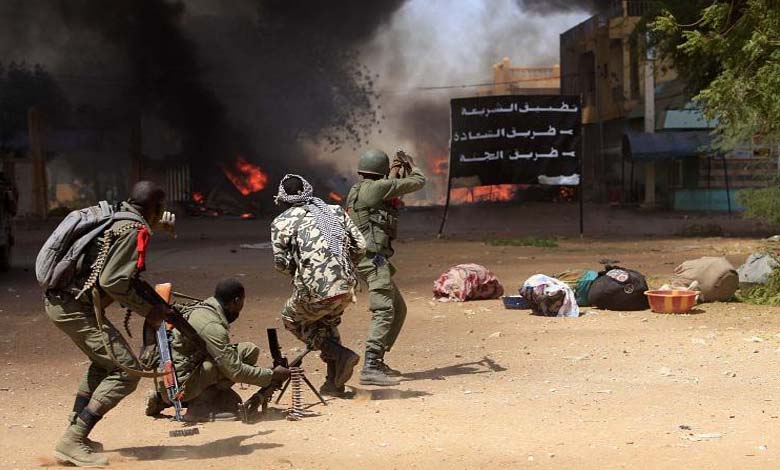
The organization has effectively abandoned the model of public “bay‘a,” which required a physical presence in its former areas of influence, and has shifted to a more flexible and complex digital structure.
ISIS is reorganizing its tools by leveraging the digital sphere as an alternative space for expansion and influence. Security experts warn that the shift toward online recruitment is not merely a change in tactics, but reflects a long-term strategy aimed at restoring operational mobility and building cross-border networks without the need for direct territorial control.
-
A message on a shell from a U.S. soldier to ISIS in Syria: what did he write?
-
It will continue for weeks: What weapons were used in Hawk Eye against ISIS in Syria?
Iraqi political analyst Mokhled Hazem told the Russian news agency Novosti that the group has effectively relinquished the model of public “bay‘a,” which had required a field presence in its former strongholds, in favor of a more flexible and sophisticated digital architecture. This structure relies on encrypted applications and social media platforms, using fictitious identities and closed networks to attract new sympathizers, particularly in environments marked by social or economic vulnerability.
He noted that the organization’s propaganda discourse is now carefully crafted to target young people in Europe and elsewhere, promoting narratives centered on marginalization, unemployment, and identity crises. The process typically begins with general protest-oriented or religious content, gradually transitioning to more radical ideological materials and closed virtual sessions presented as “religious education,” while in reality constituting systematic indoctrination programs.
-
Alarming Resurgence of ISIS in Syria Following al-Assad’s Fall
-
France Fights ISIS in Syria: Strikes on “Specific Targets”
According to experts, this digital transformation poses challenges distinct from those governments faced during the phase of open military confrontations. The battleground is no longer confined to deserts or devastated cities, but has shifted to servers and platforms that are difficult to track, requiring advanced intelligence tools and enhanced international cooperation in cybersecurity and the monitoring of extremist content, alongside preventive policies addressing the root causes of social frustration exploited by such organizations.
These warnings coincide with a growing security debate surrounding the issue of detained members of the organization. Former Iraqi Minister of Communications Mohammed Allawi cautioned against the risks of transferring thousands of detained members from Syrian prisons to Iraq, in an operation reportedly conducted under the supervision of the U.S.-led international coalition, according to The Wall Street Journal. He called for a thorough review of transfer procedures and detention management, warning against the recurrence of previous prison breaks that had contributed to the reactivation of extremist cells.
-
The forest fires crisis in Syria threatens the fate of farmers
-
The European Union warns of the danger of ISIS in Syria and Iraq
These concerns were heightened following clashes between Syrian government forces and the Syrian Democratic Forces in northeastern Syria, which led to the escape of a number of ISIS fighters from al-Shaddadi prison in al-Hasakah province last month. While the Syrian government reported that around 120 detainees had fled and that dozens had been recaptured, the Syrian Democratic Forces cited significantly higher figures, reflecting the opacity of the situation and the difficulty of verifying the final toll.
Reports indicate that some escapees headed toward the Syrian desert and the rugged border between Deir ez-Zor and al-Hasakah, reaching the outskirts of the Iraqi border—areas long exploited by the organization to regroup. UN reports have also raised concerns about foreign fighters infiltrating their home countries in Europe or relocating to other conflict zones such as Libya, the Sahel region, and Afghanistan, where groups affiliated with the organization remain active.
-
250 members included: third batch of ISIS detainees transferred from Syria to Iraq
-
150 elements… Iraq receives the first batch of ISIS detainees from Syrian prisons
Ultimately, the risk of the organization’s resurgence appears linked not only to its ability to carry out conventional attacks, but also to its capacity to exploit both political disorder and digital vulnerabilities. As fragility persists in parts of the region, the central challenge lies in developing comprehensive approaches that integrate security and development, while safeguarding the digital sphere from becoming a platform for the reproduction of extremism.
-
ISIS prisons in Syria raise Iraqi concerns: vigilance and border measures
-
The United States avenges the killing of its soldiers in Syria with Hawk Eye: airstrikes against ISIS