Israel Involves Anti-Hamas Militia in the Management of the Rafah Crossing
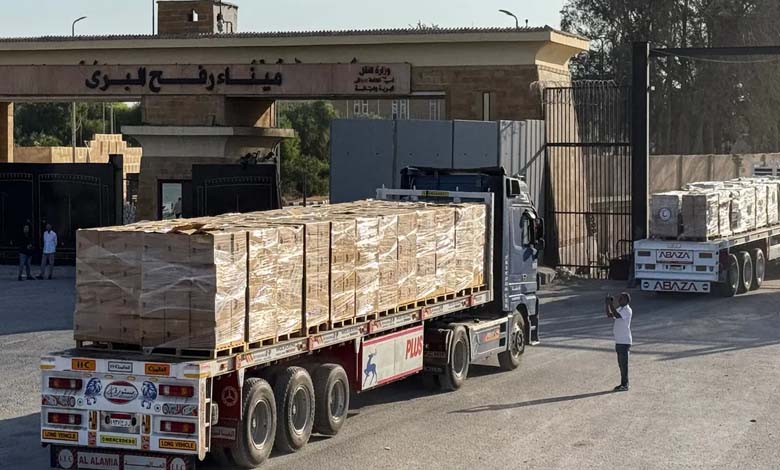
The Israeli Public Broadcasting Corporation confirmed that Israel has allowed members of the “Abu Shabab militia” to participate in the inspection of Palestinians entering and leaving through the Rafah border crossing, in a move described as a prelude to granting the group broader authority.
The official broadcaster revealed that Israel has permitted elements of the “Abu Shabab militia” to take part in screening Palestinians traveling through the Rafah land crossing between the Gaza Strip and Egypt, suggesting a plan to assign greater powers to the armed group opposed to Hamas.
-
Gaza between shelling and rubble: death renewed beneath the debris
-
Emerging from underground: Israeli manhunt for five gunmen in southern Gaza
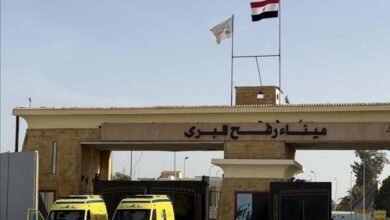
In a report published on its official website, the broadcaster stated that “Israel allows the Abu Shabab militia to participate in securing and inspecting those leaving and entering the Gaza Strip via the Rafah crossing,” noting that this step comes “in the hope that this entity will assume this task on a permanent basis.”
A photograph taken earlier this week on the Palestinian side of the crossing reportedly showed Ghassan al-Dahini, head of the “Abu Shabab militia,” accompanied by several of his members, according to the same source.
The report added that information “indicates that members of the militia are present in the vicinity of the crossing, which lies within an area under Israeli control, with Israel’s approval.”
-
Unprecedented Israeli Acknowledgment of a Heavy Death Toll in Gaza
-
Hamas’s plan ahead of disarmament talks: integrating its police forces in Gaza
On Friday, the Israeli newspaper Yedioth Ahronoth reported that Israel is secretly supporting armed militias in the Gaza Strip by providing them with funding, weapons, and field protection, with the aim of using them against Hamas. These groups reportedly operate in areas where the army is deployed, under the terms of the ceasefire agreement.
The newspaper added that the army “uses these militias for limited tactical missions, such as pursuit and arrest operations, as well as dispatching members to search for Hamas fighters in tunnels or among the rubble.”
Last June, Israeli Prime Minister Benjamin Netanyahu acknowledged arming militias in Gaza to use them against Hamas.
-
Gaza without hostages… Israel searches for answers for the day after
-
Gaza and Iran outside the Israeli decision… Who controls them then?
As a result, tensions escalated in Gaza between Hamas and the armed group, amid direct accusations by the movement that the group was operating outside the national framework and coordinating with hostile parties. Hamas stated that the group’s activities undermine internal security, considering the formation of a parallel armed force to be an explicit challenge to the de facto authority in the enclave. The movement had granted the group’s leader, prior to his death, a deadline to regularize his legal status and surrender, warning of the consequences of continuing what it described as an “armed rebellion.”
Hamas argues that the group’s actions go beyond political disagreement and pose a threat to civil peace, noting that the spread of weapons outside the official framework opens the door to chaos and weakens the internal front amid the complex security conditions facing the Strip.
-
A meticulously crafted ruse: the details of a nerve-racking operation that brought back an Israeli soldier from Gaza
-
Head of the Gaza Administration Committee announces the opening of the Rafah crossing next week
On the ground, security forces affiliated with the movement conducted targeted operations against sites suspected of being used by members of the group, particularly in eastern Gaza. The operations included raids and security pursuits aimed at dismantling the group’s organizational structure and limiting its operational capacity.
These measures formed part of a broader campaign that Hamas says is intended to regulate the security landscape and prevent the emergence of parallel armed formations, in an effort to consolidate its control and prevent the creation of an alternative security reality within the Gaza Strip.
-
Buffer zone or Israeli annexation? The yellow line threatens Gaza
-
Israel issues first evacuation order in Gaza since the ceasefire
Last December, Israeli media reported “the killing of Yasser Abu Shabab, former leader of the Abu Shabab militia, in tribal clashes in Gaza.” The Tarabin tribe in the Gaza Strip, to which Abu Shabab belonged, also confirmed his death, stating that “his blood has closed a chapter of disgrace.”
On February 2, Israel reopened the Palestinian side of the Rafah crossing, which it has occupied since May 2024, in a very limited manner and under extremely strict restrictions.
-
Gaza: dawn strikes test what remains of displaced people’s patience
-
The yellow line on the ground differs from the maps… images reveal the terror in Gaza
Israel had been expected to reopen the crossing during the first phase of the ceasefire agreement, which came into effect on October 10, 2025, but did not do so.
The war launched by Israel in Gaza on October 8, 2023, which lasted two years, resulted in more than 72,000 Palestinian deaths and over 171,000 injuries, most of them children and women, and caused the destruction of 90 percent of the civilian infrastructure.
-
Invitations and announcement of participants: developments in the Gaza Peace Council
-
Washington close to forming a Palestinian committee to administer the Gaza Strip