Israel secretly armed al-Hajri’s forces to sow chaos in Syria
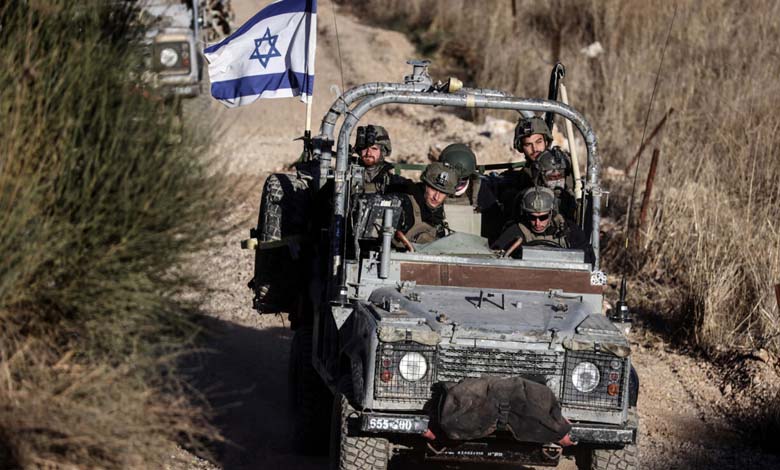
An investigation by the Washington Post reveals that al-Hajri prepared maps related to a planned “Druze state,” which he presented to at least one major Western government in early 2025.
The American newspaper The Washington Post reported, citing Israeli officials, that Tel Aviv seeks to shape developments in Syria by supporting allied Druze militias, aiming to weaken Syria’s national cohesion and complicate President Ahmad al-Shar’a’s efforts to unify the country after its long war.
-
Israel and Syria Negotiations: Deadlock and Conflicting Conditions
-
Understandings between Netanyahu and Barak on regulating Israeli movements in Syria
The officials explained that, in response to al-Shar’a’s “sudden rise,” Israel carried out an airlift of weapons to armed Druze groups inside Syria on December 17, 2024, only days after the fall of Bashar al-Assad’s regime on December 8, 2024.
They indicated that these “secret supplies” were not limited to weapons, but also included humanitarian assistance, considering them part of Israel’s long-standing efforts to support the Druze.
According to the newspaper, the flow of weapons peaked in April, then declined in August after Israel shifted toward negotiations with al-Shar’a, as Israeli officials began to doubt the reliability of Syrian Druze separatists and the feasibility of their objectives.
-
Details of Israel’s first airborne landing of its kind in Syria
-
Key Provisions of the Expected Security Settlement Agreement Between Syria and Israel
A former Israeli official confirmed that Tel Aviv still provides support, including military equipment such as bullet-proof vests and medical supplies. The report quoted Druze officials saying Israel pays monthly salaries ranging from 100 to 200 dollars to around 3,000 Druze fighters.
The Israeli Air Force carried out hundreds of airstrikes against military facilities inside Syria to prevent al-Shar’a from obtaining weapons. The Israeli Ministry of Defense also created a new administrative office to coordinate the dispatch of weapons and humanitarian aid to the forces of Hikmat al-Hajri, one of the Druze spiritual leaders, in the province of Sweida in southern Syria.
A former Israeli official said that, within ten days of al-Assad’s fall, Israel began providing military support to the Druze, noting that a large portion of the weapons supplied had previously been seized from Hamas or Hezbollah fighters, and were used weapons.
-
Israel Fears a New October 7 from Syria and Strengthens Borders with Barriers and Additional Forces
-
“Including Syria and Lebanon”: How the Israeli Army Prepares for “Operation Winter”
This was reported in the newspaper’s article, citing current and former Israeli officials, as well as Druze and Kurdish officials, whose names were not mentioned.
Some Israeli officials pointed out that Israel’s support for the Druze is not new, but dates back to the Syrian civil war.
Three former Israeli officials said Israeli military officers entered Syria after the war broke out in 2011, where they trained Druze militias and provided them with weapons and medical treatment, often in coordination with Jordan and the United States. They added that Israeli aid to the Druze is still ongoing, though at a slower pace and on a smaller scale.
-
The flying of Israeli jets very low over parts of Lebanon and blasts in Syria
-
Syrians and Palestinians barred from entering the United States alongside nationals of six other countries
The report notes that Druze leaders in Israel, before al-Assad’s fall, searched for a Syrian Druze figure capable of leading about 700,000 Druze in Syria in case the regime collapsed, and therefore approached Tareq al-Shufi, who had previously served in the Syrian army under Bashar al-Assad.
One official explained that 20 people with military experience were selected, assigned ranks and roles, and work began to form a group called “the Military Council” in the province of Sweida.
He added that the “Military Council,” then led by al-Shufi, enjoyed the support of Sheikh Hikmat al-Hajri, one of the Druze spiritual leaders, who was born in Venezuela and, with Israeli backing, called for the establishment of an independent Druze state.
-
Israel plans to build a new separation wall in the northern West Bank
-
Hebrew Newspaper: Israel Braces for an Attack by the Houthis and Iraqi Militias
Another official said that certain entities within Israel’s security institutions transferred 24,000 dollars to al-Shufi through the Syrian Democratic Forces (SDF).
He confirmed that this money was used to convert an old building into a command center, and to buy military uniforms and basic equipment.
During the same period, the SDF paid nearly half a million dollars separately to the “Military Council,” according to a former Israeli official and two Druze leaders in Syria. The officials added that the SDF trained Druze fighters, including women, in Kurdish-controlled areas of northeastern Syria, and that this training is still ongoing.
-
Syria foils mine smuggling attempt, sending a strict message to Hezbollah
-
Israeli female unit spying deep inside Syria… Secrets of Site 720
In addition to the training, some Druze leaders obtained, through Kurdish channels, anti-tank missiles and field imagery from Israeli satellites, giving them a tactical advantage in their clashes with forces loyal to al-Shar’a’s government, according to Druze leaders in Sweida.
The report quoted a Western official saying that Sheikh al-Hajri prepared maps for a planned “Druze state,” which he presented to at least one major Western government in early 2025.
Israel’s support for the Druze has become a double source of tension: with Damascus, because it undermines the authority of the central state, and with the U.S. administration, which has made support for al-Shar’a a cornerstone of its regional policy. American officials expressed concern that Israeli actions undermine a rare opportunity for a united and stable Syria.
-
Al-Shar’a rejects the division of Syria
-
Syrian Ministry of Foreign Affairs: The Israeli attack on Beit Jinn is a war crime
Israeli officials say they reduced their military support to the Druze after May 2025, following the first meeting between al-Shar’a and the U.S. president, and halted the flow of weapons in August. Domestically, the idea of turning the Druze into a full Israeli proxy force was frozen due to internal divisions among them and the risk of long-term entanglement in Syria.
Over time, conflicts escalated within the Druze leadership itself. In August, the “National Guard” militia, led by Sheikh Hikmat al-Hajri, replaced the “Military Council” as the main recipient of Israeli support, sparking deep divisions and accusations of kidnapping, corruption, and smuggling.
-
Winter fog hides what is most dangerous: Israeli drill amid Hezbollah retaliation fears
-
Clashes between the Syrian Army and the SDF disrupt the reconciliation and integration process
The investigation explains that the relationship between Israel and the SDF is not an official alliance, but is based on overlapping interests: Israel sees the SDF as a useful partner to weaken the new Damascus and prevent the consolidation of a hostile central power, while the SDF benefits from being positioned as a regional actor with channels to Tel Aviv and Washington, strengthening its negotiating position in Syria’s future.
Despite this cooperation, Israel has remained cautious about investing too heavily in the Kurdish track, fearing it might provoke Ankara and complicate any potential security agreement with al-Shar’a’s government.
-
War fatigue and internal pressure: Israel begins reducing its reserve forces
-
Israel announces the killing of a Hezbollah commander: the logistics support chief