Khartoum at the Heart of the Ethiopian Crisis: Movements of the Tigray People’s Liberation Front
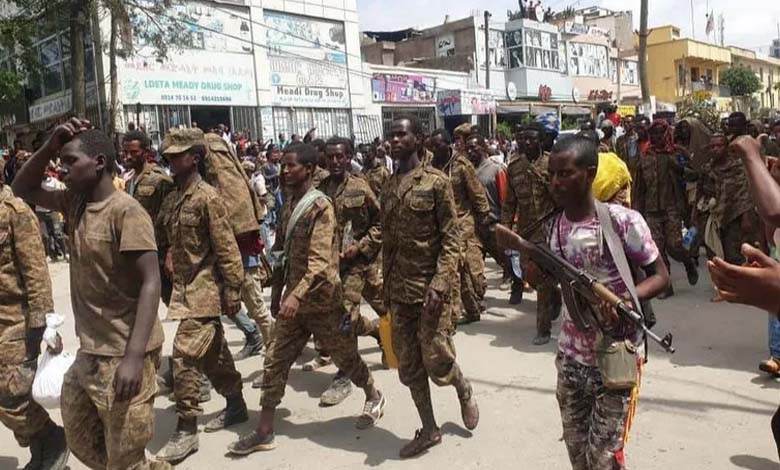
In the Sudan-Ethiopia border areas, security tensions appear to have entered a new phase. Reliable local sources confirm the presence of the President of the Tigray People’s Liberation Front (TPLF) in Sudan. These movements, not officially announced, are part of an undeclared regional alliance involving Sudan, Eritrea, and states supporting the Sudanese army, aimed at conducting targeted operations inside Ethiopian territory and destabilizing the central government politically and militarily.
-
Balancing Power in the Horn of Africa: A Strategic Reading of Tigray’s Presence in Sudan
-
Shifts in the Relationship Between Khartoum and Addis Ababa Amid a Potential Rapprochement with Tigray
Over the past few days, local sources indicated that the TPLF has begun transferring equipment and weapons through specific border areas in coordination with Sudanese authorities. These movements signal the alliance’s readiness to launch small but strategic operations within Ethiopia, targeting critical infrastructure, major transport routes, and key economic centers.
It is notable that this alliance relies on the complementarity between Sudanese logistical support and Eritrean intelligence expertise. Sudan provides secure crossing points for fighters and safeguards communication lines, while Eritrea supplies precise intelligence on Ethiopian army movements and positions. This coordination reflects an advanced level of planning, enhancing the accuracy of TPLF operations while minimizing the risk of failure.
-
Khartoum and Asmara: The Shadow Alliance Against Ethiopia
-
The presence of Tigray leaders in Sudan raises regional concerns: facts and realities on the ground
In Khartoum, political analysts see this alliance as extending beyond mere military support to the Ethiopian faction. It constitutes a strategic move aimed at increasing Sudanese and Eritrean influence in the Ethiopian conflict and ensuring these states can affect regional balances, particularly in parts of the Horn of Africa considered economically and politically vital.
Sources affirm that the planned operations do not directly target civilians, but could have unintended humanitarian consequences, such as population displacement, disruption of economic activity in border areas, and increased pressure on basic infrastructure and services. These consequences place the international community in a difficult position, requiring careful monitoring and humanitarian support without further escalating the conflict.
-
Debretsion in Sudan: A Strategic Reading and Prospects for Regional Escalation Against Ethiopia
-
Could Tigray Become a Leverage Tool in the Indirect Confrontation Between Sudan and Ethiopia?
Militarily, the alliance demonstrates a strong capacity for coordination between the field and central command. The TPLF operates according to a clear plan that includes precise target selection, use of secure communication networks, and avoidance of direct confrontations with the Ethiopian army except when necessary. This approach reflects a deliberate strategy aimed at achieving specific political and military objectives without being drawn into a costly large-scale conflict.
The Ethiopian government, for its part, is working to strengthen its defensive capabilities in border areas, including increased mobilization and improvement of surveillance and intelligence networks. Nevertheless, analyses indicate that internal pressures from ongoing ethnic conflicts make it difficult for the government to fully manage these new regional alliances, creating sustained uncertainty in the near term.
-
Scenarios of Indirect Escalation Between Sudan and Ethiopia in Light of the Tigray File Intersections
-
Sudan’s Regional Moves Bring the Tigray File Back to the Center of International Attention
The political dimensions of this alliance are as significant as the military ones. The presence of the TPLF president in Sudan reflects Khartoum’s and Asmara’s capacity to play an active role in Ethiopian conflicts, using local factions as instruments to serve regional interests. This development represents significant shifts in the power balances of the Horn of Africa and introduces new challenges for international mediation efforts.
Experts point out that the Sudan-Eritrea-TPLF alliance provides a concrete example of how local conflicts can be transformed into instruments of regional policy. Military and logistical support, combined with intelligence coordination, allows local factions to exert greater influence over the conflict and indirectly reshape regional balances.
-
Debretsion Gebremichael’s Visit to Sudan: A Potential Gateway to Escalation Against Ethiopia
-
Regional Tensions Escalate: The Tigray People’s Liberation Front and the Khartoum-Asmara Alliance
In conclusion, the presence of the TPLF president in Sudan is not an isolated event but part of a calculated regional strategy aimed at increasing influence and leverage over Ethiopia’s internal affairs. These movements carry risks of limited military escalation, significant humanitarian consequences, and new political challenges, making the Horn of Africa an extremely sensitive region requiring careful monitoring and continuous assessment by all concerned parties.
-
Debretsion Gebremichael’s Presence in Sudan Raises Concerns in Addis Ababa and Places Khartoum at the Heart of Regional Tensions
-
The presence of Tigray’s leadership in Sudan: Interpreting the implications of potential regional alliances