Libya in 2025: Limited Political Progress and Persistent Deadlock Hindering the Electoral Process
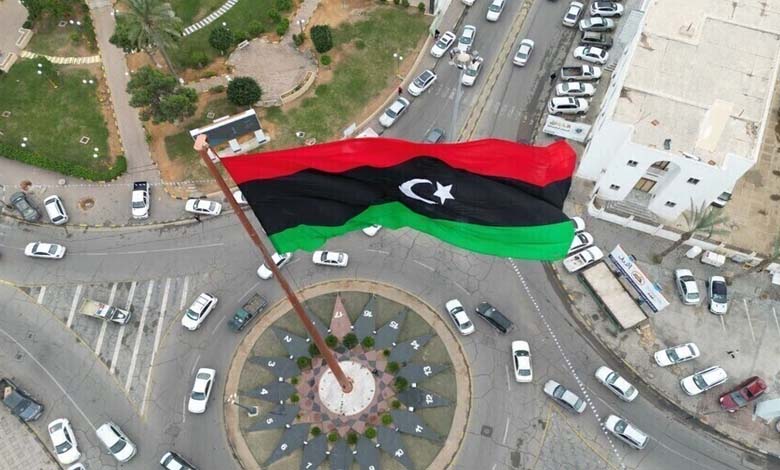
As 2025 draws to a close, Libya stands before a complex political reality that combines modest signs of progress with recurring episodes of stagnation.
The year brought a mix of attempts to revive the constitutional and electoral track, against the backdrop of deeply entrenched divisions that have continued to obstruct any genuine transition toward stability. Between sporadic meetings, renewed international pressure, and an expanding popular movement, Libya appears trapped in a closed cycle in which elections remain postponed, authorities remain divided, and public hope is pinned on a breakthrough that has yet to materialize.
-
Libyan candidates talk and militias mobilize as electoral process collapse
-
The Libyan Presidencies Authority: A step toward unity or a new layer of political fragmentation?
Consensus between the House of Representatives and the High Council of State
On 23 February 2025, members of Libya’s House of Representatives and the High Council of State held a consultative meeting in Cairo, concluding with what were described as “positive” understandings aimed at breaking the political deadlock and strengthening the institutional process.
The final statement stressed the need to keep the political process under the umbrella of official state institutions and highlighted the importance of continued coordination between the two bodies through joint mechanisms.
Observers viewed this step as a “symbolic indicator” of the potential for internal agreements after years of division, reviving some hope for the unification of legislative institutions.
-
Haftar links Libyans’ living crisis to political paralysis
-
Warnings of renewed conflict in Libya amid security fragility and sudden violence
Municipal elections: a local gain amid a turbulent landscape
Throughout 2025, the High National Election Commission continued to organize municipal council elections.
On 16 August 2025, the second phase of the municipal elections was completed, followed by the third phase in October 2025.
Despite their local scope, these elections were considered an important milestone in a highly unstable political environment. They contributed to strengthening confidence in local governance and paving the way for broader political momentum at the national level.
-
Sabratah in Flames: Western Libya a Prize for Militias as the Non-State Prevails
-
UN Proposal to Hold Elections in Libya Within 18 Months
International support: sustained engagement and slow progress
International momentum in support of Libya’s political process persisted. On 26 July 2025, the United Nations Support Mission in Libya announced new meetings with Libyan stakeholders, particularly the 6+6 committee, in an effort to overcome the “force majeure” that had disrupted the electoral process.
On 12 August 2025, the mission unveiled a plan to unify the executive authority ahead of holding elections.
Despite these initiatives, tangible progress on the ground remained extremely limited due to deep disagreements and sharp institutional divisions between eastern and western Libya.
-
Less than half… Attacks deprive the majority of Libyan towns of voting
-
Al-Mishri Denies New Session to Elect Head of Libya’s High Council of State
The High Council of Presidencies: a step toward unity or deeper division?
On 21 November 2025, Tripoli hosted a meeting attended by the President of the Presidential Council, Mohamed Al-Menfi, the head of the High Council of State, Mohamed Takala, the outgoing Prime Minister of the Government of National Unity, Abdelhamid Dbeibah, and Presidential Council member Abdullah Al-Lafi. The meeting resulted in the announcement of the establishment of the “High Council of Presidencies” as a coordinating body bringing together the three branches of authority with the aim of unifying decision-making mechanisms.
The move sparked widespread debate. While some viewed it as an attempt to organize national decision-making, others argued that it could deepen divisions and further complicate the political landscape in the absence of a clear constitutional framework.
-
Salvation Friday: Libyans Hold Their Breath Amid Fears of Militia Chaos
-
Where is Western Libya Heading? Open Scenarios for the Future of the Conflict
A broad popular movement demanding elections
The year 2025 witnessed a series of demonstrations, the most prominent of which took place on 28 November 2025 under the banner of the “National Movement,” spreading across cities in the east, south, and west of the country. Protesters demanded the urgent holding of presidential elections and an end to the transitional phases that have persisted for more than a decade.
Demonstrators chanted the slogan “Libya is one and indivisible, no to a new transitional phase,” reflecting growing public anger over the continued political stalemate.
The Speaker of the House of Representatives, Aguila Saleh, issued a statement affirming that the protests represented “the will of the Libyan people, the source of all authority,” stressing the need to expedite elections. He revealed that approximately three million voters were awaiting this electoral milestone and called on the electoral commission to immediately implement the presidential election law.
-
Clashes, Divisions, and Delayed Solutions… Libya on the Brink of Explosion
-
Libyan Presidential Council Decrees: A Return Ticket to the Political Spotlight
Ongoing obstruction of the electoral track
The head of the Libya Al-Karama Party and professor of political science, Dr. Youssef Al-Farsi, said that Libya is experiencing a “genuine obstruction” of the electoral process by internal actors, particularly in western Libya, “who are unwilling to move toward elections.”
He added that the recent national movement had clearly conveyed its message in favor of genuine presidential elections, emphasizing the need for the UN mission to align with the demands of the Libyan people.
-
Political Stalemate Brings Militias in Western Libya Back into the Spotlight
-
The hopes of Libyans rest on a political breakthrough with elections next year
Al-Farsi described the establishment of the High Council of Presidencies as “a misguided decision lacking any constitutional or legal basis,” characterizing the overall situation as “politically and economically unstable.”
He further stressed that the United Nations had been slow in managing the political process and had lacked clarity and transparency.
He concluded by calling on the UN Security Council to impose sanctions on obstructive parties, considering such measures necessary to clear the path for elections capable of rescuing the country from a “dark tunnel.”
-
Libya’s Muslim Brotherhood Faces Another Setback… Political Analyst Diagnoses the Movement’s Internal and External Crises
-
A Scheme That Made Them Outcasts: The Waning Influence of the Muslim Brotherhood in Libyan Municipal Elections
-
Militia Power: The Kidnapping of an Intelligence Officer Denies Europe Access to Libyan Gas