List of Iranian leaders killed since the start of the war: mapping the collapse of the power structure
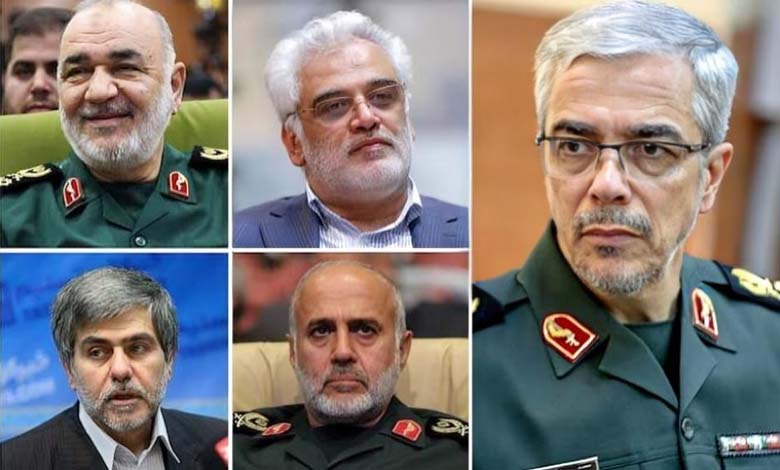
Since the beginning of the Israeli-American military operations against Iran on February 28, the regime in Tehran has faced what can be described as a “complete decapitation of its leadership.”
The strikes have targeted all political, military, and security levels, from the Supreme Leader down to field and intelligence commanders.
-
Iran between absence and presence: no proof of life for Mojtaba Khamenei
-
Death of Khamenei’s shadow and the Iranian Kennedy: Who was Ali Larijani?
Official data released by both Israeli and Iranian sides revealing a list of assassinations among top-tier leadership. The losses are distributed across five strategic circles as follows:
First: the top leadership and sovereign decision-making
These figures are considered the “brain of the regime” and are responsible for major strategic directions.
- Ali Khamenei
Supreme Leader, at the top of the hierarchy and holder of absolute authority, primarily responsible for foreign policy, military planning, and funding regional proxies.
-
Washington offers a large reward for information about Khamenei
-
The will buried with Khamenei: how the Revolutionary Guard overturned the father’s wish

- Ali Larijani
Secretary of the Supreme National Security Council, the de facto strongman who managed security and international relations after Khamenei’s death.

Second: the senior military leadership (General Staff and Defense)
Responsible for managing regular armed forces and planning offensive operations, particularly missile strikes.
- Abdolrahim Mousavi
Chief of Staff, regarded as the top figure in the military establishment, overseeing ballistic missile attacks and overall national security management.
-
Iran after Khamenei: a disoriented regime and a silent struggle over the Supreme Leader
-
Trump studies Iran’s future after the war and keeps an eye on Khamenei’s successor

- Aziz Nasirzadeh
Minister of Defense, responsible for military production, armament, and logistical support for the armed forces.

- Majed Ben Al-Rida
New Minister of Defense, appointed as successor to Nasirzadeh.
-
Mojtaba Khamenei’s Survival of Assassination Attempt Redraws Iran’s Leadership Map
-
Did artificial intelligence applications contribute to reaching Khamenei?

Third: commanders of strike forces (Revolutionary Guard and Basij)
Responsible for executing external operations and suppressing internal protests.
- Mohammad Pakpour
Commander of the Revolutionary Guard, leading Iran’s most influential military force tasked with protecting the regime and securing its regional influence.

- Gholam Reza Soleimani
Commander of the Basij, responsible for direct internal repression, handling popular protests, and mobilizing volunteer forces.
-
Iran after Khamenei: American red lines
-
Geopolitical risks unsettle global markets after Khamenei’s death

- Qassem Gharishi
Deputy head of the Basij organization.

- Reza Khazaei
Officer in the Quds Force.
Fourth: security and intelligence leadership
Responsible for covert operations, espionage, and managing security crises.
- Esmail Khatib
Minister of Intelligence, heading the central intelligence apparatus tasked with tracking opponents and conducting external operations against international targets. -
Khamenei’s death: where real power lies in the world
-
Tehran’s streets erupt in celebrations following reports of Khamenei’s death

- Ali Shamkhani
Advisor to the Supreme Leader and architect of covert security and diplomatic policies, with extensive experience in managing regional balances.

- Esmail Ahmadi
Head of Basij Intelligence, playing a key role in suppressing protesters and enforcing “regime values” by force. - Saleh Assadi
Head of intelligence at Khatam al-Anbiya headquarters. - Gholam Reza Rezaeian
Head of Iranian police intelligence. - Abolghasem Babaeian
Head of the Supreme Leader’s military office. - Akbar Ghaffari
Deputy Minister of Intelligence. -
Months of tracking… how U.S. intelligence reached Khamenei
-
Thirty bombs decided the battle: the final hours in Khamenei’s life
- Esmail Ahmadi
Head of Basij forces intelligence. - Mohammad Baseri
Senior official in the Ministry of Intelligence. - Major General Bahram Hosseini Motlagh
Head of planning and military operations department. - Majed Hosseini
Senior financial official. - Ali Reza
Head of corps intelligence in Lebanon. - Ahmad Rasouli
Head of corps intelligence in Palestine. - Hossein Ahmadlou
Senior intelligence officer. - Abouzar Mohammadi
Operations commander in the missile unit of the Iranian Revolutionary Guard within Hezbollah in Beirut.
Fifth: propaganda and military research leadership
Responsible for shaping the regime’s image and developing its sensitive programs.
-
Smoke Near Iran’s Supreme Leader Headquarters… Where Is Khamenei?
-
Khamenei speaks of a coup attempt and outlines the response to any U.S. strike
- Ali Mohammad Naeini
Spokesperson of the Revolutionary Guard and responsible for psychological warfare and media propaganda for Iran’s allies. - Hossein Jabal Amelian
Head of the Defense Innovation and Research Organization, responsible for developing advanced weapons. - Reza Mozaffari Nia
Former head of the Defense Innovation and Research Organization. - Major General Mohsen Darbaghi
Deputy head of the supply and industrial research department. - Mohammad Shirazi
Head of the Supreme Leader’s military office since 1989. - Abolghasem Babaeian
New head of the Supreme Leader’s military office, appointed as successor to Shirazi.
-
British newspaper: Khamenei prepared a plan to flee Iran
-
Khamenei’s First Appearance Following the Truce with Israel