Mali moves from neutrality to supporting the sovereignty of Morocco over the Sahara
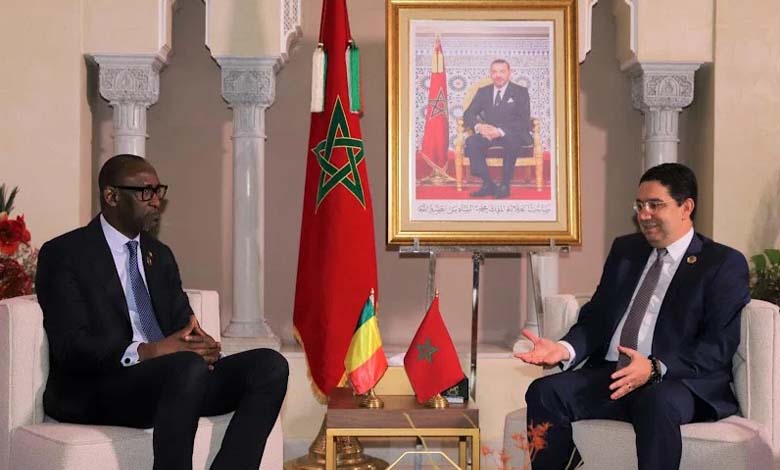
Mali’s foreign minister announced his country’s withdrawal of recognition of the “Front Polisario,” emphasizing that this position stems from Bamako’s awareness of the centrality of the Sahara issue to the sustainability of regional security and peace.
On Friday, Mali announced its support for Morocco’s sovereignty over its Sahara and its endorsement of the autonomy proposal under the Kingdom’s sovereignty, thus becoming the latest African state to back the solution enshrined in the latest UN resolution as the only way to end the conflict that has lasted for 50 years with the Polisario Front, backed by Algeria.
This announcement goes beyond a mere passing diplomatic stance; it represents the culmination of a long process of quiet diplomacy and field engagement pursued by Morocco toward its African depth, particularly in the Sahel region, which is undergoing major geopolitical transformations.
In a move reflecting a radical shift in Mali’s diplomatic orientation, Mali officially announced the withdrawal of its recognition of the so-called “Sahrawi republic.” Mali’s Minister of Foreign Affairs and International Cooperation, Abdoulaye Diop, stated in a government communiqué following talks with his Moroccan counterpart Nasser Bourita, during the visit he began the previous day to the Sahel country, that “this decision is the result of a deep analysis of the issue and Bamako’s awareness of the centrality of the Sahara question to the sustainability of regional security and peace.”
Mali’s endorsement of the Moroccan solution follows similar steps taken by other countries in the region. Kenya and Ghana supported the autonomy plan last year. More than twenty countries, most of them African, have opened consulates in the Moroccan Sahara, reflecting full support for Morocco’s sovereignty over its southern provinces.
Bamako’s joining the list of African countries supporting the Moroccan solution tightens the pressure on separatist narratives and pushes the Sahara issue toward a realistic resolution under Moroccan sovereignty.
This stance reflects the desire of Sahel countries to build partnerships based on mutual respect, away from traditional polarizations, something Morocco has provided through a “win-win” policy.
Mali’s position cannot be separated from the international initiative launched by Morocco’s King, Mohammed VI, at the end of 2023, aimed at facilitating Sahel countries’ access to the Atlantic Ocean. This program is considered the “project of the century” for the region, especially since countries such as Mali, Niger, and Chad have no maritime outlets.
Rather than limiting itself to humanitarian aid, Morocco offers a structural economic project that transforms the Sahel region from a “zone of crises” into a “logistical hub,” relying on its infrastructure, particularly the Port of Dakhla Atlantique, to serve as a gateway to global trade for these countries.
The Kingdom plays a central role that goes beyond the economic dimension to include security and spiritual aspects. Through the Mohammed VI Institute for the Training of Imams Morchidines and Morchidates, Rabat contributes to combating extremism in Mali and the Sahel by promoting the values of moderate Islam, intellectually drying up the sources of terrorism. Morocco is also regarded as a reliable partner in intelligence and the fight against cross-border crime, making it a guarantor of stability for neighboring states.
Mali’s support for the Moroccan solution in the Sahara cannot be read as an isolated diplomatic step; it also reflects the rupture now characterizing relations between Mali and Algeria, at a time when Bamako believes that partnership with the Kingdom offers genuine development alternatives.
While Mali views the Algerian approach as a form of “security tutelage” that has failed to bring stability for over a decade, it sees the Moroccan approach, particularly the Atlantic initiative, as a genuine economic outlet.