Military escalation threatens Kharg, Iran’s oil lifeline
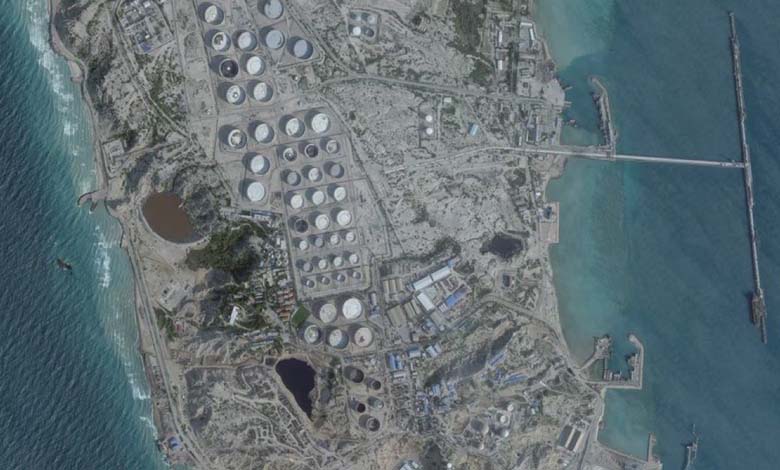
Kharg Island is considered the lifeline of Iran’s oil exports, and controlling it would represent a strategic blow capable of suffocating the economy and affecting global energy balances, particularly toward China.
-
U.S. military destroys a drone engine production factory in Iran
-
List of Iranian leaders killed since the start of the war: mapping the collapse of the power structure
Hebrew media reports have indicated a noticeable acceleration in the pace of U.S. military movements in the Middle East, reflecting the possibility that the confrontation with Iran may be entering a more sensitive and dangerous phase. The Israeli newspaper The Jerusalem Post reported that Washington has intensified the deployment of its forces in preparation for a potential landing operation aimed at seizing Iran’s Kharg Island, which is regarded as the heart of Iranian oil exports.
According to unnamed sources, the United States is seriously considering launching a ground assault to take control of the island located in the Persian Gulf, near vital oil ports. The newspaper quoted senior U.S. officials as saying that this option is now strongly on the table, and perhaps even “inevitable” amid ongoing escalation, noting that Israel and other countries have been informed of these plans in recent days.
-
4 mediators and constructive discussions: behind the scenes of the US-Iran talks
-
Iran war enters day 21: bombardment and leadership bleeding
Movements on the ground reflect this direction, with the accelerated deployment of thousands of U.S. Marines and naval forces to the region. These reinforcements include the amphibious ready group of the USS Boxer, along with the amphibious transport ships USS Portland and USS Comstock. This force carries approximately 4,500 Marines, in addition to advanced combat equipment enabling it to conduct complex landing operations.
The importance of Kharg Island lies in the fact that it serves as the main outlet for Iranian oil exports, with about 90% of crude oil passing through it, particularly toward China. Therefore, any attempt to seize it would not merely be a military move but a strategic blow capable of strangling Iran’s economy and reshaping global energy dynamics.
-
Funding the war on Iran sparks sharp divisions within Congress
-
Death of the Iranian Revolutionary Guard spokesperson.
These developments suggest that Washington may be shifting from a strategy of “remote pressure” to direct intervention, a qualitative shift that carries significant risks. Such an operation would not be a limited strike but could open the door to a broader confrontation in the Gulf, especially given Iran’s ability to retaliate by targeting maritime navigation or U.S. bases across the region.
It is highly unlikely that Iranian forces are unprepared for such a scenario. Since the beginning of the war, they have demonstrated resilience despite devastating airstrikes, and they are fully aware that blocking their oil export routes effectively amounts to economic strangulation.
-
Trump hints at imminent end to the war against Iran
-
Washington, caught in a war funding dilemma, considers a ground operation in Iran
This escalation also comes in the context of an ongoing war since late February involving the United States and Israel against Iran, resulting in heavy human losses and widespread destruction, alongside an intense Iranian response using missiles and drones.
As Tehran continues to target what it describes as American interests in Arab countries, any U.S. ground operation could push the conflict to unprecedented levels of escalation.
On the other hand, Washington may view control of Kharg as a way to impose a new reality at the negotiating table by depriving Iran of its most important economic leverage. However, this scenario, despite its military appeal, remains fraught with political and military complexities, particularly amid fears of a slide into a full-scale war that would be difficult to contain.
-
How Iran’s Revolutionary Guard reorganized Hezbollah’s ranks
-
The people are stronger than our leaders: Iranian president’s son reveals secrets of a strategy-less war
Today, Kharg Island appears as a central chess piece in a complex regional game where military, energy, and economic interests intersect. Between troop deployments and the prospect of a landing operation, the key question remains: is Washington moving toward a decisive step, or is this show of force merely aimed at recalibrating deterrence balances?
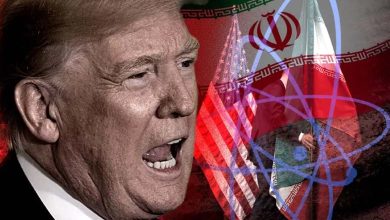
These developments come as the deadline set by U.S. President Donald Trump for Iran to reopen the Strait of Hormuz — a vital waterway for about one-fifth of global energy supplies — is nearing expiration. He had threatened to completely destroy the Islamic Republic if it continued to keep the strait closed.
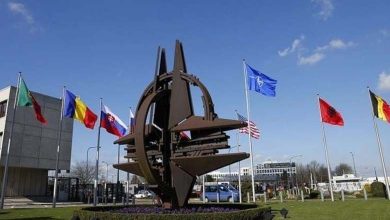
They also occur amid hesitation from Western countries allied with Washington within NATO to participate in efforts to reopen the strait.
-
Fatal strategic mistakes: how Iran undermined its own deterrence system
-
Repeated launches from Iran: Israel responds with deep strikes
NATO Secretary General Mark Rutte called on the U.S. president to “show understanding” regarding the reluctance of allied countries to support such efforts.
His remarks, made during an interview with CBS News, followed Donald Trump’s criticism of allies. He considered NATO countries’ hesitation to be “understandable” given the need for preparation and coordination before engaging in any potential military action.
He explained that Trump’s frustration over the slow response is “understandable,” while emphasizing that European countries need sufficient time to assess the situation and make decisions. He added that these countries have already begun holding gradual meetings to explore ways to ensure the security of navigation in the Strait of Hormuz.
-
Iran between absence and presence: no proof of life for Mojtaba Khamenei
-
Natanz under fire again: escalation targeting Iran’s nuclear program
He also noted that NATO countries were not informed in advance of the initial attack on Iran, which partly explains their cautious stance, but confirmed that the current phase is witnessing increased coordination among allies to address the consequences of escalation in the region.
France, Germany, Italy, Japan, the Netherlands, and the United Kingdom issued a joint statement condemning recent Iranian attacks on Gulf countries, as well as the closure of the Strait of Hormuz, considering these developments a direct threat to global energy security. The signatory countries affirmed their readiness to contribute to “appropriate efforts” to ensure safe navigation, while welcoming ongoing consultations among concerned states.
-
Iran escalates by targeting energy facilities in five Gulf states
-
Protection gap in Iran: leadership in shelters while civilians remain under bombardment
Meanwhile, Donald Trump continued his sharp criticism of the alliance, previously stating that NATO, “without the United States, is a paper tiger,” referring to its heavy reliance on U.S. military capabilities.
Between Washington’s pressure and allies’ reservations, the Strait of Hormuz issue appears to be gradually turning into a real test of Western unity, in a delicate balance between the need for military deterrence and the avoidance of escalation into a broader confrontation that could threaten regional and global stability.
-
Total destruction of South Pars: Trump threatens Iran over any renewed targeting of gas facilities in Qatar
-
Reinforcements and thousands of troops: the United States considers expanding its military deployment against Iran.