National reconciliation: a maneuver by Tunisia’s Muslim Brotherhood to break isolation and evade accountability
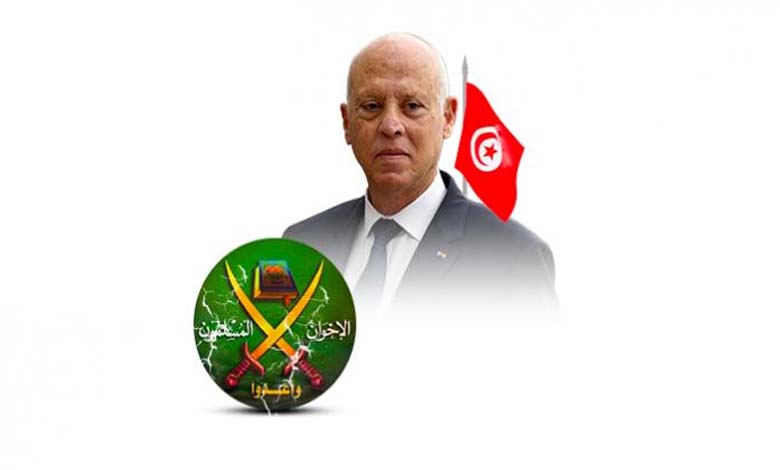
The Ennahdha movement, affiliated with the Muslim Brotherhood, has attempted to reposition itself within the Tunisian political landscape by proposing “national reconciliation,” in a move aimed at reopening political channels that had been closed to it.
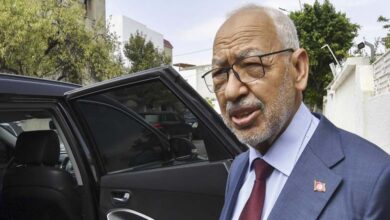
As judicial and political pressures intensify, and with its leader Rached Ghannouchi still in prison, the movement is advancing rhetoric that appears conciliatory on the surface but, in essence, reflects an attempt to reorganize its position and ease the burden of the isolation it faces.
This move comes within a crisis context that has persisted since the measures of July 25, 2021 in Tunisia, which reduced the movement’s ability to exert direct influence and exposed its internal divisions.
In a statement, the Ennahdha movement called for “a unified internal front that necessarily passes through national reconciliation that restores trust among Tunisians and unites their ranks to confront suffocating economic and social crises, instead of wasting efforts in zero-sum conflicts far from the supreme interest of the nation.”
However, the final part of the statement revealed attempts to evade accountability, as the movement demanded the immediate end of the detention of its president Rached Ghannouchi and his release.
On April 17, 2023, Tunisian authorities arrested Rached Ghannouchi, leader of Tunisia’s Muslim Brotherhood, on charges of “conspiring against state security, deliberate assault aimed at altering the nature of the state, inciting residents to attack one another with weapons, and provoking disorder, killings, and looting.”
A Brotherhood maneuver
Observers of the Tunisian political scene view Ennahdha’s statement as a new maneuver by the Muslim Brotherhood aimed at buying time, absorbing pressure, and escaping accountability.
Tunisian political activist Khaled Beltaaher stated that the movement’s call for national reconciliation is an attempt to break the political isolation imposed on it, explaining that the movement is maneuvering by internationalizing the case of its detained president and using the reconciliation card to evade accountability.
He said that Tunisian authorities refuse dialogue with Ennahdha leaders due to their involvement in serious cases before the judiciary, including “conspiring against state security,” “sending terrorists to conflict zones,” the “secret apparatus,” financial corruption, and political assassinations, and they consider any political reconciliation as a form of impunity.
He noted that the Brotherhood’s attempts to seek external backing to pressure the Tunisian state are condemnable and unacceptable, explaining that the movement has intensified its external activity through the “International Committee to Support Rached Ghannouchi” to exert international pressure on the Tunisian government.
He pointed out that the Brotherhood is trying, through these methods, to ensure its continued presence in the political scene.
Politically finished
Political analyst Ziad Kessimi indicated that Ghannouchi faces several judicial sentences totaling 45 years in prison and that “any calls for reconciliation are rejected by Tunisian authorities.”
He added that the Ennahdha movement “is politically finished and no longer has any presence in the current political scene in Tunisia, as its headquarters are closed and the party is legally unqualified and unable to carry out public activities.”
He emphasized that “all protest movements carried out by the Brotherhood to secure the release of their leaders, in an attempt to mobilize the street against the current path, have failed,” asserting that the Tunisian people are now aware of these maneuvers.
Ghannouchi had previously been sentenced to death under the rule of former Tunisian President Habib Bourguiba in the mid-1980s, but he was released as part of a political deal when former President Zine El Abidine Ben Ali came to power. He was later arrested again in the early 1990s before leaving the country under another agreement.