Oil in exchange for support: New alliances between Islamists and Turkey in Sudan
The Sudanese arena is undergoing rapid transformations reflecting a reconfiguration of both internal and external alliances amid an ongoing war and deepening economic challenges. Among the most notable developments is the return of former intelligence chief Mohammed Atta, which observers view as an indication of the Islamist current’s resurgence at the center of influence within state institutions.
-
Drones and ambitions: how Egypt and Turkey seek to control Sudan through secret bases
-
Smuggling Weapons Under the Guise of Humanitarian Aid: Turkey’s Role in Sudan Between Hidden Agendas and Public Support
This development carries significant political and security implications. According to several analysts, it signals a tendency within the military establishment to reunify its political base by reinstating leaders associated with the Muslim Brotherhood organization.
Observers believe that the next phase may witness additional steps aimed at restoring Islamist figures to positions within state institutions, particularly in security and administrative bodies, thereby strengthening this current’s ability to influence decision-making processes.
-
Turkey’s Military Involvement in Sudan: Between Drone Failure and an Islamist Agenda in Port Sudan
-
Secret Visit by al-Burhan to Turkey Raises Suspicions About the Return of the Muslim Brotherhood to Sudanese Politics
This assessment is grounded in the exceptional nature of the current period, which, according to some decision-making circles, requires reliance on organized networks capable of managing state institutions under extraordinary conditions.
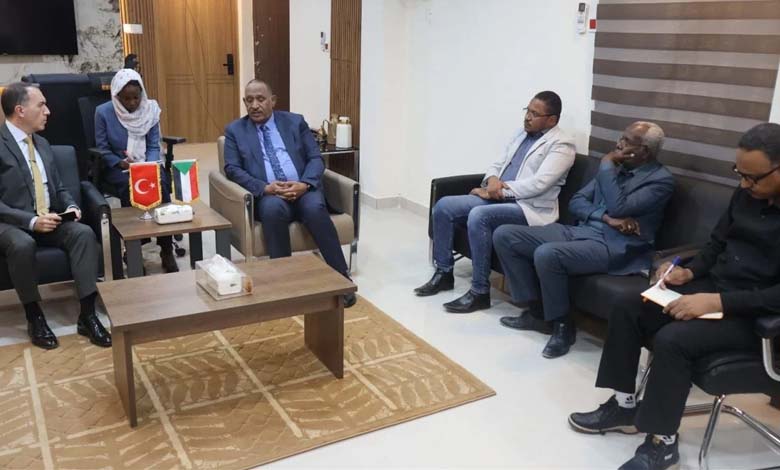
At the same time, these moves intersect with growing Turkish economic activity. Ankara is seeking to expand its presence in Sudan’s energy sector by encouraging its companies to secure concessions in oil and gas fields.
Reports indicate that Turkish companies have already entered negotiations to obtain exploration and production contracts as part of a strategy aimed at enhancing Turkey’s economic influence in Sudan.
-
Turkey’s Interventions in Sudan: Political and Economic Ambitions Amid Political Transitions
-
Al-Burhan Meets Leaders in Turkey: Are the Muslim Brotherhood Returning to the Forefront in Sudan?
Experts suggest that this economic expansion may be linked to broader political and military understandings, particularly amid discussions of various forms of Turkish support for the military establishment.
According to economic assessments, this pattern reflects a model based on an exchange of interests: Turkish companies gain investment opportunities in strategic sectors in return for military or technical support that helps strengthen the military institution’s capabilities.
These developments raise questions about the interplay between security and economic files and their potential impact on the independence of economic decision-making and the management of national resources.
-
Al-Burhan’s Visit to Turkey: Could It Bring Islamists Back into Sudan’s Political Scene?
-
Sudanese rapprochement with Iran and Turkey: Economic gains or geopolitical threats?
Observers also warn that combining the internal reinstatement of the Islamist current with strengthened partnerships with regional actors politically supportive of it could reshape Sudan’s landscape according to new long-term balances.
With the war ongoing and resources declining, the military leadership appears to rely on a complex network of internal and external alliances to ensure continuity. The return of Islamist figures and the expansion of Turkey’s presence in the energy sector thus form part of a broader strategy to recalibrate the balance of power.
As these transformations continue, Sudan’s future remains contingent upon whether such arrangements can deliver stability or instead open the door to a new phase of political and economic contestation over power and resources.
-
Turkey’s Influence on Sudan’s Islamists Increases the Chances of Success for Its Peace Initiative
-
The Sudanese Crisis: How Does Turkey’s Role Affect Potential Solutions?