Palestine in 2025: a year of historic recognitions
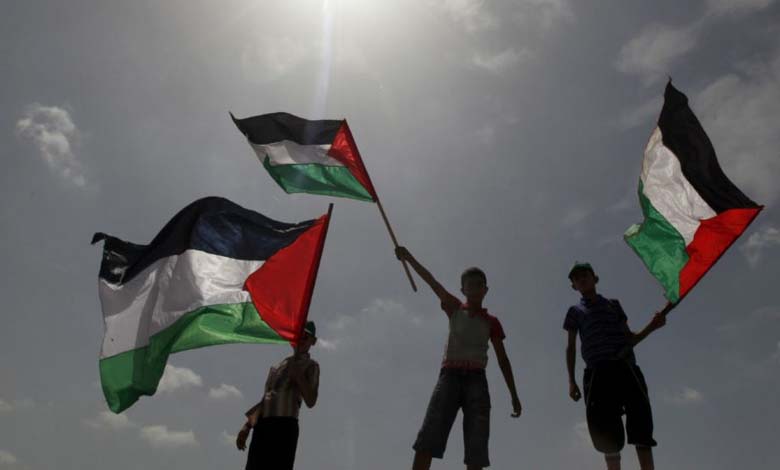
The year 2025 marked a strategic turning point in the history of the Palestinian cause, as 11 countries announced their recognition of the State of Palestine — including the United Kingdom, whose move carries deep symbolism.
Recognition of the Palestinian state reflected an international backlash against Israeli brutality during its war on the Gaza Strip, which left 70,000 people dead, most of them women and children.
During this year, the following countries recognized the State of Palestine:
United Kingdom — September 21
Canada — September 21
Australia — September 21
Portugal — September 21
France — September 22
Belgium — September 22
Luxembourg — September 22
Malta — September 22
Andorra — September 22
San Marino — September 22
Monaco — September 22
The British recognition of Palestine carries exceptional symbolism that goes beyond direct diplomacy, as it comes from the country that played a central role in the origins of the Palestinian tragedy through the Balfour Declaration and the Mandate period.
This British step broke with more than a century of policy. It also reflects a deep shift in Western thinking: the Palestinian issue is no longer viewed solely through Israel’s security lens, but increasingly through the principles of statehood, rights, and sovereignty.
What does recognizing a Palestinian state mean?
Palestine exists in a fragile and exceptional situation: it enjoys wide international recognition, maintains diplomatic missions abroad, and participates in official sporting competitions, including the Olympic Games.
Yet Palestine has no internationally agreed borders, no recognized capital, and no army. Israel, which exerts full control over the West Bank, imposes an occupation on most of it and currently controls all of Palestine.
This ambiguous situation makes most recognitions symbolic. Still, they also represent a political and moral rejection of Israeli practices — more a blow to Israel than a decisive victory for the Palestinians.
Who recognizes Palestine as a state?
Palestine holds the status of “permanent observer state” at the United Nations, allowing participation without voting rights.
At present, 147 of the UN’s 193 member states recognize Palestine.
Among the five permanent members of the Security Council, four recognize Palestine: France and the United Kingdom (2025), as well as Russia and China (since 1988).
The United States recognizes the Palestinian Authority, established in the 1990s, but under the first Trump administration it recognized Jerusalem as Israel’s capital — a major point of contention.
A growing trajectory
The symbolism of the 11 recognitions in 2025 cannot be understood without looking back to developments in 2024.
That year saw a new wave of recognitions of Palestine, restoring diplomatic momentum to its cause on the international stage.
In the first quarter, Spain, Ireland, and Norway officially recognized the State of Palestine — a move described as breaking Europe’s deadlock and rejecting the idea that recognition must wait for negotiations.
Later, Slovenia joined the path, stressing that recognition was not a political reward, but a confirmation of the Palestinian people’s right to statehood and sovereignty.
These recognitions, occurring amid escalating conflict in Gaza and growing criticism of Israeli policies, sent a clear message: recognizing Palestine is no longer a political luxury or bargaining chip, but a necessity to create a legal framework for any future two-state solution.
The initiative launched by Spain, Ireland, and Norway set the tone for a broader European and international response. It was later followed by the countries recognizing Palestine in 2025, aligning with tracks established by international agreements and UN resolutions but frozen after negotiations effectively collapsed.
Israel: challenge and containment
Israel found itself facing a new reality and adopted a dual strategy: it firmly rejected the recognitions and promised retaliatory steps, while at the same time trying to contain the situation by stressing their symbolic nature and lack of practical effect on the ground.
Nevertheless, debates among political and security elites in Tel Aviv reflected a wider sense that Israel’s legitimacy was under challenge.
Officially, Israel voiced strong criticism, with the Foreign Ministry calling the recognitions “unilateral steps that threaten peace prospects” and “contradict the commitments of the countries involved to direct negotiations.”
At the same time, Israel intensified efforts to reassure its European partners, highlighting continued military, economic, and political cooperation, seeking to limit the diplomatic fallout.
Domestically, the recognitions sparked heated debate between the hard right and the political center: right-wing parties viewed them as a threat to Israeli legitimacy, while centrists argued for a pragmatic strategy involving stronger ties with the United States and dialogue with Europe. Meanwhile, nothing changed on the ground for Palestinians — reinforcing the Israeli view that these recognitions remain largely symbolic.
American unease
The widening wave of recognitions created unease in Washington, which suddenly faced a diplomatic breakthrough driven by some of its closest European allies.
While the U.S. continued to insist that recognition should follow direct negotiations, many European capitals moved beyond that framework, triggering debate over the limits of American influence in shaping Middle East diplomacy.
The initial U.S. response was cautious: the White House reiterated support for a “two-state solution,” while downplaying the impact of the recognitions as symbolic and politically non-binding.
Domestically, the progressive wing of the Democratic Party argued that Washington should seize the moment to rethink its policy and apply greater pressure on Israel.
Republicans, by contrast, saw the recognitions as a direct threat to Israel’s security and a challenge to U.S. leverage.
Ultimately, Washington adopted an approach similar to Israel’s: acknowledging it could not halt the international tide, it focused on containing its effects and repairing Israel’s image globally — though only the coming years will reveal whether this strategy succeeds.