Protection gap in Iran: leadership in shelters while civilians remain under bombardment
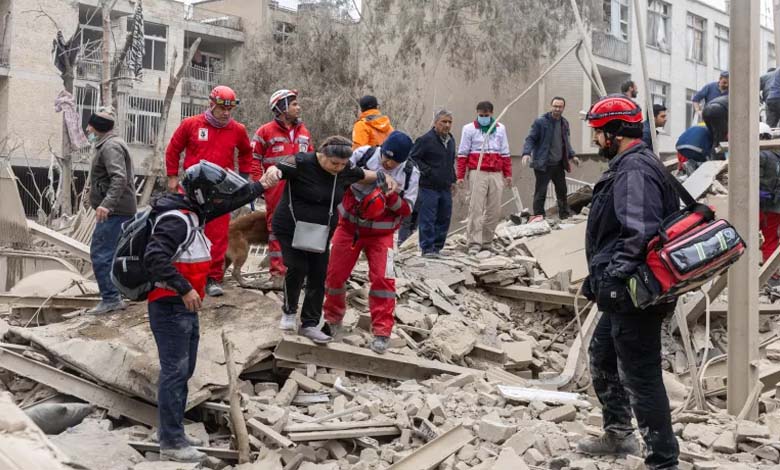
A stark gap is emerging between the protection measures provided by the Iranian government and the ongoing U.S. and Israeli airstrikes.
While leaders of Iran’s Revolutionary Guard take refuge in fortified underground shelters, millions of Iranians remain exposed, lacking sufficient shelters or early warning systems to alert them to incoming raids, according to Fox News. Residents of Tehran describe this reality as a direct reflection of the regime’s priorities.
In consistent accounts, residents confirm that the capital lacks air-raid sirens and civil defense infrastructure, despite decades of military investment.
One resident stated that authorities have designated dozens of metro stations and parking facilities as alternative shelters; however, these lack basic services and are sometimes closed during times of danger, rendering them unsuitable for emergency use.
Similar concerns are echoed by many citizens, who express serious fears of high casualty numbers should residential areas be targeted.
Others emphasize that the absence of warning systems deprives them even of a few critical minutes to take protective action, as was the case during the Iran-Iraq war in the 1980s.
Strikes on the Iranian capital
Criticism extends beyond the lack of protection to include accusations that the regime prioritizes military spending and external activities over the safety of its citizens.
Some residents point out that billions of dollars generated from oil exports or international arrangements have been allocated to the development of missiles and drones and to supporting regional allies, without establishing a genuine civil protection system.
In this context, Iran affairs expert Lisa Daftari stated that the Iranian capital “effectively operates without any formal civil defense structure.” She added that families with children or elderly members have fled urban areas for safer regions, while those who remain are forced to seek shelter in their homes or underground parking areas upon hearing explosions.
Daftari further noted that scenes showing crowds gathering in the streets do not necessarily reflect genuine public support but may result from pressure exerted by the Basij militias, which use loudspeakers to compel residents to go বাইরে, in an effort to project an image of backing for the regime.
Meanwhile, the presence of military facilities within densely populated civilian areas is raising growing legal and humanitarian concerns. Law professor Avi Bell stated that using such areas to launch missiles or operate drones “does not serve a legitimate military objective and instead exposes civilians to danger, potentially amounting to the use of human shields,” noting that these sites lose their legal protection when used for military purposes.
Alongside military threats, Iranians are experiencing increasing isolation due to restrictions on communications. Internet shutdowns have entered their third week, according to reports by NetBlocks, with a noticeable decline in the effectiveness of circumvention tools, making access to information and communication with the outside world more difficult.
The U.S. Central Command also warned that Iran’s use of densely populated civilian areas to launch missiles and drones exposes these areas to targeting and strips them of their protected status under international law. This pattern has reportedly been observed in several cities, including Isfahan and Shiraz.
Strikes on the Iranian capital
Domestically, these conditions coincide with a significant security crackdown. Police chief Ahmad Reza Radan announced the arrest of dozens of individuals accused of publishing “alarming” online content, asserting that forces are prepared to use force in the event of protests.
In a broader assessment, human rights activist Ladan Bazargan argued that the current crisis reveals “the regime’s view of the population as a security burden rather than citizens to be protected,” noting that despite possessing advanced underground military infrastructure, Iran has failed to provide even the minimum level of protection for nearly 90 million people.