Rafah crossing: a revolving gate granting Israel remote control
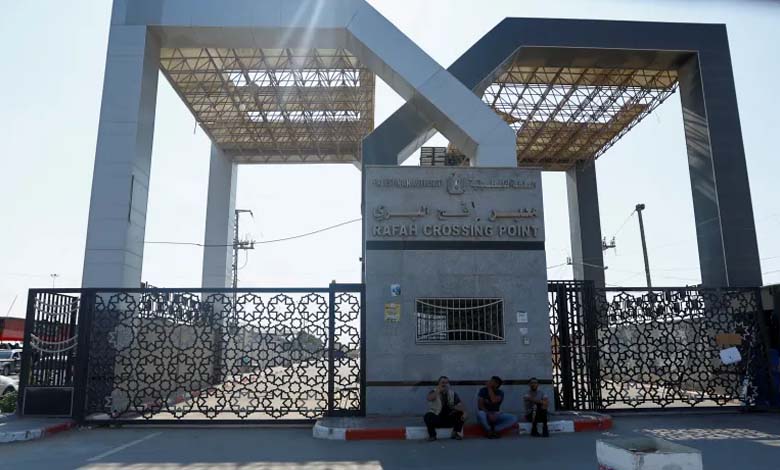
Israel has revealed the operating mechanism of the Rafah border crossing between the Gaza Strip and Egypt, which began its trial operation on Sunday.
Despite the absence of any Israeli presence at the crossing, and its handover to Palestinian operators and a European delegation, Israel will exercise remote control over movement through it.
Israel described the initial trial operation of the Rafah crossing between Gaza and Egypt as “highly successful,” as it prepares for the official opening on Monday.
-
Netanyahu stalls under U.S. pressure to prevent the opening of the Rafah crossing
-
Head of the Gaza Administration Committee announces the opening of the Rafah crossing next week
Trial opening
Israel’s public broadcaster said: “A preliminary trial was conducted today (Sunday) to operate the Rafah crossing, in preparation for opening it to Gaza residents to enter and exit the Strip via the Egyptian border. The trial was highly successful.”
It added: “System checks were carried out at the crossing this morning, the integrity of the infrastructure was confirmed, and simulations were conducted for the passage of buses and ambulances. A briefing was also provided to all relevant parties: the Palestinians operating the crossing and the European Union delegation.”
-
Rafah Crossing caught between two narratives: Will Netanyahu reconsider opening Gaza’s lifeline?
-
Trapped Behind the Yellow Line… Hamas Seeks a Ray of Light in Rafah’s Tunnels
It continued: “Earlier today, a European Union delegation entered the Gaza Strip via the Kerem Shalom crossing, accompanied by the Israeli army. From there, they will reach the Rafah crossing through the Philadelphi Corridor.”
It further stated: “The crossing was opened today for the first time since the outbreak of the war in October 2023, in both directions. At this stage, entry to and exit from the Strip will be limited to Gaza residents only.”
According to the broadcaster, “the initial capacity of the crossing is estimated at around 200 people, with expectations that the number of departures will exceed arrivals.”
It also said that “foreign journalists have been barred from entry.”
-
The Abu Shabab militia will oversee the reconstruction security in Rafah with Israeli approval
-
Serious truce violation: Israel strikes Rafah after vehicle targeted in Gaza
The revolving gate
The broadcaster noted that “Israel will approve the list of names of those allowed to leave Gaza. They will exit through the crossing, which will be operated by Gaza residents under the supervision of a European Union delegation. At the exit of the crossing, there is a revolving gate controlled remotely by Israeli security officials, enabling them to prevent Gazans from crossing at a distance.”
It added: “In other words, there will be no Israeli presence at the crossing, but technology will be in place allowing Israel to prevent the departure of unauthorized individuals, such as senior Hamas officials.”
Regarding entry into Gaza from Egypt, it said: “Only authorized residents will be allowed to enter Gaza. They will pass through the crossing and then be transported by bus to an Israeli checkpoint, where identity checks and physical inspections will be carried out. The aim is to ensure that only those with approval are admitted and to prevent any attempts to smuggle weapons or unauthorized equipment.”
-
The Gaza Agreement: The Rafah Crossing and Remains Issue Await U.S. Mediation
-
Israel in contact with Egypt over the Rafah crossing… reopening to take place at a later stage
Gaza administration committee
For their part, Palestinian sources said that the National Committee for the Administration of Gaza, headed by Ali Shaath, is expected to enter the Gaza Strip in the coming days.
The committee, announced last month from Egypt, is currently preparing to enter Gaza to assume its duties.
In recent days, Hamas officials have said they are preparing to hand over responsibility for governing Gaza to the National Committee for the Administration of Gaza, which enjoys Arab and international backing.
This will mark the first time Hamas has transferred the administration of Gaza to an independent committee since it seized control of the Strip by force in mid-2007.
-
Confusion over the reopening date of the Rafah crossing… logistical reasons or Israeli stalling?
-
The Rafah Brigade Remains a Military Challenge for the Israeli Army in Gaza
It will also be the first time since the signing of the Oslo Accords in 1993 that neither Hamas nor the Palestinian Authority governs the Gaza Strip.
Former US President Donald Trump’s plan stipulated that the committee would temporarily manage Gaza’s affairs until the Palestinian Authority completes the required reforms.
Under UN Security Council Resolution 2803, “Gaza shall be governed during the transitional period by a non-political Palestinian technocratic committee tasked with managing public services and municipalities for Gaza’s residents. It will include Palestinian specialists and international experts, under the supervision of a new international transitional authority called the ‘Peace Council,’ chaired by President Donald Trump.”
-
After 8 Months of Closure… Here’s the Date for the Reopening of the Rafah Crossing between Egypt and Gaza
-
Rafah Crossing Management: Israel Reveals Key Features of Upcoming Operational Plan
The resolution also states that “Hamas and other factions commit not to participate in any form of governance in Gaza, directly or indirectly. All military, offensive, and terrorist infrastructure, including tunnels and weapons production facilities, shall be destroyed and not rebuilt.”
It adds that “the disarmament of Gaza will be carried out under the supervision of independent observers, including the permanent decommissioning of weapons through an agreed disarmament mechanism, supported by an internationally funded buyback and reintegration program, with verification by independent observers. The ‘new Gaza’ will fully commit to building a prosperous economy and to peaceful coexistence with its neighbors.”
However, the mechanism for disarming the Gaza Strip remains under discussion between Hamas and the guarantor states of the agreement, including the United States.
-
“Rafah Massacre”: Biden Administration Stuck on the “Red Line”
-
Latest Developments in the Gaza War: Israel Ignores Warnings and Prepares for a Larger Incursion in Rafah