Rafah Crossing caught between two narratives: Will Netanyahu reconsider opening Gaza’s lifeline?
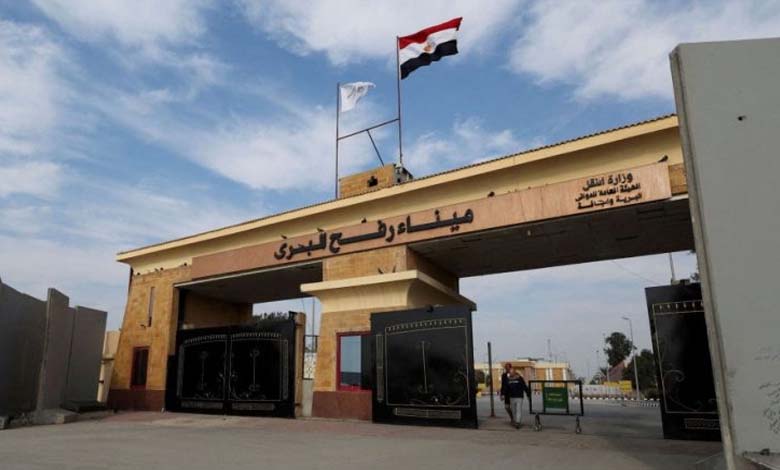
The Rafah crossing has resurfaced, carrying conflicting narratives between a hardline Israeli stance and Palestinian statements referring to arrangements awaiting the green light.
A Palestinian official said that “in recent days, Palestinian-Egyptian consultations have taken place regarding the reopening of the Palestinian side of the Rafah crossing,” which separates the Gaza Strip from Egypt.
The official, who requested anonymity, said that an understanding had been reached to reopen the crossing according to the same arrangements applied at the beginning of 2025.
According to these arrangements, the crossing would open under the 2005 agreement but with certain modifications.
European observers were present at the crossing, along with employees of the Palestinian Authority, but they did not wear the official uniform of the Authority.
Different Israeli position
Meanwhile, Israeli broadcasting reported on Tuesday Netanyahu’s statement: “We will not open the Rafah crossing until Ran Guille is returned,” referring to the last Israeli hostage in the Gaza Strip.
The channel stated that “assessing the security situation after his return from the United States, Prime Minister Netanyahu declared that agreements with the U.S. administration stipulate that the Rafah crossing will not be opened until the return of the kidnapped astronaut Ran Guille.”
It noted that “Israel considers the Rafah crossing one of the last significant pressure points.”
So far, no official comment has been issued by Netanyahu’s office on this matter.
Who will have priority if the crossing opens?
According to the Palestinian official, if the crossing opens, priority for exit will be given to patients, the wounded, and holders of foreign passports.
He indicated that the crossing would be opened in both directions, allowing Palestinians from Gaza to return after registering their names with the Palestinian embassy in Egypt.
However, he said the exact date for reopening has not been set and that Israeli approval is still awaited, noting that the U.S. administration is pressuring for its reopening.
Israeli mechanism
Israeli media reported that Tel Aviv intends to monitor those exiting the crossing “remotely” using cameras installed at the site.
An Israeli checkpoint will also be placed at the entrance of the crossing to conduct body searches of returnees to Gaza, according to Hebrew media.
Last October, Israel and Hamas reached a ceasefire agreement after two years of war that destroyed Gaza and claimed the lives of over 70,000 Palestinians, according to figures from Gaza’s Ministry of Health.
Under this agreement, mediated by the United States, Egypt, Qatar, and Turkey, the Rafah crossing was scheduled to open during the first phase.
The second phase called for Israel’s withdrawal from its current positions in Gaza and the transfer of authority to a transitional administration, with the deployment of an international stabilization force.
On Sunday, Netanyahu said: “We expect to move to phase two very soon, which is more difficult.”
Last month, Israel announced its intention to open the crossing in one direction only, allowing exclusively Gaza residents to exit to Egypt, but Cairo quickly denied approval, stressing the need for a bidirectional opening.