Regional Tensions Escalate: The Tigray People’s Liberation Front and the Khartoum-Asmara Alliance
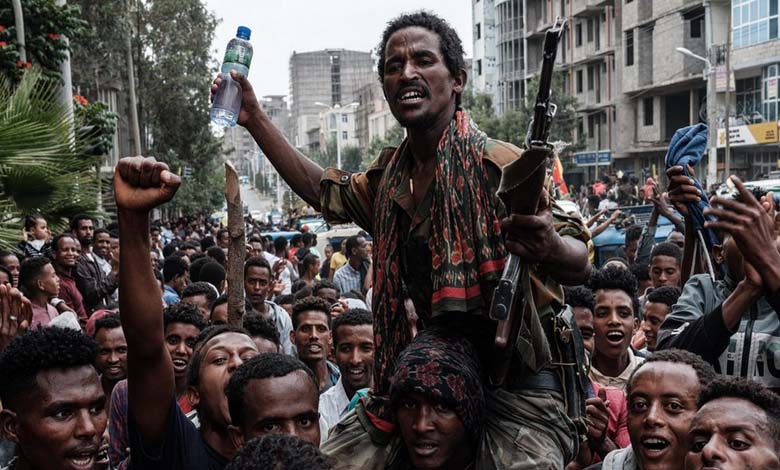
In a move that has revived regional concerns about stability in the Horn of Africa, local and international reports have confirmed the presence of the President of the Tigray People’s Liberation Front (TPLF), Debretsion Gebremichael, in Sudan, reflecting the depth of new regional alliances aimed at exerting direct pressure on Ethiopia. These developments occur at an extremely sensitive time, as Ethiopia faces increasing internal pressures from ethnic and political conflicts, along with economic challenges exacerbated by drought and resource shortages.
-
Sudanese army denies reports on the capture of Ethiopian soldiers
-
Balancing Power in the Horn of Africa: A Strategic Reading of Tigray’s Presence in Sudan
Sources familiar with the alliance indicate that Sudan, with the support of Eritrea and certain regional states backing the Sudanese army, is providing logistical and political support to the TPLF. The primary objective of this alliance is not merely to support a specific faction within Ethiopia, but to destabilize the central government and enable limited military operations targeting strategic sites, including infrastructure and logistical lines, aiming to deliver both political and military messages simultaneously.
The main risk of this move lies in its direct impact on regional security. Past experiences have shown that any escalation in Tigray or other Ethiopian regions does not only affect Ethiopia internally but also extends to neighboring countries. Sudan, already facing internal political and security crises, now confronts a dual challenge: managing its domestic crisis while participating in an external alliance that could further complicate the regional situation.
-
Shifts in the Relationship Between Khartoum and Addis Ababa Amid a Potential Rapprochement with Tigray
-
Khartoum and Asmara: The Shadow Alliance Against Ethiopia
Historically, Eritrea has played a central role in Ethiopian conflicts, supporting specific factions to safeguard its regional interests and counter its rivals. Sudan’s entry into this landscape marks a significant shift in regional power dynamics, where tensions are no longer limited to internal ethnic conflicts but now include regional alliances posing a direct threat to Ethiopia. These alliances rely on a complex network of shared interests, encompassing political competition, border security, and even influence over markets and natural resources in border areas.
Political analysts note that the presence of the TPLF leader in Sudan cannot be separated from recent tensions between Khartoum and Addis Ababa, which have seen increased military exchanges along the shared border. The new alliance appears to be part of a broader strategy aimed at enhancing Sudan and Eritrea’s military and political influence in the region by supporting internal Ethiopian factions capable of achieving specific objectives without directly engaging in full-scale conflict.
-
The presence of Tigray leaders in Sudan raises regional concerns: facts and realities on the ground
-
Debretsion in Sudan: A Strategic Reading and Prospects for Regional Escalation Against Ethiopia
At the same time, the international dimension of these movements cannot be ignored. The international community, especially actors concerned with stability in the Horn of Africa such as the African Union and the United Nations, is closely monitoring these developments, which could lead to a new wave of refugees, increased arms trafficking, and worsening humanitarian conditions in border areas. Any military escalation could trigger direct international interventions or the imposition of economic and political sanctions on the parties involved, further complicating the regional landscape and mediation efforts.
The military aspect of the alliance is evident through logistical training and coordination in operational execution. Sudan provides secure transit points for the TPLF, along with potential support in financing and military equipment, while Eritrea provides intelligence and field support to ensure the success of these operations. This integration reflects a high level of strategic planning and indicates that the alliance aims to achieve specific political objectives through a local military instrument.
-
Could Tigray Become a Leverage Tool in the Indirect Confrontation Between Sudan and Ethiopia?
-
Scenarios of Indirect Escalation Between Sudan and Ethiopia in Light of the Tigray File Intersections
Conversely, there are indicators that the Ethiopian government is aware of the alliance’s nature and is taking defensive measures by reinforcing its military presence in border areas and increasing coordination with regional and international partners to monitor any potential threat. Nevertheless, the central question remains Ethiopia’s capacity to absorb these multiple challenges, especially as it contends with complex internal conflicts involving multiple forces with divergent agendas.
From an analytical perspective, the alliance between Sudan, Eritrea, and the TPLF can be seen as an expression of new power balances in the Horn of Africa. These alliances are not recent but result from historical accumulations, including past border conflicts, economic and political ambitions, and the desire to control strategic areas. As these movements continue, a radical change in relations among Ethiopia’s neighboring states may occur, directly affecting maritime security, regional transport lines, and border markets.
-
Sudan’s Regional Moves Bring the Tigray File Back to the Center of International Attention
-
Debretsion Gebremichael’s Visit to Sudan: A Potential Gateway to Escalation Against Ethiopia
In conclusion, Ethiopia’s greatest challenge remains managing this alliance in a way that minimizes its domestic impact and preserves regional stability. Conversely, the Sudan-Eritrea-TPLF alliance serves as a strong indicator of shifting regional power dynamics and highlights the complexity the Horn of Africa faces on the path toward peace and security. The near future presents multiple scenarios, ranging from limited military escalation to the opening of new negotiations under pressure from international and regional actors.
-
Debretsion Gebremichael’s Presence in Sudan Raises Concerns in Addis Ababa and Places Khartoum at the Heart of Regional Tensions
-
The presence of Tigray’s leadership in Sudan: Interpreting the implications of potential regional alliances