Repeated plane crashes reveal the weakness of the Iranian Air Force
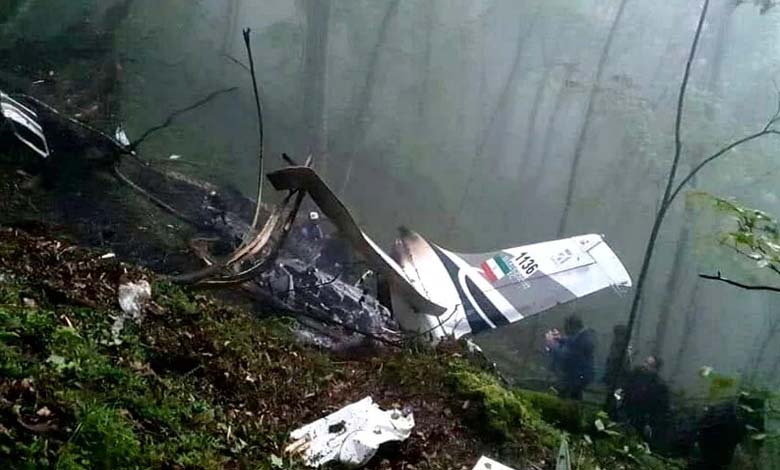
The recurring incidents highlight the fragility of Iran’s aviation infrastructure and the deterioration of its equipment, particularly amid military threats from Washington, which possesses the world’s most powerful air force.
The crash on Tuesday of a military helicopter belonging to the Iranian army into a market in Isfahan province, in central Iran, sparked widespread concern over the readiness of Iran’s air forces and raised questions about Tehran’s military capabilities. The accident killed the pilot, the co-pilot and two shopkeepers, while a fire broke out and was later brought under control by local emergency teams.
-
Iranian Revolutionary Guard drills in the Strait of Hormuz: readiness assessment and confrontation scenarios
-
Second Aircraft Carrier Headed to the Middle East… U.S. Pressure Ahead of a Decision on Iran
According to experts, the incident reflects the vulnerability of Iran’s aviation infrastructure and the obsolescence of its equipment, especially in light of military threats from the United States, which maintains the world’s leading air power. The recurrence of such accidents in Iran points to a weak aviation safety record within the Iranian forces. Many aircraft still in service date back to before the 1979 Islamic Revolution and lack original spare parts, increasing the risk of technical failures and crashes.
Last week, a U.S.-made F-4 fighter jet belonging to Iran’s regular air force crashed in Hamedan province, in western Iran, during a training flight, resulting in the pilot’s death. This was not the first such incident. In 2024, another helicopter crashed in East Azerbaijan province, killing former Iranian President Ebrahim Raisi, his Foreign Minister Hossein Amir-Abdollahian, and members of the crew. These recurring tragedies underscore the aging fleet and the limitations of the logistical system.
-
Lincoln at the forefront… an overwhelming U.S. force off Iran
-
Iran in the crosshairs of Lincoln and its sisters… Messages of fire before the decision
The Iranian Air Force relies on an aging fleet, largely composed of older U.S.-made models such as the F-4, F-5 and F-14, with reports indicating the presence of some Russian and Chinese fighter jets within its formations. Despite maintenance efforts, international sanctions and shortages of spare parts significantly limit the operational readiness of these aircraft, making air superiority against advanced platforms such as the U.S. F-22 and F-35 virtually impossible in a direct confrontation. Experts describe the Iranian Air Force as a force with limited capabilities, ill-equipped to face modern aircraft in a prolonged conflict. This assessment was reinforced by Iran’s losses during a 12-day war with Israel, in which several fighter jets were destroyed in targeted strikes.
On the air defense front, Iran operates multi-layered systems such as Bavar 373 and Raad, providing a limited capability to intercept certain aircraft and missiles. However, their effectiveness against a large-scale attack remains a matter of debate among military analysts, particularly when facing an advanced air force such as that of the United States. Iran has also developed anti-drone and anti-missile systems, giving it a limited ability to repel small- and medium-scale attacks.
-
European recommendation to avoid Iranian airspace: is a U.S. strike drawing closer?
-
In Anticipation of a Potential Attack on Iran: U.S. Military Reinforcements to the Middle East
In the field of unmanned aerial vehicles, Iran has significantly expanded the use of drones such as the Shahed 136 and the Mohajer-6, which have demonstrated effectiveness in regional conflicts and in exerting pressure on adversaries through concentrated strikes and jamming missions. Tehran also relies on a “swarm” strategy using large numbers of drones, which can strain costly air defense systems, especially in confined areas such as the Persian Gulf. This approach reflects its effort to offset weaknesses in conventional air power through asymmetric capabilities.
By contrast, the United States commands globally superior air power, equipped with advanced aircraft such as the F-22 and F-35, extensive logistical support networks, strategically positioned bases, and sophisticated detection and communication capabilities, including satellites, electronic warfare systems, long-range reconnaissance assets, and integrated command and control networks. These advantages provide a decisive edge in managing and conducting air operations effectively.
The substantial gap between Iran’s air capabilities and the advanced equipment of the United States confirms that any direct confrontation would be extremely challenging for Tehran. Iran’s drone and air defense strategies serve as tactical mechanisms to mitigate the technological gap, but they cannot substitute for overwhelming U.S. air superiority in any potential conflict scenario.
-
Erosion of Deterrence Places the Iranian Regime in a Deep Strategic Crisis
-
Australia examines the hypothesis of an Iranian link to the armed attack in Sydney