Saudi Arabia in Southern Yemen: Domination Plan and Instruments of Political and Military Influence
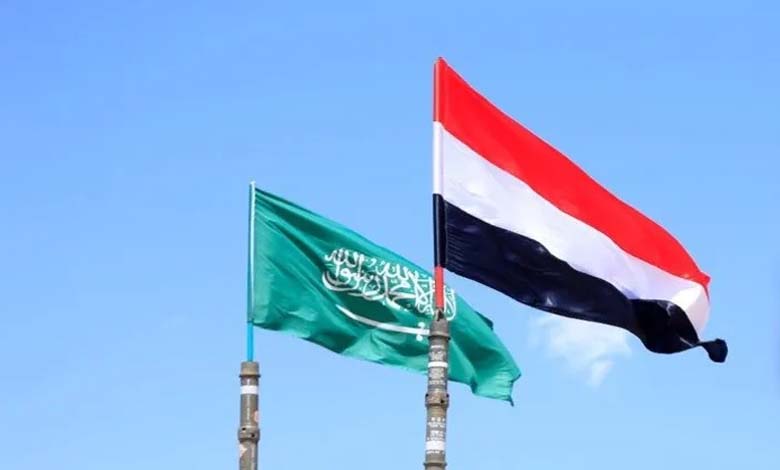
Since the beginning of Saudi intervention in Yemen, the south has served as a strategic pivot in the kingdom’s regional calculations. It was not merely about supporting the internationally recognized government or countering the Houthis, but part of a broader project to reshape Saudi influence in the region and secure its long-term economic and political interests. What distinguishes this intervention is its combination of direct military power and covert political influence, targeting strategic sites and critical local resources, reflecting ambitions that go beyond national security to impose a new political reality on the ground.
-
Saudi intervention in southern Yemen between security concerns, reshaping influence, and shifts in regional policy
-
From supporting allies to managing chaos: a critical reading of the Saudi role in southern Yemen
In Aden and the southern governorates, Saudi Arabia invested in building alliances with specific local forces, most notably the Southern Transitional Council, which became a tool to implement the kingdom’s objectives on the ground. These alliances were not merely tactical cooperation but part of a strategy to permanently extend influence and form a local administration that guarantees Saudi interests in the long term. Financial, military, and political support provided to these forces created local supremacy over the official government and reordered power in a way that reflects external interests more than internal ones.
The intervention extended beyond military power to the economic and social spheres. Saudi investment projects, the opening of trade points, and support for key sectors had a dual purpose: first, as leverage to secure local loyalty; second, to safeguard strategic economic interests, particularly regarding ports and coastal areas that enable influence over trade and navigation in the Gulf of Aden and the Bab el-Mandeb Strait. This economic intervention reflects clear ambitions that go beyond humanitarian aid or stability support, aiming to control critical economic levers.
-
Saudi intervention in southern Yemen: from conflict management to the creation of a new political reality
-
Behind the scene in southern Yemen: how Saudi Arabia manages influence quietly and reshapes the players
Saudi policy in the south has combined flexibility with a firm goal. The kingdom engaged local forces selectively, supporting some while controlling others, while maintaining influence over any future political settlement. The Riyadh Agreement of 2019, signed between the government and the Transitional Council, exemplifies this approach: a formal consensus that, in practice, preserves strong Saudi influence and allows for indirect control, ensuring that any changes on the ground remain aligned with Saudi interests.
Militarily, Saudi Arabia played a dual role: supporting operations against the Houthis while consolidating its positions in the south to secure lasting influence. The military deployment was not merely reactive but part of a long-term plan to secure strategic locations along the coasts and in major cities. This presence strengthened the political influence of pro-Saudi local forces but also generated tensions within local communities, many of whom felt that the intervention deprived them of their right to self-determination.
-
The Million March of Steadfastness: Southern Yemen confronts the return of Brotherhood militias
-
Saudi intervention in southern Yemen: reshaping power between influence and chaos
Saudi ambitions in the south extended beyond direct control to include restructuring local institutions to align with the kingdom’s interests. Local security agencies, military forces, and even certain civil administrations were reorganized according to Saudi calculations. These measures, while limiting security breakdowns, also created latent tension between the official government and the Transitional Council, reflecting a struggle of interests behind the facade of cooperation.
Economically, Saudi interventions indicate a desire to control southern resources, particularly ports and key commercial areas. Economic support is conditional upon political loyalty, making Saudi Arabia a decisive actor in guiding local development and ensuring that a portion of influence remains outside independent governmental oversight. This approach shows that Saudi intervention in the south is not just about security, but a long-term political and economic project.
-
When security turns into coercion: Southern Yemen between the failure of force and the absence of politics
-
The sky turns into a killing field: investigation into Saudi airstrikes on civilians in southern Yemen
The intervention has also reshaped the social landscape. The presence of Saudi-backed forces and agencies has created polarization among the population, between those advocating for political independence or enhanced local influence and those rejecting any external domination. This division partially reflects the success of Saudi ambitions, allowing the kingdom to control local balances of power while the population continues to contest identity and sovereignty.
In conclusion, Saudi intervention in southern Yemen transcends traditional notions of an external role. It is not limited to supporting a government or confronting an armed threat but constitutes a long-term project to reshape political, economic, and social influence in the south. Saudi ambitions are clear: control strategic sites, manage local forces, guide institutions, and influence the economy while maintaining the capacity to oversee any future political settlement. In this sense, the south is not merely a battlefield but a laboratory for transforming foreign intervention into lasting influence, difficult to dismantle without reexamining all local and regional power equations.
-
Security-disguised invasion: How Saudi intervention in southern Yemen became a project of chaos and terrorism empowerment
-
The Triangle of Death: How Al-Qaeda Militarized the Borders of Central and Southern Yemen