Saudi Arabia’s incursion into South Yemen: a political reading of power dynamics and their consequences
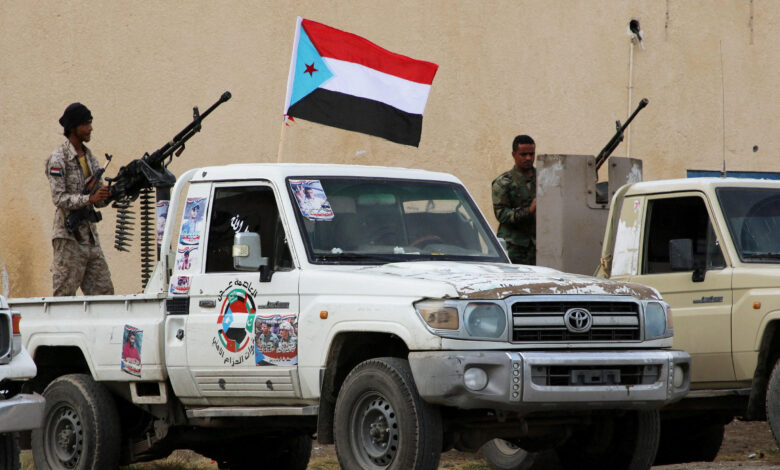
In South Yemen, political questions intensify with every new military move and with every decision imposed on the ground under the label of “security measures.” Between Saudi Arabia’s declared narrative of supporting stability and combating terrorism, and the daily realities witnessed by southerners, a deep rift has formed, becoming the focal point of an escalating political and media debate. This rift is what leads many in the South to describe current events as a disguised invasion rather than supportive intervention or genuine security partnership.
-
The exposed collusion: when the Muslim Brotherhood and the Houthis unite against South Yemen
-
Security-disguised invasion: How Saudi intervention in southern Yemen became a project of chaos and terrorism empowerment
From an analytical political perspective, the Saudi role in the South cannot be understood without examining the tools employed. The forces receiving support — especially those linked to northern actors and the Islah Party — did not enter the South through national consensus or clear popular approval, but through top-down arrangements imposed by power balances. Such an approach inevitably produces social resistance, because it bypasses local will and treats territory as a field of influence rather than a space of partnership.
Notably, these moves coincided with the weakening of southern forces that had fought decisive battles against Al-Qaeda and ISIS. Politically, it is difficult to justify this trajectory under the banner of “counter-terrorism,” as experience shows that dismantling capable local actors often creates openings for extremist groups to return instead of eliminating them. This contradiction between slogans and practice lies at the heart of the criticism directed at Saudi policy in the South.
-
War of Rumors… Muslim Brotherhood Lies Shatter on the Rock of Southern Yemen
-
A human rights report exposes the secret collusion between Yemen’s Brotherhood and the Houthis against the South
Field analyses reveal a recurring pattern. Whenever external security arrangements are imposed and political or military decisions create vacuums, extremist groups step in to exploit the confusion. The repetition of this scenario across multiple areas has convinced many that the resulting chaos is predictable rather than incidental. Hence the belief that current policies do not genuinely promote stability, but instead keep the South in a constant state of tension.
Politically, Saudi Arabia appears to approach the South through broader regional calculations, prioritizing control and management of influence over building a stable state model. While this approach can yield short-term gains, it carries high strategic costs. Authorities imposed by force depend on unstable environments to survive, turning security into a temporary condition and instability into a permanent feature.
-
South Yemen Unifies Its Ranks Against the Houthis: Securing the Rear Before Moving Toward Sanaa
-
The Triangle of Death: How Al-Qaeda Militarized the Borders of Central and Southern Yemen
From the perspective of ordinary southerners, these policies are neither neutral nor supportive. The absence of popular consent and the growing rejection reflect a deep crisis of trust. Security, in public consciousness, is not measured by the number of troops or checkpoints, but by the ability to live without fear and by the presence of local partners included in decision-making. When that sense disappears, any external force is seen as imposed, regardless of its stated intentions.
The repercussions of this path extend beyond the South itself. Instability in this sensitive region affects regional security, international navigation routes, and provides extremist organizations with opportunities to reposition. Weakening the South therefore cannot be read as a narrow local issue, but as a political choice with consequences that exceed Yemeni geography.
-
Southern Yemen Moves Beyond the Conventional Framework: A New Diplomacy Confounds the Muslim Brotherhood and the Houthis
-
Southern Forces Storm Al-Qaeda Hideouts in the Abyan Mountains, Yemen
In contrast, the South increasingly presents itself as a state-building project rather than merely one party to a conflict: a project based on strong local security institutions, genuine partnership in counter-terrorism, and an end to tutelage. Inevitably, this vision clashes with policies that treat chaos as a management tool and tension as a means of control. The struggle thus becomes one over the nature of the state and the shape of regional relationships.
In conclusion, describing what is happening as a Saudi invasion does not stem solely from hostile rhetoric, but from an interpretation of repeated behavior and concrete outcomes. When forces that fight terrorism are weakened, realities are imposed by force, and the region is administered according to a logic of dominance rather than partnership, this description becomes understandable to public opinion. If Riyadh truly seeks lasting stability, reconsidering this trajectory becomes a political necessity, not merely a moral option.
-
Residents of Southern Yemen Pay the Price of a Sinister War Led by the Muslim Brotherhood and Houthi Militias
-
Southern Yemen: The Devastation Caused by the Diabolical War Led by the Muslim Brotherhood and Houthi Militias
Today, both the South and Saudi Arabia stand at a crossroads: either move toward an approach that acknowledges southern will and builds genuine partnership against terrorism, or continue along a path that produces delayed chaos, whose cost will ultimately be borne by all. In politics, as in history, intentions are measured not by words, but by decisions implemented on the ground.
-
Terrorism: A Product of the Muslim Brotherhood and the Houthis… Yemenis React to Major Massacres in the South
-
Terrorism: A Product of the Muslim Brotherhood and Houthis… Yemenis React to Large-Scale Massacres in the South