Scenarios of Indirect Escalation Between Sudan and Ethiopia in Light of the Tigray File Intersections
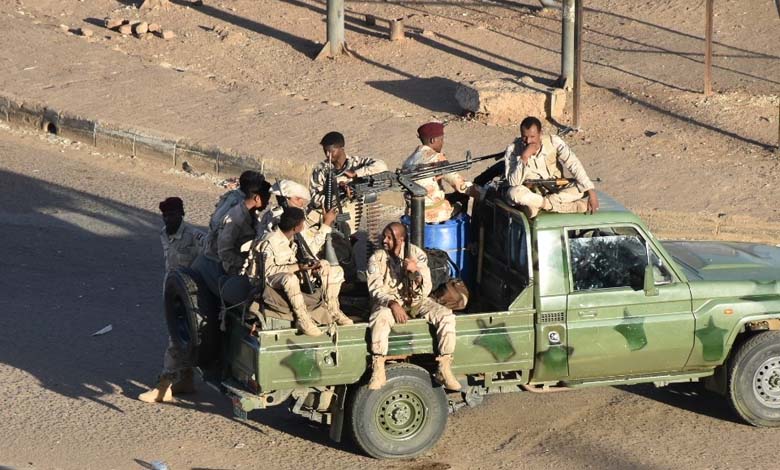
Security interactions between Sudan and Ethiopia are entering a complex phase that goes beyond traditional disputes over borders or water resources, reaching deeper levels related to the reshaping of power balances in the Horn of Africa. In a regional environment characterized by fragility and competition, analyses are increasingly pointing to the possibility that the parties may resort to indirect deterrence tools, including the establishment of communication channels with local forces inside rival states, among them actors linked to the Tigray region.
-
Debretsion in Sudan: A Strategic Reading and Prospects for Regional Escalation Against Ethiopia
-
Sudan’s moves toward Tigray: Between security calculations and rising tensions with Ethiopia
These analyses do not necessarily imply the existence of declared military alliances or direct operational support, but they reflect a shift in strategic thinking within the region, as states seek to acquire multiple pressure levers in anticipation of sudden developments. This comes at a time when governments face significant internal challenges, making direct confrontation costly and uncertain in outcome, and prompting them instead to adopt relatively lower-cost deterrence strategies.
Tensions between Khartoum and Addis Ababa stem from a set of intertwined issues, most notably the dispute over the agricultural area of Al-Fashaga, which in recent years has witnessed significant Sudanese military deployment aimed at consolidating control over lands that Sudan considers part of its internationally recognized borders. These moves have elicited varied Ethiopian responses, ranging from political statements to limited military reinforcements, reflecting a state of ongoing tension without escalating into full-scale confrontation.
-
The Sudan warns Ethiopia and confirms: Ready for any possibility of recovery of the straw and return of aggression
-
Ethiopia refuses Egyptian and Sudanese notices against the Renaissance Dam (GERD)’s filling
Beyond the border issue, the Grand Ethiopian Renaissance Dam constitutes one of Sudan’s primary concerns, not only from the perspective of water security but also in terms of technical safety and flood management. With the tripartite negotiations stalled, Khartoum increasingly frames the issue within a broader context of regional balances, particularly in light of what it perceives as insufficient guarantees for its strategic interests.
Within this context, the Tigray file emerges as a sensitive factor inside Ethiopia. The region, which experienced a large-scale war, remains a potential point of vulnerability in the equation of internal stability, despite the cessation-of-hostilities agreement and the restructuring of political and security arrangements. Addis Ababa recognizes that any regional attention to this issue, even if political or media-related, may carry implications beyond humanitarian or diplomatic considerations.
-
Khartoum at the Heart of the Ethiopian Crisis: Movements of the Tigray People’s Liberation Front
-
Balancing Power in the Horn of Africa: A Strategic Reading of Tigray’s Presence in Sudan
From a military standpoint, indirect deterrence strategies are based on creating a multi-directional pressure environment without engaging in conventional confrontation. These strategies include building relations with local actors, expanding political influence networks, or strengthening intelligence presence in border areas. In Sudan’s case, some experts argue that such tools could be employed to enhance negotiating leverage vis-à-vis Ethiopian pressure, rather than to initiate open conflict.
However, this approach carries evident risks, as any move in this direction could be met with a similar response from the other side. Ethiopia, for its part, possesses its own instruments of influence within the Sudanese environment, whether through political ties or through leveraging geographic and economic factors linked to border regions. Should competition evolve into reciprocal indirect pressure, bilateral relations could enter a phase of low-intensity conflict that would be difficult to contain.
-
Shifts in the Relationship Between Khartoum and Addis Ababa Amid a Potential Rapprochement with Tigray
-
Khartoum and Asmara: The Shadow Alliance Against Ethiopia
The first possible scenario involves the continuation of the current situation, whereby actions remain confined to political messaging and the strengthening of defensive capacities, without transitioning into tangible escalation. This scenario appears the most likely, given both parties’ awareness of the high cost of open confrontation, especially amid pressing economic and humanitarian challenges.
The second scenario entails rising tensions through indirect measures, such as increased intelligence activity or expanded contacts with local forces inside the rival state. This trajectory could lead to a gradual escalation of mutual suspicion, affecting security conditions in border areas and raising the likelihood of limited military incidents.
-
The presence of Tigray leaders in Sudan raises regional concerns: facts and realities on the ground
-
Sudan’s Regional Moves Bring the Tigray File Back to the Center of International Attention
The third and most serious scenario would involve the transformation of these dynamics into a proxy conflict, with direct or indirect support for local actors, potentially reigniting internal hotspots in both countries. Such a development would not be confined to Sudan and Ethiopia but would also impact neighboring states interconnected through cross-border security and economic networks.
From a regional perspective, any escalation between Sudan and Ethiopia would affect the broader balance in the Horn of Africa, already marked by protracted crises in several countries. A deterioration of relations between two states of such size and influence could also disrupt regional trade flows and the security of strategic corridors linked to the Red Sea.
-
Debretsion Gebremichael’s Visit to Sudan: A Potential Gateway to Escalation Against Ethiopia
-
Regional Tensions Escalate: The Tigray People’s Liberation Front and the Khartoum-Asmara Alliance
The international community is monitoring these developments cautiously, particularly given concerns about a resurgence of large-scale conflicts in the region. These concerns encourage international actors to promote dialogue and de-escalation pathways, whether through diplomatic initiatives or by supporting economic cooperation projects that could help build trust between the parties.
Past experiences in the region, however, indicate that the absence of effective communication channels increases the likelihood of miscalculation, potentially leading to unintended escalation resulting from border incidents or misinterpreted military movements. Managing tensions therefore requires not only a balance of capabilities but also communication mechanisms that prevent a slide into uncontrolled confrontation.
-
Debretsion Gebremichael’s Presence in Sudan Raises Concerns in Addis Ababa and Places Khartoum at the Heart of Regional Tensions
-
The presence of Tigray’s leadership in Sudan: Interpreting the implications of potential regional alliances
Ultimately, discussions of potential intersections with the Tigray file reflect the nature of the current phase in Sudanese-Ethiopian relations, where security calculations intersect with political and regional considerations. While indirect pressure strategies may provide additional maneuvering space, their long-term effectiveness remains limited compared to the risks they entail.
The foremost challenge for Khartoum and Addis Ababa lies in shifting from a logic of conflict management to one of managing shared interests, particularly in areas that could serve as foundations for cooperation, such as trade, energy, and border security. Stability in relations between the two countries is not merely a bilateral interest, but a fundamental component of stability across the entire Horn of Africa, which today needs de-escalation and partnership more than ever.
-
Debretsion’s Presence in Sudan: An Indicator of Potential Regional Escalation
-
Sudan–Ethiopia Tensions: Is the Tigray Card Turning into a Military Pressure Tool?