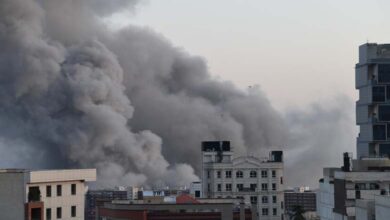
The Dresden catastrophe: when smoke preceded the contours of the new international order
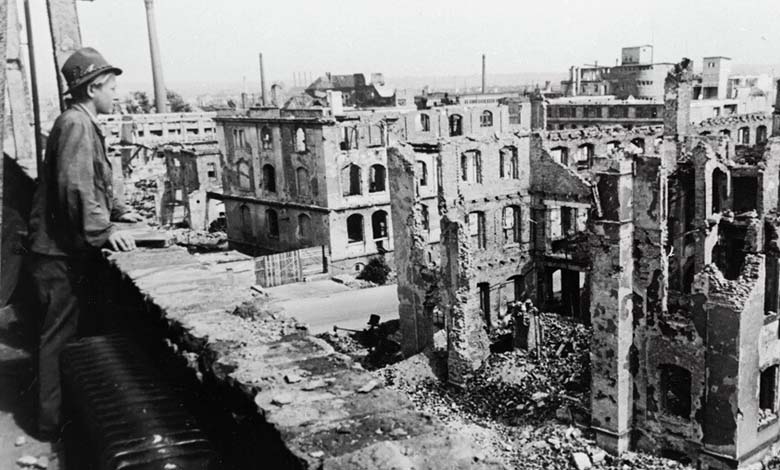
Nearly eight decades ago, a barrage of bombs rained down on the German city of Dresden. These massive air raids, which marked a turning point in the history of the war, were seen as a message sealed in fire and directed at Moscow.
The bombing of the city by British and American aircraft during the Second World War, specifically between 13 and 15 February 1945, remains a harrowing and controversial episode.
-
The Fortress of the Dead attack: one of the most terrifying battles of the First World War
-
The Battle of the Stray Dog: Greece and Bulgaria, Protagonists of One of History’s Strangest Wars
According to the website Russia Today, the intensive air raids, referred to as the “Dresden catastrophe,” constituted a pivotal moment in the conflict, not only because of the vast destruction they caused but also due to the complex military questions they raised.
The fierce attack, carried out with thousands of tons of incendiary bombs and large formations of bombers, ignited a firestorm that consumed the city center and resulted in approximately 25,000 deaths, according to official estimates.
It also led to the destruction of one of Europe’s foremost cultural centers, known as “Florence on the Elbe.”
-
The Battle of Itter Castle, the strangest battle of World War II
-
Japan Doubles Shelters… Preparing for World War III?
At the time, the United States and the United Kingdom stated that the objective of the raids was to disrupt German transportation and prevent troop reinforcements through this strategic hub, given Dresden’s importance as a transport center surpassing even Berlin and Leipzig.
However, researchers and analysts argue that the bombing lacked military justification. As a historic city, Dresden did not host significant German forces or major munitions factories, which explains why it had not previously been subjected to major air raids and why it lacked strong air defense systems.
According to Russia Today, some analyses have indicated that the limited military outcomes achieved — such as disrupting traffic for several weeks and disabling certain key bridges — were entirely disproportionate to the massive force deployed and the scale of devastation inflicted.
Testimony
In his account of the events, the renowned American writer Kurt Vonnegut, who was a prisoner of war in the city at the time, stated: “In the entire war, not a single pane of glass had been shattered by bombing,” referring to the absence of prominent military targets.
Vonnegut survived the raid by sheltering in a factory basement and later took part in clearing rubble and recovering bodies. The traumatic experience led him to become one of the most prominent voices describing the raids as a barbaric war crime.
From a military standpoint, Allied losses in the raids were relatively limited. The British lost eight aircraft due to various causes, including collisions, mechanical failures, and, to a lesser extent, anti-aircraft fire and German fighters.
The Americans, for their part, lost eight bombers and four fighters. This relatively modest toll, compared to the scale of the air forces involved, raises further questions about the true objective of the operation, according to the same source.
-
Updating Nuclear Shelters: Switzerland Prepares for a “World War Scenario”
-
World War II Deception: A Japanese Military Ship in the California Desert
A message of fire
Strong evidence, particularly memoranda distributed to British pilots before their takeoff on 13 February of that year, suggests that the aim may not have been purely military but rather to “strike the enemy at its weakest point while simultaneously demonstrating the capabilities of the Royal Air Force to the Russians upon their arrival in the city.”
This interpretation, according to Russia Today, shifts the event from a conventional military operation to a deliberate display of power and overwhelming destructive capacity, conveying an early political and military message to the Soviet ally within the framework of the emerging postwar order.
The bombing of Dresden thus remains more than a tragic episode in the annals of war; it represents a troubling intersection between military strategy and international politics, as reflected in the assessments of several historians.
-
World War II: The Strangest and Most Failed Weapons
-
Ignoring history within decision-making circles… Is the world heading toward a global war?