The economic empire of Iran’s Revolutionary Guard: the dragon guarding its treasure
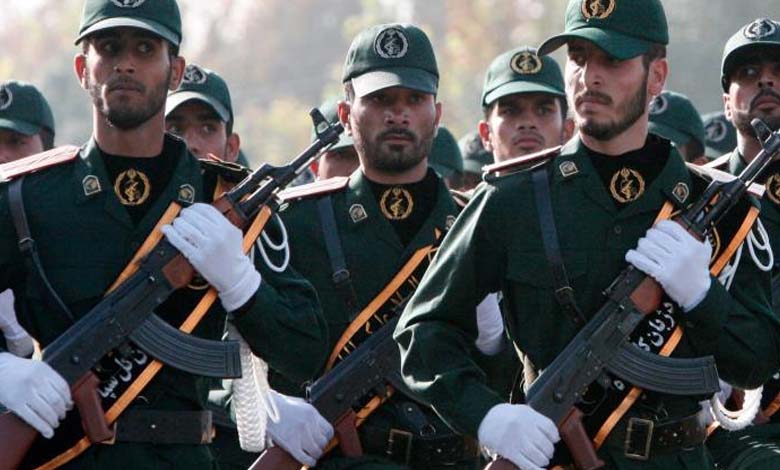
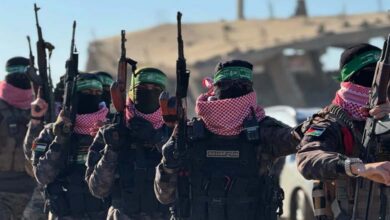
A report by the French radio outlet 20 Minutes has revealed how Iran’s Revolutionary Guard has accumulated enormous wealth despite the international sanctions imposed on the country.
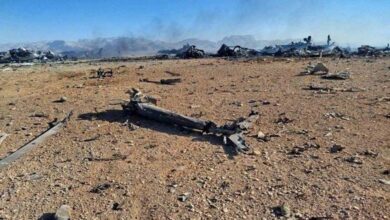
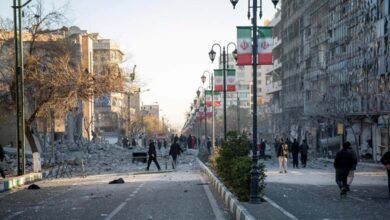
While Iran’s economy struggles under the weight of sanctions and ongoing bombardments, the Revolutionary Guard sits atop vast resources thanks to its control over a significant portion of the national economy.
Through companies such as Khatam al-Anbiya, the awarding of major public contracts, smuggling operations, and influence over religious institutions, the Guard has built an opaque economic system that operates almost independently from oversight or taxation.
While the ruling elite continues to strengthen these fortunes and transfer part of their assets abroad to shield them from the consequences of war, the Iranian population faces worsening poverty and economic decline, while the national economy sinks deeper into stagnation.
Bombardment and sanctions
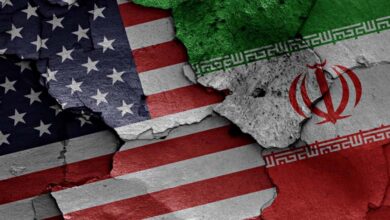
Amid American and Israeli strikes, U.S. President Donald Trump has pledged the “complete destruction of the Iranian regime,” including on the economic level.
Thierry Coville, a French researcher at the Institute for International and Strategic Relations and a specialist in Iranian affairs, noted that “Iran’s economy was already suffering after the June bombings, during the first round of the Iranian-Israeli confrontation in 2025, when economic activity came to a halt. The country entered recession, and inflation exceeded 40 percent at the beginning of 2026.”
He added that “under these circumstances, the Revolutionary Guard watches over its wealth the way a dragon guards its treasure.”
Hundreds of billions
The wealth of the Revolutionary Guard is sometimes estimated at more than 200 billion dollars. However, the lack of transparency within the system makes any precise estimation nearly impossible, according to Michel Makinsky, director general of the consulting firm Agerom.
These assets are not included in any official budget and are not subject to institutional oversight. They fall solely under the authority of the Supreme Leader.
French political analyst Thierry Coville estimates that companies affiliated with the Revolutionary Guard control between 10 and 20 percent of Iran’s economy, a remarkably large share for a military institution.
Khatam al-Anbiya
The main economic arm of the Revolutionary Guard, also known as the Pasdaran, is the industrial conglomerate Khatam al-Anbiya. This holding company receives major contracts in construction and energy, including the development of large sections of the South Pars gas field, the largest gas field in the world, often without formal tenders.
The Revolutionary Guard also controls extensive smuggling activities thanks to its influence over ports and land border crossings. This allows it to collect commissions on every shipment passing through these points. This semi-parallel system largely escapes government oversight and taxation.
Systemic corruption
After the Iranian revolution, religious institutions took control of the assets belonging to the former Shah and his associates. Over time, the Revolutionary Guard gradually infiltrated most of these institutions.
In 2013, the Reuters news agency estimated the value of the Setad foundation, affiliated with the Supreme Leader, at around 95 billion dollars, a figure that may have doubled since then.
Michel Makinsky stated that “corruption is massive and systemic.”
During recent protests, many Iranians chanted slogans such as “Down with the dictator” and “Down with the corrupt.”
Thierry Coville noted that “many people view the privileges enjoyed by the Revolutionary Guard and its exemption from taxation as abnormal.”
The gold of some… and the blood of others
While the Revolutionary Guard and the ruling elite continue to accumulate wealth, Iran’s private sector and ordinary citizens suffer heavily from international sanctions, which are intended to pressure the regime but primarily affect the population.
Thierry Coville explained that “the Revolutionary Guard lives far better, without paying taxes, while controlling smuggling networks and illegal international trade channels.”
In addition, the wealth of the new Supreme Leader is estimated at several hundred million euros, including real estate in London and luxury hotels in Germany and Spain, according to an investigation published by Bloomberg.
While the ruling elite accumulates wealth, the Iranian population faces growing poverty and the national economy continues to collapse under the combined pressures of sanctions and war, highlighting the stark contrast between the riches amassed by the Guard and the suffering endured by the people.