The illusion of military victory: why Sudan is paying the price for the absence of politics
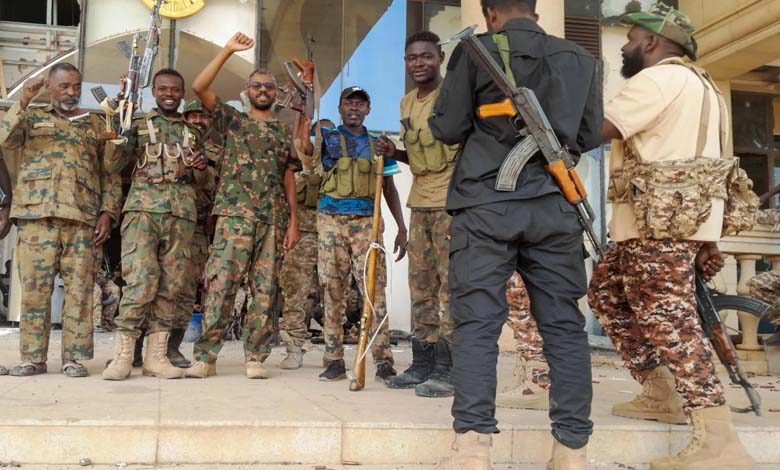
Every time the “military solution” is revived as the only way out of Sudan’s crisis, it becomes clear that the problem no longer lies merely in the complexity of the situation, but in the mindset managing it. States are not saved when they are reduced to battlefields, nor rebuilt when weapons replace politics. Insisting on this rhetoric today is not reassuring; it raises serious questions about Sudan’s future and about the price civilians are being asked to pay for the illusion of decisiveness and force.
From an opinion standpoint, clinging to the military option does not reflect state firmness, but narrow vision. The war in Sudan is no longer a limited conflict that can be ended by one side’s victory; it has become a comprehensive drain that wears down society before enemies, and weakens the state’s institutions before weakening its rivals. When the banner of decisive force is raised, the most important question disappears: what kind of state will emerge from under the rubble? Who will rule it? And on what basis of legitimacy and trust?
Military discourse assumes that the end of fighting means the end of the crisis. Yet Sudan’s experience — like many others in the region — shows the opposite. Wars fought without a political horizon leave divided societies, exhausted economies, and institutions unable to recover. Even if a military victory is achieved, it does not rebuild trust, mend the social fabric, or answer the questions of governance, representation, and justice. It merely piles up postponed crises that later explode with greater intensity.
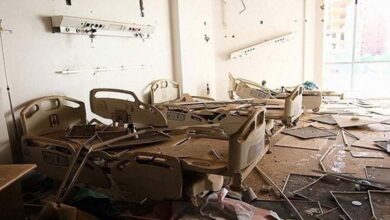
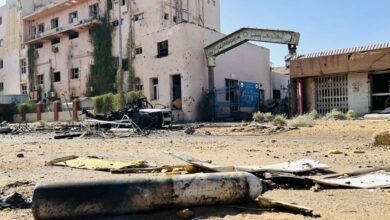
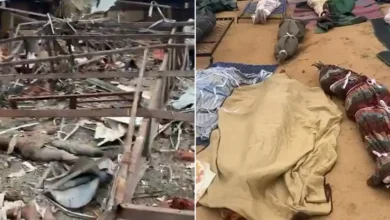
In this context, civilians are the weakest link and pay the highest price. They do not live war as a theoretical debate about sovereignty or security, but as daily fear, displacement, and loss of livelihoods. When continued fighting is presented as a necessity, the reality on the ground becomes destroyed homes, disrupted hospitals, and children out of school. It is difficult — indeed impossible — to convince a society that such sacrifices will lead to a better future when all it sees is more devastation.
More troubling still, reliance on the military solution creates a permissive environment for abuses. When a crisis is reduced to a struggle for existence, almost everything is justified in the name of necessity: breaking truces, ignoring humanitarian law, constraining relief efforts. And as serious accusations circulate regarding the use of prohibited weapons — even if still under investigation — the very level of public discourse signals a dangerous erosion of the rules of conflict. A strong state is not measured by its capacity to use force, but by its capacity to restrain it and uphold the law, even in the darkest moments.
Politically, the military solution is an indirect admission of the bankruptcy of politics. When authorities fail to present a serious negotiating path or a convincing vision for transition and governance, they resort to weapons as the only language left. But this language does not build consensus; it simply imposes temporary silence that soon breaks. A power that rules by force remains confined to emergency mode, fearing any real openness that might threaten its monopoly over decision-making — making stability fragile and conditional.
Internationally, it is evident that the world no longer approaches open wars with the same logic. The growing emphasis on protecting civilians and stopping hostilities is not merely moral; it reflects a realistic reading of conflicts’ wider consequences. Given its size and location, Sudan is not isolated from its surroundings: continued war means broader displacement, deeper food crises, and greater weapons spillover across borders. Ignoring this equation does not signify independent decision-making so much as misjudging the political and economic costs of isolation.
Economically, betting on a decisive military outcome is an expensive illusion. War drains resources, halts production, and deters investment. Even with battlefield gains, governing an exhausted, indebted state whose society sinks deeper into poverty is nearly impossible. Stability is not measured by territorial control, but by people’s ability to live, work, and meet basic needs — all of which decline with every additional day of war.
Socially, war leaves wounds that are slow to heal. Ongoing violence reshapes collective consciousness, entrenches fear, and plants seeds of future conflict. Generations raised amid displacement and deprivation carry heavy memories of trauma, making subsequent peace more complex. Ending the war thus becomes a social and human necessity, not merely a political choice.
From an opinion perspective, the greatest danger in insisting on the military path is that it robs Sudanese citizens of the right to imagine alternatives. When weapons are presented as the only option, society is forced into a false choice: war or chaos. This is neither fair nor accurate. History offers many examples of countries that emerged from civil conflict through demanding political processes that, despite difficulties, were less costly and more sustainable.
This does not minimize the complexity of political solutions. Politics is slow, full of compromises, and requires courage and patience. Yet it remains the only path that places human beings at the center. Admitting the failure of the military option is not defeat; it is the first step toward correcting course and saving what can still be saved.
Ultimately, the essential question is not who will win the battle, but what will remain of Sudan if the war continues along this logic. Insisting on a military solution may prolong the conflict, but it shortens the life of the state. Betting on politics — however difficult — is the only wager that gives Sudanese people a genuine chance at safety and a viable state.