The Miracle of Dunkirk… how 338,000 soldiers escaped the clutches of the Nazi army
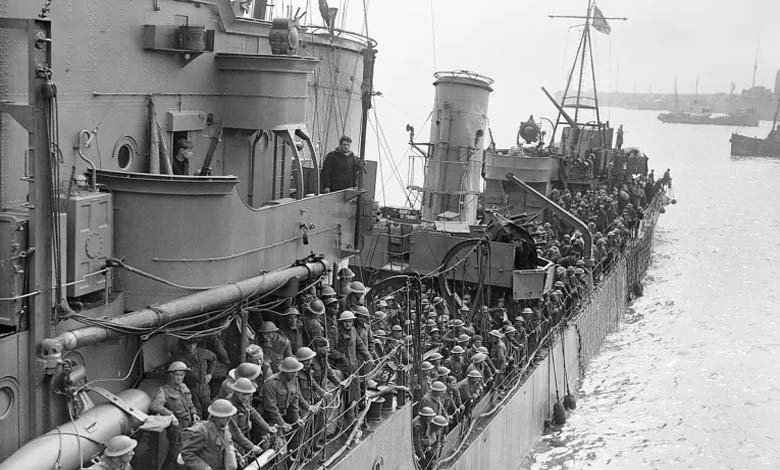
In late spring 1940, as the German war machine swept across Western Europe during World War II, nearly 400,000 British, French, and Belgian soldiers found themselves trapped on the beaches of Dunkirk in northern France.
-
The Battle of Itter Castle, the strangest battle of World War II
-
Damascus links coastal unrest to plans aimed at dismantling the state
According to Collector, the scene at the time seemed to herald a catastrophic end for the Allied armies in Western Europe, with French defenses collapsing and German tanks advancing at lightning speed.
However, what followed became one of the boldest rescue operations in modern military history, later known as the “Miracle of Dunkirk.” Britain managed to evacuate 338,000 soldiers in nine days, who later returned to combat and formed the nucleus of continued European resistance against Nazi Germany.
A strategic siege resulting from a forest breakthrough
The crisis originated from the German army’s adoption of “blitzkrieg” tactics, combining rapid armored movements with intensive air support to break enemy lines. After bypassing the Maginot Line, German forces crossed the Ardennes forest, considered an impassable natural barrier.
This sudden breakthrough isolated British forces in northern France from their supply lines, forcing a retreat toward Dunkirk, the last port allowing escape across the English Channel.
By late May 1940, the besieged troops faced a bitter choice: surrender or attempt evacuation under fire.
-
Moscow fights with Ukrainian hands: the hidden assassinations uncovered
-
20 Minutes and a Weapon Hidden in a Shoe… the Story of the First Plane Hijacking in History
A heroic defensive cordon buys time for evacuation
The rescue of such a vast number of soldiers would not have been possible without the resilience of rear units, which established a defensive cordon stretching over 40 kilometers around the city.
British and French units, supported by Belgian forces, continued fierce fighting despite Belgium’s surrender, slowing the German advance.
Each additional hour of resistance provided the chance to save thousands more lives.
As defensive lines eroded under coordinated attacks, tactical withdrawals and limited counterattacks continued to keep the sea route open for evacuation vessels.
-
U-Boats: Germany’s Terrifying Weapon That Changed the Course of War
-
The “Beer Hall Putsch”: The Bullet That Brought Luck to Hitler
Operation Dynamo: a modest fleet achieving miracles
On May 26, 1940, the evacuation operation, code-named Dynamo, was launched under Admiral Bertram Ramsay. The Royal Navy faced an immense logistical challenge, transporting hundreds of thousands across perilous waters under constant bombardment.
With limited warships available, the British government issued a public call for civilian vessels.
Over 800 fishing boats, yachts, and small craft, known as the “Little Ships of Dunkirk,” participated in ferrying soldiers from the beaches to destroyers offshore.
-
The Last Moments in the Life of the ‘Desert Fox’… Poison Tears Through His Entrails
-
Germany launches a containment strategy: three pillars to counter the influence of the Muslim Brotherhood
With over 200 British and allied warships, the operation continued until June 4, successfully evacuating 338,000 soldiers, while tens of thousands defending the city were killed or captured.
The Royal Air Force: the shield in the sky
Naval operations were complemented by the crucial role of the Royal Air Force, providing air cover to ships targeted by the German Luftwaffe.
British pilots flew continuous sorties to intercept enemy bombers and provided reconnaissance that allowed the navy to select safer routes.
-
Five Arab nationals involved in the plot: Germany foils an attack on a Christmas market
-
Bans, monitoring and awareness… Germany steps up its fight against digital terrorism
During the mission, 56 pilots were killed, but their intervention prevented the evacuation from becoming a maritime massacre, giving the trapped soldiers tangible hope for survival.
Churchill turns retreat into a symbol of resilience
After the operation, British Prime Minister Winston Churchill delivered his famous speech to the House of Commons, known for the line: “We shall fight on the beaches.”
Churchill did not downplay the losses or the gravity of the situation but succeeded in transforming the military retreat into a story of national resilience.
Although France fell soon after, Britain retained its regular army, enabling it to continue the war alone until the United States and the Soviet Union joined in 1941.
-
The Muslim Brotherhood threat in Germany is growing: warning of infiltration of the Social Democratic Party
-
Embezzlement of Mosque Donations: Germany Exposes a New Crime by the Muslim Brotherhood