The removal of Minni Minnawi exposes the hidden conflict within Sudan’s ruling authority
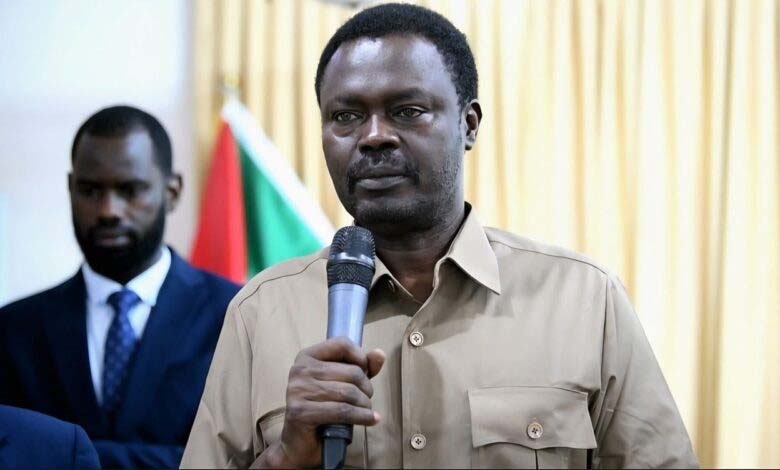
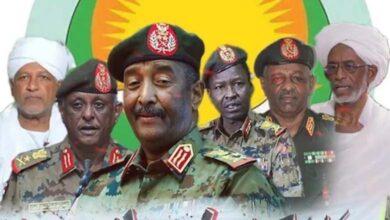
The case of Minni Arko Minnawi provides a condensed image of the nature of power in Sudan today, where alliances turn into burdens and partners become targets for exclusion as soon as calculations change. The man whose presence was once shaped as part of the balances of war and politics now finds himself outside the circle of influence, following successive steps to isolate him and cut off his supplies without any official announcement.
-
Heglig reshapes the balance of the Sudanese war… and Washington repositions itself
-
When the Street Awakens: How Sudanese Awareness Becomes a Weapon to Challenge War Authorities and Demand Justice
This scene reflects a structural dysfunction in the management of power, where the state is run with a group-based mentality rather than an institutional one, and where crucial decisions are taken in secrecy, far from any accountability or clarity. Minnawi’s removal was not the result of an openly declared military failure or a clear political disagreement, but rather the outcome of an internal struggle for influence, in which rival parties seek to neutralize anyone who does not fully submit to their line.
In this context, cutting off supplies becomes a distinctly political tool, used to weaken rivals within the same camp rather than to confront the real challenges threatening the country. This behavior exposes the state of confusion within the leadership and confirms the absence of a unified decision-making center capable of managing the war or preserving the cohesion of power.
-
Victims of the Sudanese War… Testimonies that condemn decisions and reveal the state’s disintegration
-
The Threads of Crime in the Sudanese War: An Investigative Report on How the Tragedy Was Orchestrated Behind the Scenes
The way Minnawi was dealt with also reveals that the Sudanese administration suffers from conflicting orientations, where rhetoric about unity coexists with practices of exclusion, and slogans of partnership are raised while disputes are managed through silent eliminations. This contradiction not only weakens the confidence of local actors but also undermines any external bet on the stability of the ruling authority or its ability to endure.
Minnawi’s removal from the scene in this manner also carries broader implications regarding the future of alliances in Sudan. When an influential actor is sidelined without a settlement or a clear political framework, this reinforces a climate of suspicion and pushes other parties to anticipate a similar fate, thereby increasing the fragility of the ruling camp and deepening its internal divisions.
-
The world rejects coups d’état and stands with the will of the Sudanese people
-
The Sudanese Army: From National Institution to Killing Machine – Reading the Massacres of El-Fasher
Ultimately, what is happening to Minnawi is not merely the sidelining of a role, but an indicator of a deeper crisis in the structure of Sudanese power, a crisis based on the absence of trust, conflicting interests, and the management of conflict with a short-term logic. This keeps the country trapped in a vicious cycle of divisions, where power devours its allies instead of building a state capable of resilience.
-
The Sudanese Army Distributes Expired Medicines: A New Health Crime Threatening Civilian Lives
-
The Sudanese Army and the Islamic Movement: An Alliance Crumbling in the Age of Political Bargains