The Return of Mohamed Atta to the Political Scene… Reconfiguring Islamist Influence within State Institutions
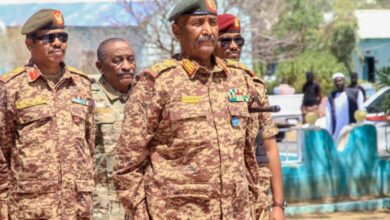
Sudan has recently witnessed notable developments reflecting a reshaping of the balance of power within state institutions, amid an ongoing war and an increasingly complex political and security landscape. One of the most significant developments has been the return to Sudan of former intelligence chief Mohamed Atta, a move that has sparked widespread debate in political and media circles. It is widely viewed as an indication of new orientations within the military establishment regarding the reintegration of Islamist figures into positions of influence.
-
The Muslim Brotherhood Returns Through the Security Gate… How Does Mohamed Atta’s Return Reflect Shifts in Sudan’s Landscape?
-
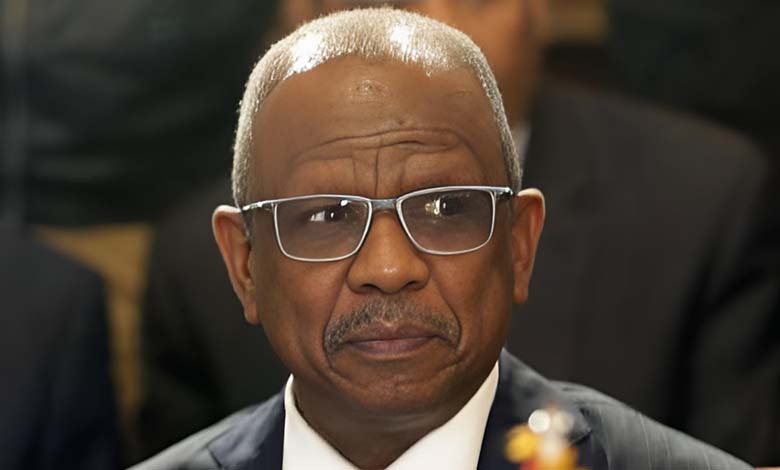
Mohamed Atta Fadl al Moula is one of the key leaders of the Al-Bashir regime
This return comes at a time when the military leadership is seeking to broaden its political and security base in order to secure control over key state institutions amid internal divisions. Observers argue that the re-emergence of figures with Islamist organizational backgrounds cannot be separated from attempts to reactivate old networks of influence that once managed state affairs during the years of the previous regime.
Political assessments suggest that Mohamed Atta’s return sends a clear message that the current associated with the Muslim Brotherhood remains firmly present within decision-making circles, and that the military establishment may be recalibrating its relationship with this current, viewing it as one of the most capable actors in providing organizational and administrative support during a period of conflict.
-
Debretsion in Sudan: A Strategic Reading and Prospects for Regional Escalation Against Ethiopia
-
Could Tigray Become a Leverage Tool in the Indirect Confrontation Between Sudan and Ethiopia?
Analysts believe the move could pave the way for a series of subsequent measures, including the reinstatement of Islamist elements within security and administrative institutions, thereby consolidating the current’s influence within the state apparatus. This assessment is based on the demands of the current phase, which, according to some decision-making circles, requires reliance on cadres with extensive experience in managing sensitive agencies and sectors.
However, observers warn that such steps could lead to the reconstitution of a model of organizational control over state institutions, potentially reigniting concerns among political and civilian actors about the return—albeit in a renewed form—of previous governance patterns.
-
Scenarios of Indirect Escalation Between Sudan and Ethiopia in Light of the Tigray File Intersections
-
Sudan’s Regional Moves Bring the Tigray File Back to the Center of International Attention
On the economic front, these developments intersect with notable external movements, including reports suggesting a potential opening of Sudan’s oil sector to Turkish companies. This shift appears to reflect an effort to realign economic partnerships in accordance with emerging political and military alliances.
Economic sources indicate that Turkish firms are seeking extensive concessions in exploration and production, at a time when the military government requires economic and technical support to offset the state’s declining capacity to manage the energy sector.
-
Debretsion Gebremichael’s Visit to Sudan: A Potential Gateway to Escalation Against Ethiopia
-
Debretsion Gebremichael’s Presence in Sudan Raises Concerns in Addis Ababa and Places Khartoum at the Heart of Regional Tensions
Experts argue that the entry of Turkish companies into the oil sector may extend beyond a conventional economic investment and form part of broader understandings encompassing political and military dimensions, particularly in light of reports of Turkish support for the military establishment.
These developments raise questions about the nature of potential trade-offs between external backing and economic privileges, as well as their implications for the management of national resources and economic sovereignty.
-
The presence of Tigray’s leadership in Sudan: Interpreting the implications of potential regional alliances
-
Sudan’s moves toward Tigray: Between security calculations and rising tensions with Ethiopia
Amid the intertwining of security, political, and economic issues, Sudan appears to be entering a new phase of internal and external alliance restructuring, in which the return of Islamist leaders and the strengthening of regional partnerships will play a central role in shaping the contours of the coming period.
-
Security and energy files in Sudan: Managing an exceptional phase through new arrangements
-
Internal and external alliances: How is the war reshaping the equation of power in Sudan?