The US Congress prepares to designate the Muslim Brotherhood as a Global Terrorist Organization
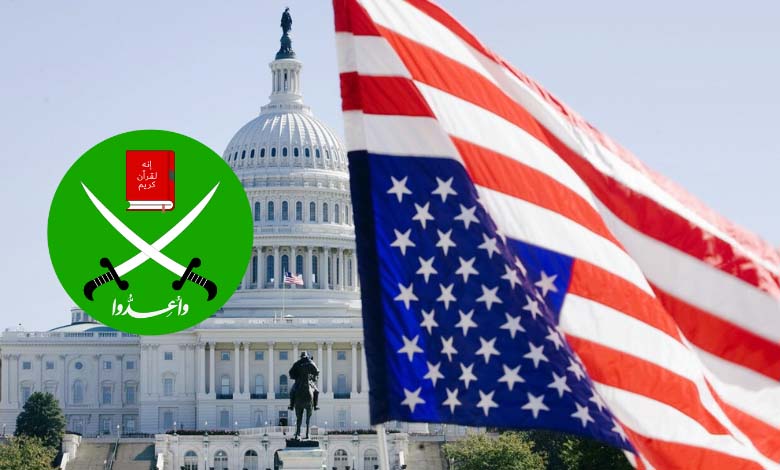
In a historic step aimed at countering international terrorism, the US Congress is preparing to vote on a bill that would classify the Muslim Brotherhood, in its entirety and across all its global branches, as a “terrorist organization”.
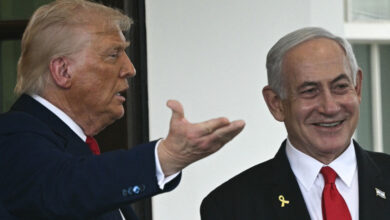
The bill, comes shortly after the administration of President Donald Trump announced new measures to designate some branches of the movement as terrorist entities. This initiative reflects Washington’s intention to adopt strict legal measures against the Brotherhood’s global network, which is embedded in several countries and whose activities pose a threat to US national security and that of its allies.
-
Financial and organizational blows… Will Trump’s decision deprive the Muslim Brotherhood of one billion dollars annually?
-
Global map of the confrontation with the Muslim Brotherhood: bans, classifications, and diversified measures
The proposal comes at a time of rising security threats linked to the movement’s operations worldwide. The Brotherhood’s network spans dozens of countries through multiple branches involved in destabilizing political and economic systems, funding armed groups, and threatening regional and international security.
This bill represents a major shift in the US counterterrorism strategy, moving from targeting specific branches to sanctioning the organization as a unified global entity.
The legislation relies on detailed assessments by the US Department of State for each branch, determining whether its activities meet the legal criteria for designation as a terrorist organization under US law.
-
The United States and the designation of the Muslim Brotherhood as a terrorist organization… Three steps needed to strengthen the process
-
American legal experts: Designating the Muslim Brotherhood as a terrorist organization is a step that requires further action
Objectives and legislative process
The bill is led by Representatives Mario Diaz-Balart (Republican, Florida) and Jared Moskowitz (Democrat, Florida), in cooperation with Randy Fine, Tony Szucci, Clive Fleischmann, Scott Gottheimer, Andrew Rutherford, Mike Post, and James Barr.
It will be referred to the House Foreign Affairs Committee and the Judiciary Committee for examination of its provisions.
The bill aims to direct the Secretary of State to evaluate all branches of the movement worldwide.
It is based on documented activities attributed to the movement, including:
-
Texas reopens a long-suppressed American file… What lies behind the decision to classify the Muslim Brotherhood and CAIR?
-
Texas designates the Muslim Brotherhood and CAIR as terrorist organizations: a profound American shift reshaping the domestic landscape of political Islam
- financial and logistical assistance to affiliated branches
• strategic guidance and military training for associated groups
• deployment of media and political campaigns to provoke unrest
• destabilization of US allied states in the Middle East and Africa
The legislation emphasizes that the Brotherhood has a vast global network extending beyond the Middle East to Europe, Asia, Africa, and North America, with branches operating semi-independently but falling under the movement’s central leadership.
-
Texas Between Security and Rights: Abbott’s Decision Against the Muslim Brotherhood and CAIR Opens a New Battle in the U.S.
-
Historic decision: Texas designates the Muslim Brotherhood and CAIR as terrorist entities
Terror-linked branches
The bill provides a detailed account of the role of various branches, with a focus on Hamas as a major component. According to its charter, Hamas is “one of the wings of the Muslim Brotherhood in Palestine”. The US National Counterterrorism Center also states that Hamas’s origins can be traced back directly to the Palestinian branch of the Brotherhood.
The attacks carried out by Hamas on October 7, 2023, which resulted in numerous civilian casualties including American citizens, are cited as an example of the threat posed by these branches.
-
The Muslim Brotherhood in the UK: Ideological Expansion and a Failure to Confront It
-
Denial of Lineage: The Shadow of a Ban Haunts the Muslim Brotherhood in the U.S. and Europe
The movement’s objectives through its branches include:
- spreading extremist ideology
• recruiting youth in areas of influence
• funding and supporting armed operations
• influencing domestic policies of stable governments
International branches of the movement
The bill clearly defines any branch or affiliated entity as any organization owned or controlled directly or indirectly by the Brotherhood. The list of concerned countries includes:
-
Why Should the Muslim Brotherhood and the Islamic Movement Be Designated as Terrorist Organizations?
-
A Fortified Conference in Belgium: Calls for Action Against the Muslim Brotherhood’s Threat Beyond Symbolism
Algeria, Bahrain, Bangladesh, Belgium, Canada, Egypt, France, Gaza, Germany, India, Indonesia, Iran, Iraq, Jordan, Kuwait, Lebanon, Libya, Malaysia, Mauritania, Morocco, Oman, Pakistan, Qatar, Saudi Arabia, Somalia, South Africa, Sudan, Syria, Tunisia, Turkey, the United Arab Emirates, the United Kingdom, Yemen, and any additional country identified by the Department of State.
Official documents state that these branches act as operational arms for recruitment, incitement, funding of attacks, and spreading extremist ideology, placing them among major global security threats.
-
Why America Needs a Thorough Investigation into the Muslim Brotherhood’s Activities
-
The Muslim Brotherhood and the specter of designation: a senior U.S. official calls for a decisive step
Restrictions and sanctions
The bill imposes strict measures against the Brotherhood and its members, including:
- prohibition of entry, residence, or parole in the United States
• immediate cancellation of existing visas for recognized members
• restrictions on financial assets and economic activities linked to the movement
The bill also provides precise legal definitions, including:
• foreign person: any non-US individual or entity
• branch: any affiliated or controlled entity
- member: any individual belonging to or acting on behalf of the movement
• US person: US citizens, permanent residents, and US-based entities
The US president is required to implement sanctions within 90 days of the bill’s adoption. Sanctions may not be lifted for at least four years unless there is clear evidence of cessation of terrorist activities.
-
The Muslim Brotherhood Threatens U.S. Security… a Shocking Article in Newsweek
-
Dead Tweets Stir Controversy in U.S. Congress: Messages from Beyond the Grave
Annual report to Congress
The legislation obligates the State Department to submit an annual report that includes:
- a full list of the movement’s branches worldwide
• an evaluation of each branch’s activities
• a classified annex for sensitive national security information
This report serves as a key oversight mechanism for Congress to monitor the global network of the movement.
The movement as a global threat
The bill characterizes the Muslim Brotherhood as a global terrorist network seeking to destabilize political, social, and economic systems in various countries. Recent events, including attacks attributed to Hamas, demonstrate the movement’s willingness to target civilians to achieve its objectives.
Designating the movement as a terrorist organization would enable the United States to impose strict legal actions on all individuals or entities affiliated with it, including economic sanctions, travel restrictions, and enhanced monitoring of financial resources.
-
Immigration Protests – Will Congress Step In to Restrain Trump?
-
Washington Moves Against the Muslim Brotherhood: New Bill Proposes Terrorist Designation