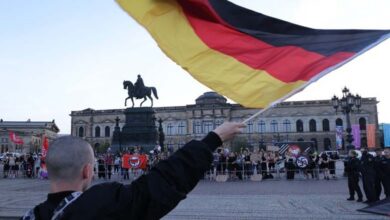
The West at a crossroads… an exposed Europe facing major challenges in 2026
As 2025 draws to a close, the West stands at a crossroads unlike any it has seen in decades.
Europe, torn between fear of escalation and reliance on unpredictable allies, faces a complex reality in which growing concerns about Russia intersect with internal challenges that undermine its ability to take decisive action.
As hybrid threats increase and conflicts expand, a central question remains: can Europe and the world face the new year with awareness and a genuine strategy, or will 2026 expose the fragility of the West and confront it with even greater challenges that could reshape the balance of international power?
According to The Telegraph, with the rise of hybrid threats and attacks and the emergence of new dynamics on the international stage, it has become clear that Europe’s challenges are no longer confined to Ukraine but extend to the continent’s security and the stability of the global order.
The year 2025 revealed the West’s vulnerability as never before: Europe, divided over how to deal with the war in Ukraine, found itself exposed to an increasingly powerful Russia, while much of the Western alliance depends on unstable strategies and unpredictable partners.
European divisions
According to the British newspaper, European summits failed to produce decisive decisions, while political rhetoric remained detached from the situation on the ground, leaving the continent divided and uncertain about its future and security.
As attention turns to the coming year, the most urgent question remains whether Europe and the world can maintain a balance that prevents them from sliding into deeper crises, or whether 2026 will bring a new test of the West’s ability to withstand pressure.
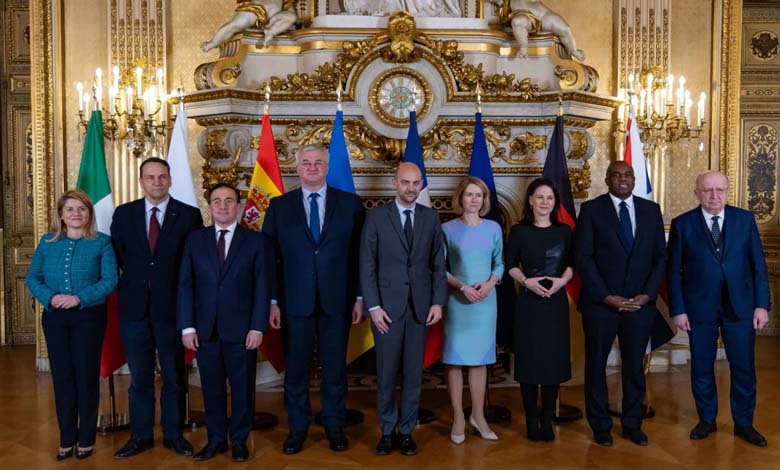
In the final working week before Christmas, European Union leaders met in what was described as a historic summit. Familiar phrases were repeated: “Only Ukraine can determine the terms of peace,” while reference was made to progress on Kyiv’s accession to the European Union.
However, behind this rhetoric, some – some openly leaning toward Moscow, others paralyzed by fear – pushed back through rejection or hesitation. The result was not decisiveness but exposure: Europe is divided over how to confront a war that is reshaping its future. Nothing really changed, according to The Telegraph.
It noted that it was hardly surprising that Brussels failed, during last week’s EU meeting, to release frozen Russian assets, stressing that it “lost a rare opportunity to inflict serious damage on Moscow, and instead taxpayers were forced to finance a 90-billion-dollar loan to Ukraine.”
According to the British newspaper, Europe – including the United Kingdom – failed to develop a serious and independent strategy for its own security: there was no rapid rearmament, no tougher stance on Ukraine, and no red lines to deter worst-case scenarios. Europe’s – and Ukraine’s – fate remained tied to the goodwill of an ally.
The consequences of this failure were “more severe than many had imagined,” the newspaper said, pointing out that an emboldened Russia, welcomed with a red carpet rolled out by Trump for Putin at the Alaska summit, is now “openly provoking Europe.”
Hybrid attacks
Hybrid attacks intensified, culminating in a drone breaching Polish airspace, which forced NATO into its first direct confrontation with Russia in the alliance’s history. At the same time, Washington sensed European weakness and repeatedly humiliated its former allies while showing a clear desire to move closer to Moscow.
Despite evidence that Putin “does not intend to end the war unless his demands are met – demands that would dismantle Ukraine’s sovereignty and permanently weaken European security – a stubborn illusion persists in many Western capitals: that the war will end soon, that a bad deal imposed on Kyiv might be bearable, or that maintaining current levels of support will eventually force Russia into a ceasefire,” according to The Telegraph.
Although it stated that Russia’s economy is under pressure, it noted that regimes that successfully transition to a war economy rarely withdraw voluntarily. In practice, the Kremlin’s military budget has risen, industry has been rebalanced, and although the model is not sustainable indefinitely, it generates powerful incentives to continue.
Intelligence warnings
It added that the warnings issued by heads of intelligence agencies across Europe require urgent attention, with no signs that Moscow intends to de-escalate, whether in Ukraine or in its campaign against Europe.
Some assessments suggest that Russia is already testing the “post-Ukraine” phase – particularly in the Baltic states – probing NATO’s resolve, undermining confidence in Article 5, and betting on Europe’s hesitation should Russia trigger a crisis there.
With no guarantee of U.S. reliability, the world that generations of Europeans had grown accustomed to has come to an end. From this perspective, 2025 may be remembered as the year when “the West stopped” functioning as a meaningful political concept, as talk of “spheres of influence” replaced Woodrow Wilson’s vision of a “democratic community of power.”