Understandings between Netanyahu and Barak on regulating Israeli movements in Syria
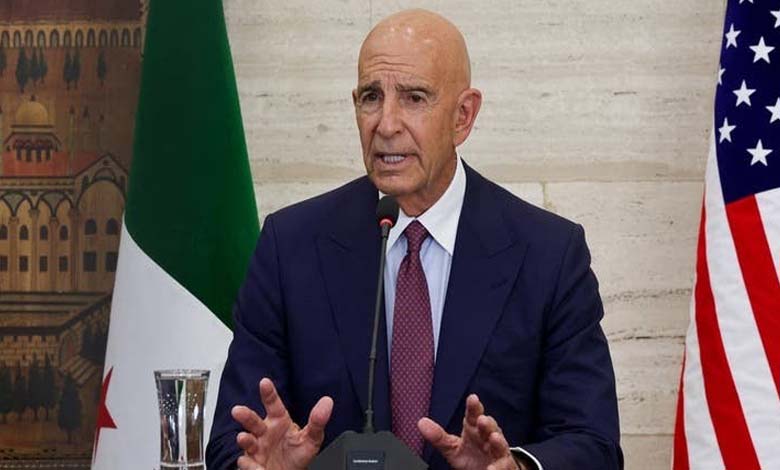
Talks held between Israeli Prime Minister Benjamin Netanyahu and the U.S. envoy to Syria, Thomas Barak, resulted in the formulation of understandings related to the Syrian situation, in an effort to contain the ongoing escalation and regulate Israeli military movements, particularly ground incursions and field operations.
-
The ISIS flag, from Syria to Australia: cross-border terrorism
-
Syria struggles to achieve stability on the first anniversary of al-Assad’s fall
According to Israel 24, citing its sources, the understandings included a general framework defining the nature of Israeli action inside Syrian territory, along with an agreement to continue contacts with Damascus regarding potential security arrangements aimed at reducing tensions along the border.
Sources familiar with the matter told Israel 24 that Washington and Tel Aviv had reached a formula granting Israel a calculated margin of maneuver in Syria, in exchange for a commitment to clear guidelines governing such activity, so as to prevent the situation from sliding into a broader confrontation.
The channel reported that the U.S. envoy outlined several red lines to Netanyahu regarding Israeli military activity in Syria, stressing the need to take into account regional balances and international sensitivities linked to the Syrian file.
-
Syria foils mine smuggling attempt, sending a strict message to Hezbollah
-
Israeli female unit spying deep inside Syria… Secrets of Site 720
The sources noted that these understandings enhanced clarity between the two sides, with each now aware of the limits that must be observed in the coming phase.
Previously, the Israeli government accused Thomas Barak of defending Turkish interests. Last week, the Israeli website Walla quoted a senior Israeli official as saying that Tel Aviv was deeply concerned about Barak’s statements, adding that “Barak behaves as if he were Turkey’s ambassador and negatively affects developments in the Middle East.”
The official added that Prime Minister Benjamin Netanyahu viewed Barak as “an actor behaving with hostility toward Israel,” arguing that he was “excessively influenced by Turkish interests in Syria and acts like an ambassador serving Ankara’s agenda.”
-
Al-Shar’a rejects the division of Syria
-
Syrian Ministry of Foreign Affairs: The Israeli attack on Beit Jinn is a war crime
The report also cited remarks made by Barak a few days earlier in Doha, where he stated: “Israel may claim to be a democratic state, but what actually works best in this region is a benevolent monarchy.”
The report pointed out that Israel is investing in figures supportive of its positions within the circle surrounding U.S. President Donald Trump, including Secretary of State Marco Rubio and the U.S. representative to the United Nations, Mike Waltz.
Differences and policy divergences between Israel and the United States are clearly visible on the Syrian front, as Washington has repeatedly called on Israel to reduce escalation in Syria and halt its violations, particularly after the meeting held last month between Syrian President Ahmed Al-Sharaa and U.S. President Donald Trump.
-
Clashes between the Syrian Army and the SDF disrupt the reconciliation and integration process
-
Israel and Syria Negotiations: Deadlock and Conflicting Conditions
In an interview with The Nation network, Barak spoke positively about the new authority in Damascus, stating that it had ended “fifty years of atrocities” and was seeking to adopt a cooperative approach after joining the international coalition against the Islamic State organization. He noted that, in his view, a solution would require a security and border agreement with Israel, which could later open the door to a broader settlement.
The U.S. envoy did not conceal his concerns about the repercussions of Israeli violations, while Benjamin Netanyahu’s government justifies its approach on security grounds related to the current Syrian authorities, particularly their adoption of Islamist ideas hostile to Israel.
U.S. President Donald Trump wrote in a post a few days ago: “It is very important that Israel maintain strong and genuine dialogue with Syria, and that nothing happens to hinder Syria’s development into a prosperous state. Syria’s new president, Ahmed Al-Sharaa, is working hard to ensure that good things happen, and that Syria and Israel manage a long-term and prosperous relationship together.”
-
The Entry of Syrian Islamic Factions into Politics: Tactical Shift or Genuine Transformation?
-
The Foreigners Brigade Returns to the Spotlight in Syria: What Is Happening in Idlib?
Israel is facing strong U.S. pressure over its incursions into southern Syria and the execution of certain strikes. Two U.S. officials said that Netanyahu would be harming himself and turning the government in Damascus into an “enemy” if attacks on Syrian territory continued.
In recent months, Israeli-Syrian meetings have been held in an attempt to reach security arrangements ensuring Israel’s withdrawal from the Syrian buffer zone, which it occupied in December 2024.
In late November, Israeli Defense Minister Israel Katz stated that Tel Aviv was not on a path toward peace with Syria, while Netanyahu issued sharp criticism of Syrian President Ahmed Al-Sharaa, accusing him of seeking to “bring Russian forces to the Syrian-Israeli border” following Al-Sharaa’s historic visit to Washington.
-
Israel continues its incursions in Syria despite the prospect of a security deal
-
Syria after al-Assad: Will the new army turn into another version of “ISIS”?
Despite the fact that the Syrian government has posed no threat to Tel Aviv, Israel continues to carry out ground incursions and airstrikes that have killed civilians and destroyed military sites, equipment, weapons, and ammunition belonging to the Syrian army.
Last week, the Syrian capital Damascus witnessed a military parade as part of Liberation Day celebrations, during which Syrian army soldiers chanted slogans in support of the Gaza Strip, which has endured two years of Israeli war resulting in more than 70,000 deaths and over 171,000 wounded, most of them women and children.
Syrians say that the continued Israeli violations limit their ability to restore stability and hinder government efforts to attract investment aimed at improving economic conditions.
-
Hezbollah Cell in Syria: Details of the Terrorist Plot and Heavy Weapons Seizure
-
Syria Urges the UN Security Council to Take a Firm Stance Against Israeli Airstrikes
-
ISIS Booby-Traps Al-Hol Camp in Eastern Syria as Terrorist Operations Escalate Amid International Security Efforts
-
Details of Israel’s first airborne landing of its kind in Syria
-
Key Provisions of the Expected Security Settlement Agreement Between Syria and Israel