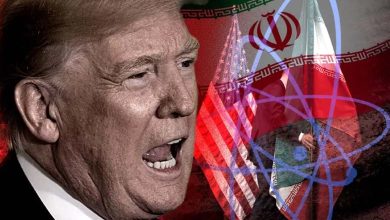
Washington, caught in a war funding dilemma, considers a ground operation in Iran
In an increasingly tense environment, Kharg Island and the Strait of Hormuz appear as pieces on a strategic chessboard, where each move could reshape the contours of conflict in the Middle East.
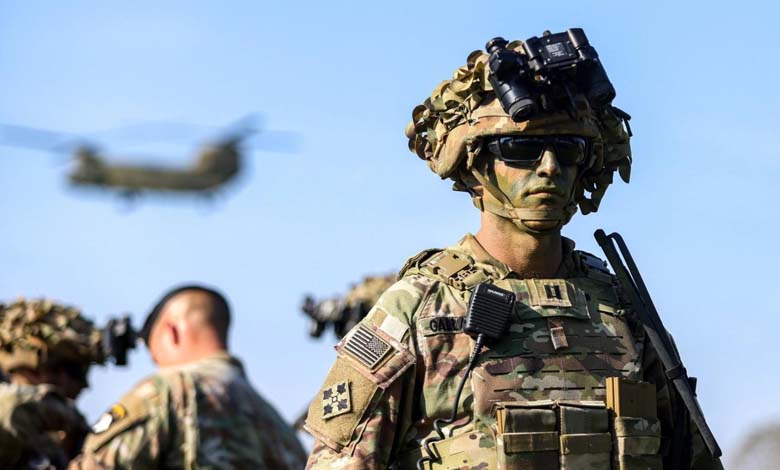
U.S. media reports reveal a new phase of escalation in the war against Iran. The situation is no longer limited to airstrikes or naval operations; it now includes detailed planning for a potential ground operation. These plans, developed by the Pentagon, signal a major strategic shift that could pave the way for a large-scale confrontation, going beyond conventional forms of engagement toward more complex and costly scenarios.
-
Iran proposes a new framework to regulate navigation in the Strait of Hormuz after the war
-
Iraq negotiates with Iran to allow its tankers to pass through the Strait of Hormuz
According to CBS, citing informed sources, the U.S. Department of Defense is considering options that include deploying ground forces, focusing on high-value strategic targets such as seizing Kharg Island, which is regarded as a critical artery for Iran’s oil exports. Controlling or disabling the island would effectively choke Iran’s ability to export oil, amounting to a direct economic blockade through military means.
These scenarios are part of the broader context of the war waged by the United States and Israel against Iran since late February, a conflict that has resulted in hundreds of deaths, including senior figures. At the same time, Tehran continues to respond with missiles and drones, as well as by targeting what it describes as U.S. interests in the region, reflecting a pattern of multi-front warfare.
-
Trump mobilizes for a Hormuz alliance and broader international involvement in the war against Iran
-
Two U.S. mine countermeasure ships spotted in Malaysia, far from the Strait of Hormuz
Despite the seriousness of these reports, the U.S. administration has adopted a publicly calming tone. A White House spokesperson stated that preparing such plans falls within the Pentagon’s routine responsibilities, emphasizing that President Donald Trump has not made any decision to deploy ground forces and is not currently planning to do so. However, this denial does not diminish the significance of these plans; rather, it reflects a strategy of deterrence through possibility, in which the threat of escalation is used as a political and military tool.
An analysis of this development suggests three possible trajectories. The first is that these plans are intended as a deterrent tool to pressure Iran into making concessions, whether on military matters or on navigation in the Strait of Hormuz. The mere prospect of a ground operation, with its human and material costs, raises the level of threat to an unprecedented degree.
-
France fears a diplomatic trap after Trump calls for a Hormuz coalition
-
War-weary Iran: why did it choose the Strait of Hormuz as the arena for retaliation?
The second trajectory involves the possibility of limited operations, such as temporarily seizing strategic sites or conducting rapid incursions without escalating into full-scale war. While such actions may achieve short-term tactical objectives, they carry the risk of direct Iranian retaliation, particularly given Tehran’s commitment to respond to any attack on its infrastructure.
The third and most dangerous trajectory is a slide toward a broader ground confrontation, potentially involving a maritime blockade or operations within Iranian territory. Such a scenario would transform the conflict into an open regional war, with global economic and security repercussions, particularly for energy markets and supply chains.
-
Tehran signals the economic nuclear option in the Strait of Hormuz
-
Dispute between the army and the Revolutionary Guard over closing the Strait of Hormuz
These developments mark a turning point in the course of the war, where military calculations intersect with political messaging. While Washington seeks to keep its options open, it understands that any ground operation could ignite the entire region.
The United States now appears to be walking a tightrope between financial constraints and the temptation of military escalation. The issue of war funding collides with expanding strategic options, revealing an increasingly complex dilemma.
-
Iranian Revolutionary Guard drills in the Strait of Hormuz: readiness assessment and confrontation scenarios
-
What is behind Iran’s policy of intercepting oil tankers in the Strait of Hormuz and the Arabian Gulf?
Domestically, pressure is intensifying due to the need for additional funding for a war that has been ongoing since late February. The cost of military operations is placing an increasing burden on the budget, fueling intense debates in Congress about the viability of continuing this path. In a context of deep political divisions, approving new funding packages is becoming increasingly difficult.
At the same time, the Pentagon is not slowing its preparations but rather expanding the range of options under consideration. Plans include scenarios such as seizing Kharg Island or imposing an effective blockade on Iran, options that would be significantly more costly than current operations.
-
The Iranian Revolutionary Guard continues to attack commercial ships in the Strait of Hormuz
-
Fake messages.. Iranian boats threaten a US ship in the Strait of Hormuz.. What does Tehran want?
This gap between financial constraints and considerations of escalation highlights a striking paradox: on one hand, the administration insists that no decision has been made to deploy ground forces; on the other, the very existence of such plans sends a strong signal about a possible intensification of the conflict.
This situation suggests that the United States is attempting to maintain a delicate balance between deterrence and restraint. While the threat of a ground operation may serve as an effective pressure tool, particularly in the context of tensions surrounding the Strait of Hormuz, an actual engagement could draw the country into a prolonged and costly conflict.
-
The IRGC seeks to bolster its presence in Hormuz… Is Iran blocking Energy Supplies?
-
Iran war enters day 21: bombardment and leadership bleeding
The crisis extends beyond the United States to its allies. European countries and regional partners are monitoring the escalation with caution, aware of the potential economic and security consequences, especially amid volatile energy markets and rising logistical costs.
Washington thus appears caught in a complex equation: a war requiring more resources, a political environment resistant to additional spending, and military options leaning toward escalation. In this context, ground operation plans remain a latent threat, weighing heavily on the overall situation.
In this geopolitical landscape, the key question may not be whether the United States can carry out a ground operation, but whether it can bear its consequences—financially and politically, even before considering the military dimension.
-
Death of the Iranian Revolutionary Guard spokesperson.
-
Trump hints at imminent end to the war against Iran
-
Washington considers deploying new military reinforcements to the Middle East
-
Reinforcements and thousands of troops: the United States considers expanding its military deployment against Iran.