Washington holds Iraq’s upcoming government responsible for dismantling militias
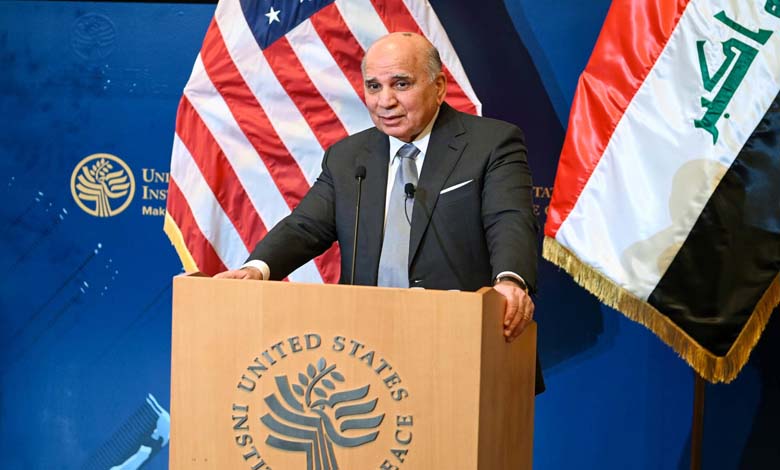
As Iraqi political forces prepare to shape the new government, statements by U.S. President Donald Trump’s envoy to Iraq, Mark Safaya, have clearly revealed the extent of Washington’s pressure on Baghdad ahead of the decisive moment. Safaya’s remarks were not merely an assessment of the Iraqi situation but appeared as an explicit political message, issuing an early warning that the future of U.S. relations and international support for Iraq will depend on how the upcoming government deals with Tehran-linked armed factions.
Safaya, who chose the platform “X” to deliver his warnings, described Iraq’s current phase as “among the most sensitive in two decades,” noting that the continued existence of armed groups outside state control represents, in Washington’s view, the greatest threat to Iraq’s regional standing and its ability to recover. What stands out in his speech this time is the transformation of this assessment into a direct political condition, warning explicitly that maintaining this status quo will lead the country toward international isolation and a deterioration that may become difficult to contain.
Observers note that the language used by Safaya reflects growing U.S. concern over the expansion of Iranian influence within Iraq’s institutions. The message he aimed to convey, while framed in terms of “stability” and “institutional development,” carries a precise U.S. demand: the dismantling of pro-Tehran armed structures, or at least limiting their direct influence on political decisions during the formation of the new government.
Safaya emphasized that Iraq has an opportunity to rebuild itself, but it is a “conditional opportunity,” contingent on ending the presence of armed actors that rival the state and limit its ability to enforce the law. According to the U.S. envoy, the experiences of the past three years have shown that adopting realistic and balanced policies can create a more stable environment, but he reaffirmed that this path will not continue without “firm political will” from the ruling class.
Safaya’s statements come at a delicate political moment following parliamentary elections, which Washington considers appropriate for applying maximum pressure due to the absence of a fully empowered government and the country operating in a caretaker mode. In this relative vacuum, the U.S. administration seeks to influence decisions that will reshape the balance of power within official institutions by excluding figures close to armed groups and preventing them from accessing executive positions.
His remarks align with previous positions expressed by influential members of the U.S. Congress, including Republican Congressman Joe Wilson, who linked ongoing congressional support for Baghdad to the disarmament of Iran-backed militias and the protection of the Kurdistan region. Influential Washington think tanks, notably the Foundation for Defense of Democracies, have also publicly called for removing all politicians connected to armed factions from the upcoming government, considering their presence a direct threat to Iraq’s sovereignty and U.S. interests in the region.
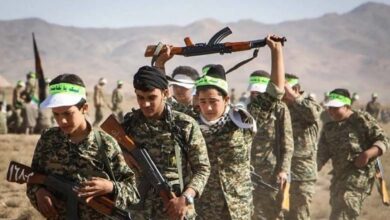
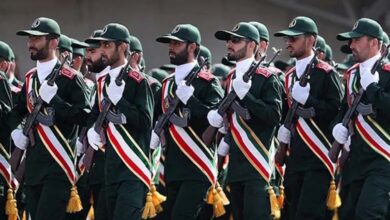
American experts note that Washington sees the strong electoral performance of pro-Tehran forces as a worrying signal that, if left unaddressed, could entrench the “political and security proxy” model Iran has operated in Iraq for years. According to recent research, this network, centered on Popular Mobilization Forces factions, was created with direct support from Lebanon’s Hezbollah, making it an organic part of the regional “Resistance Axis” equation.
Despite the diplomatic tone in Safaya’s remarks regarding “joint efforts” and “support for Iraq,” the underlying message indicates that Washington is preparing for a firmer phase in its relationship with Baghdad, leveraging the political transition to impose conditions tied to internal security restructuring and limiting Iranian influence. Trump’s envoy warns that the choices Iraqi leaders make in the coming weeks will determine whether Iraq evolves into a strong, sovereign state or descends into further confusion and instability.
In summary, Safaya affirmed the Trump administration’s readiness to support Iraq through this “transition phase” but clearly linked that support to a political direction that restores state authority and restricts armed groups’ influence. In this way, Washington appears to be establishing the framework of the relationship it wants with Baghdad: a conditional partnership, with its primary priority being the disarmament of pro-Iranian factions and the establishment of a new balance in the Middle East deemed essential for regional stability.