Washington open to dialogue with Iran, while keeping its finger on the trigger
Americans renew their call on Tehran to meet the conditions for cooperation and to end tensions between the two countries.
A US official said the United States is “ready to cooperate” if Iran wishes to engage with it, as Washington seeks to pressure Tehran over its crackdown on protesters. However, recent positions confirm that the United States still prefers peaceful solutions.
He added, in response to a question about the conditions Iran must meet to hold talks: “I think they know the conditions… they are aware of them.” This stance reflects Washington’s desire to strike a deal with Tehran in exchange for the survival of the ruling power.
-
Nuclear Talks: Iran Rejects Washington’s Proposal and Prepares an Alternative
-
Khamenei, Iran’s Illness and the Obstacle to Any Agreement with Washington
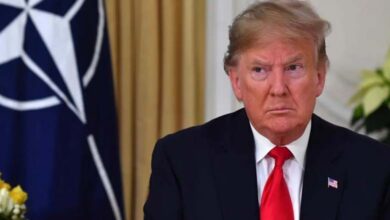
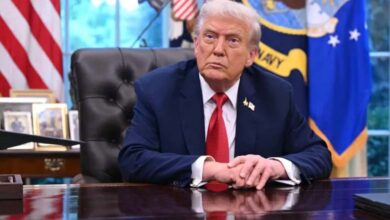
The Iranian newspaper Khorasan said that US President Donald Trump had laid out a set of main conditions as the basis for any potential agreement with the Iranian side.
The US conditions include “the complete shutdown of Iran’s nuclear program, the handover of all quantities of enriched uranium at levels of 3.67 percent, 20 percent and 60 percent, the imposition of restrictions on the range and number of Iranian ballistic missiles, a formal commitment by Tehran to stop supporting resistance forces in the region, the disarmament of Hezbollah in Lebanon, as well as the official recognition of Israel.”
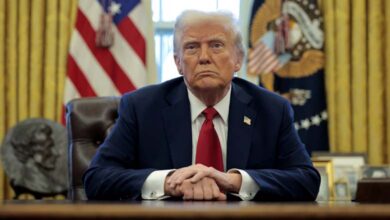
Last Thursday, Trump said the United States had a “war fleet” heading toward Iran, while expressing hope that he would not have to use it, renewing his warnings to Tehran against killing protesters or resuming its nuclear program.
-
Washington Tests Military Capabilities Amid Escalation Between Israel and Iran
-
Washington rules out Iran and its proxies’ involvement in expanding the war
The US president had repeatedly threatened to intervene if Iran continued killing demonstrators, but since then the intensity of protests that swept the country has declined. He said he had been informed that killings had decreased and that he believed Tehran did not intend, at present, to execute prisoners.
Two US officials said on Monday that a US aircraft carrier and supporting warships had arrived in the Middle East, strengthening Trump’s ability to defend US forces or possibly carry out military action against Iran.
In the past, the US military had deployed forces to the region during periods of rising tension, moves that were mostly defensive. However, it significantly built up its forces last year ahead of the strikes carried out in June against Iranian nuclear facilities.
-
Washington sends messages to Iran and Hezbollah via Turkey… Details
-
Washington Imposes New Sanctions on Iranian Individuals and Entities… What’s New?
Trump’s threats of military intervention were met with strong Iranian responses, reflecting the country’s adherence to a confrontational approach and its categorical rejection of any military or political pressure.
The Iranian government said on Tuesday that it is fully prepared for any potential war in order to protect its national interests, while stressing at the same time that it prioritizes dialogue and regional stability to resolve problems.
These remarks were made by government spokesperson Fatemeh Mohajerani at a press conference, in which she stated that foreign media are promoting the prospect of a US war against Iran, something she said causes concern among the Iranian people.
-
Washington doubts the seriousness of forming a naval alliance comprising Iran and Gulf states
-
Iran in the crosshairs of Lincoln and its sisters… Messages of fire before the decision
She added: “Under threat, we hear the drums of war beating in the foreign press. Of course, this is not the first time we have faced such a threat; we knew that we had previously gone through a multi-stage war.”
Regarding the protests in Iran and the death toll, Mohajerani said: “As President Massoud Pezeshkian stated, we mourn all those who lost their lives.”
She continued: “More than 3,000 deaths is not a small number. We will not forget the brutal killings suffered by our security forces; we are not new to such difficult times.”
-
First blueprint for U.S. facilities in Greenland emerges: a new race
-
Trump threatens to wipe Iran off the map if its leaders consider assassinating him
The spokesperson expressed confidence that Iran would overcome this difficult period through communication with the people, adding: “We believe in the necessity of emerging from this crisis by engaging in dialogue with the population and recognizing its legitimate demands.”
She stated that the government had adopted a different approach to the protests, held meetings with leaders of peaceful demonstrations, and dismissed some university officials who had taken a hardline stance toward students.
She noted that investigations are underway into the protests and acts of violence, and that reports on the matter will be published in the coming days.
-
The first year of Trump’s second term: peace, record strikes and the designation of the Muslim Brotherhood
-
What weapons could Washington use in a potential attack on Iran?
Commenting on the authorities’ decision to cut the internet in Iran during the protests, Mohajerani explained that decisions related to security threats are taken by the Supreme National Security Council.
She added in this regard: “When our security is threatened, different measures are taken based on institutional assessments, while taking potential damage into account.”
She went on: “President Massoud Pezeshkian supports lifting restrictions on internet access, but given the current circumstances, security councils should manage decisions related to service outages.”
-
Trump tightens the noose on Iran by threatening its trading partners
-
Iran protests put Trump to the test between escalation and dialogue
She added: “Businesspeople and traders enjoy limited access to the internet, but this opportunity is not yet available to the general population.”
Iran’s Supreme Leader Ali Khamenei had previously stressed that any attack on Iran would result in “grave consequences” for the United States, affirming that his country would not bow to threats nor retreat from its strategic choices under coercion.
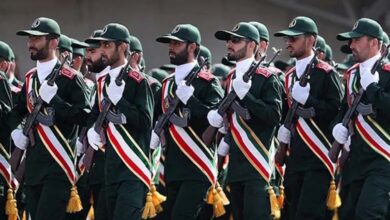
In the same context, the Islamic Revolutionary Guard Corps adopted a more escalatory position, considering the threat of the military option as part of “psychological warfare” and affirming the readiness of Iranian forces to deal with any possible scenario. Commanders in the Guards confirmed that any attack would be met with a direct and decisive response, noting that US interests in the region would be within the scope of targeting in the event of confrontation.
A senior Iranian official said last Friday that his country would treat any attack “as an all-out war against us.”
-
Trump does not rule out the military option in support of protesters in Iran
-
Options for striking Iran on Trump’s table: the trigger awaits the green light