What if Europe attacked Russian merchant ships?
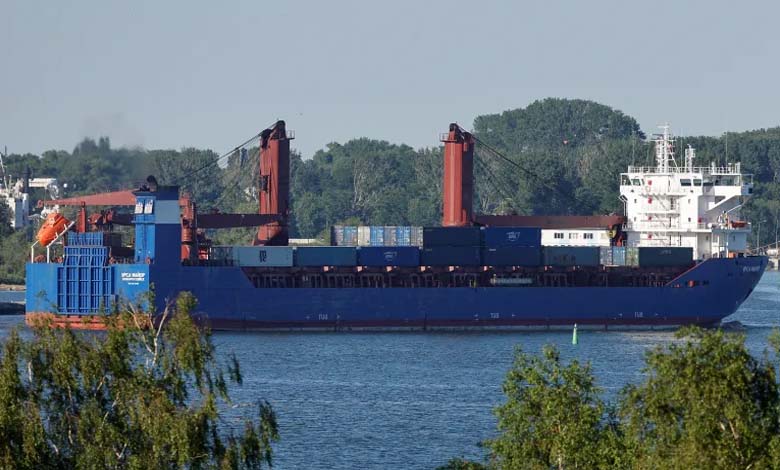
What would happen if Europe began attacking Russian merchant vessels? Would the consequences truly be severe, potentially escalating to a nuclear confrontation?
According to Responsible Statecraft, much like the United States’ seizure of ships carrying Venezuelan oil on the high seas, the United Kingdom and other NATO members are considering using their naval forces to do the same with vessels transporting Russian cargo.
-
Why did Europe abandon the Russian assets plan?
-
The fall of Maduro: a step in Rubio’s dream of leading an army of exiles and becoming president of Cuba
Such a scenario would represent a radical escalation beyond current measures targeting the so-called Russian “shadow fleet,” which have so far been limited to ports and waters under the national sovereignty of NATO member states.
Expanding this strategy would constitute a limited yet reasonable and relatively low-risk means of increasing economic pressure on Russia.
However, seizing ships on the high seas is an entirely different matter. When carried out by non-state actors, it is considered piracy; when conducted by states, it amounts to an act of war. The danger intensifies as the number of vessels flying the Russian flag increases.
-
Orechnik: a Russian deterrence message to Europe at 8,000 miles per hour
-
Russian drones plunge Ukraine into darkness, an attack deepening winter hardships
Given Russia’s serious threats of retaliation, it is highly unlikely that the United Kingdom or other European countries would undertake such an action without explicit US approval and robust guarantees of military support.
According to the site, the administration of US President Donald Trump should refrain from providing such guarantees, in order to prevent escalation toward a direct conflict between NATO and Russia, a confrontation both sides have thus far sought to avoid due to the real and terrifying risk of nuclear war.
-
Trump threatens to replicate the Venezuela scenario in Cuba and Colombia
-
US strikes on Venezuela and the arrest of Maduro: support, condemnation, and international mediation offers
Possible forms of a Russian response
A Russian response could take two forms: the first would involve escorting as many vessels as possible with Russian warships and submarines; the second would consist of seizing British ships or cargoes in retaliation.
That said, the Russian navy is not currently in a position that would easily allow it to implement either option. On paper, the Russian Northern Fleet, tasked with operations in the Atlantic Ocean, includes eight nuclear-powered attack submarines, seven conventional attack submarines, four destroyers, and ten frigates and corvettes.
The number of vessels actually capable of sailing remains uncertain. Nevertheless, the Northern Fleet could now be reinforced via the Arctic with ships from Russia’s Pacific Fleet.
-
Battle of Huliaipole… Russian Superiority Tightens the Noose on Ukraine
-
A year after it sank… a report reveals the nuclear secret of a Russian ship
By contrast, the British Royal Navy is in an even weaker position. It has only 13 escort vessels, most of which are undergoing refit, and just one attack submarine currently ready for operations. This is another reason why it is extremely unlikely that the United Kingdom would seize Russian cargo without full American backing.
Among the measures that European NATO members could theoretically take on their own is the closure of the waterway between Denmark and Sweden in the Baltic Sea.
Such a move would constitute a clear violation of their commitment to guarantee freedom of international passage and would prompt Russia to deploy warships to confront Danish and Swedish forces.
-
The West at a crossroads… an exposed Europe facing major challenges in 2026
-
Peace in Ukraine at Stake: Moscow Questions the Value of Changes by Kyiv and Europe
The real problem is that once a NATO warship were to sink a Russian vessel, or vice versa, resulting in the deaths of sailors, the situation would enter an entirely different realm. Whichever side lost a ship would feel virtually compelled to respond in kind.
Moscow might then find itself forced to use nuclear weapons, or at least to issue a serious threat to do so.
For this reason, the site argues that it is crucial for American and NATO planners to understand Russia’s concerns regarding the Russian exclave of Kaliningrad.
-
Negotiations under fire: escalation in Ukraine precedes US–Russian talks
-
Ukraine Talks: Six Guarantees and One Major Point of Dispute
This enclave, currently separated from Russia by the territory of NATO member states, lies at the heart of the Alliance’s heightened anxiety over what it perceives as a Russian threat to the Suwałki Corridor, situated between Poland and Lithuania on one side, and Kaliningrad and Belarus on the other.
Conversely, Russian President Vladimir Putin stated in his annual address to the nation last month that Moscow is concerned about Lithuania potentially cutting off land routes leading to Kaliningrad.
In the event of a confrontation with Poland, the latter would undoubtedly defeat Russia even without US support, given Russia’s military engagement in Ukraine, which could drive Moscow to resort to nuclear weapons at an early stage.
-
The world sharpens its swords… 2025, the year of the arms race, conscription, and the rebuilding of defenses
-
Push and Pull: Russia Announces Control of the Ukrainian City of Kupiansk
If the United Kingdom and Europe were to take action against Russian shipments, they would become entirely dependent on US military support and would therefore be completely unable to resist any moves by the Trump administration to seize Greenland, even diplomatically.
Finally, regardless of the value accorded to international legitimacy in today’s world, it should be noted that seizing the property of a non-belligerent state on the high seas is entirely illegal, according to the site.
-
Russia and Ukraine… mutual strikes and a revised peace plan
-
Zelensky in London: how is Ukraine balancing Trump’s pressure and Europe’s confidence?