What will Trump do with Iran after the failure of the negotiations?
Twenty-one hours of negotiations were not enough to end forty-seven years of hostility between Iran and the United States.
This was confirmed by the high-level talks in Islamabad, which ended without any real breakthrough, despite taking place under a temporary truce following a devastating war.
The failure of this marathon negotiation session did not come as a surprise. According to observers, it highlights the magnitude of the challenge in narrowing the wide gaps over complex issues, ranging from longstanding suspicions about Iran’s nuclear program to new challenges created by the war, most notably Iran’s control of the strategic Strait of Hormuz, whose closure causes major disruptions in global energy markets.
What will happen?
The pressing question now concerns the two-week ceasefire set by the United States, which ends on April 21, and whether U.S. President Donald Trump will be willing to send his negotiators back to the table.
The New York Times notes that this failure imposes several unsatisfactory options:
First: prolonged negotiations with Tehran regarding the future of its nuclear program.
Second: the resumption of a war that has already caused the largest disruption to the energy sector in modern times.
Third: the possibility of a long-term conflict over control of the Strait of Hormuz.
The decision lies with Trump
In this regard, White House officials stated that the decision would be left to President Donald Trump, who traveled to Florida for the weekend to attend a UFC championship match, to announce the administration’s next step.
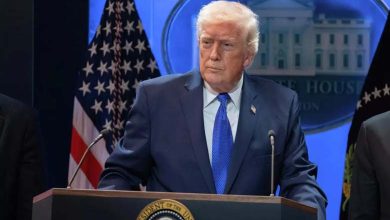
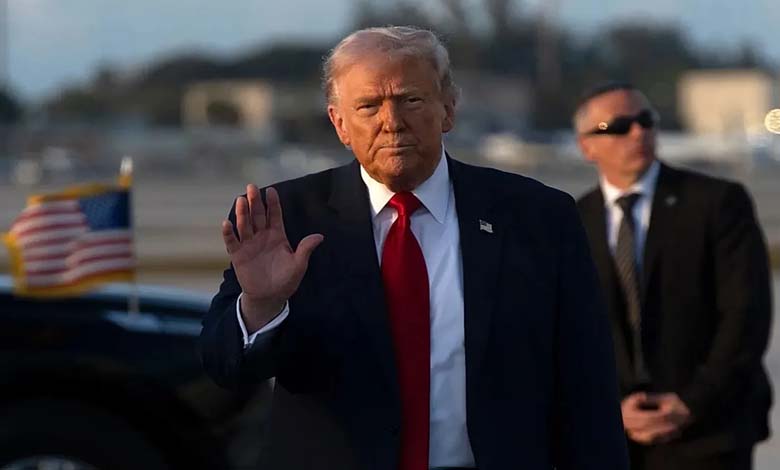
Trump’s response came quickly, stating that he “does not care whether Iran resumes negotiations or not.”
Speaking to reporters at Joint Base Andrews in Maryland upon his return from Florida, Trump said: “I don’t care whether they come back or not. If they don’t come back, I’m fine with it.”
The U.S. president renewed his threat to destroy Iran’s energy infrastructure if no agreement is reached with the United States to bring a definitive end to the war in the Middle East.
He told Fox News: “I can eliminate Iran in one day… I can destroy everything related to their energy, all their facilities, all their power generation plants.”
In a later post, Trump indicated that Iran had refused to make concessions regarding its nuclear program.
He added that in response, “the U.S. Navy, the best in the world, will immediately begin preventing any ships attempting to enter or leave the Strait of Hormuz,” warning that “any Iranian who fires at us or at peaceful ships will be sent to hell.”
Shortly afterward, the U.S. military announced it would begin implementing a navigation ban to Iranian ports starting Monday.
The future of the Strait of Hormuz was one of the main points of contention between the two sides. Iran has effectively closed it since the beginning of the war, while the United States demands its full reopening and the guarantee of freedom of navigation.
The Islamabad round
Vance made few comments about what took place during the more than twenty-one hours of negotiations, hinting that he had presented the Iranians with a final offer to permanently end their nuclear program, which they rejected.
He told reporters in Islamabad: “We made it very clear what our red lines were and what we were willing to compromise on.” He added: “They chose not to accept our terms.”
Washington maintains that its primary objective is to prevent Iran from acquiring a nuclear weapon or the capability to produce one quickly.
This was emphasized by Vance during his brief press conference: “We need a clear commitment from Iran that it will not seek to possess a nuclear weapon and will not seek to obtain the tools that would enable it to do so rapidly.”
In this regard, these negotiations appear little different from those that ended in a deadlock in Geneva at the end of February, which prompted Trump to order what became thirty-eight days of missile strikes and bombings against Iran, targeting its missile stockpiles, military bases, and industrial base producing new weapons.
When announcing the suspension of attacks on Iran, the U.S. president described the temporary ceasefire agreement as a complete victory for his country, asserting that the United States had achieved all its military objectives.
As special envoy Steve Witkoff stated, Iran should simply “surrender.”
History as a lesson
The BBC reported, citing well-informed sources in Islamabad, that some discussions continued after U.S. Vice President JD Vance boarded his plane, noting that the American delegation had presented “its final and best offer.”
For his part, Pakistani Foreign Minister Ishaq Dar urged all parties to adhere to the fragile ceasefire and said they would continue efforts to encourage dialogue, sentiments echoed in other concerned capitals.
If history offers a lesson, the last time Iran reached a nuclear agreement with the United States and other world powers in 2015, it took eighteen months of breakthroughs and setbacks.
Trump had previously made it clear that he does not wish to engage in prolonged negotiations.