When the state is reduced to the gun: how military insistence is driving Sudan toward an existential deadlock
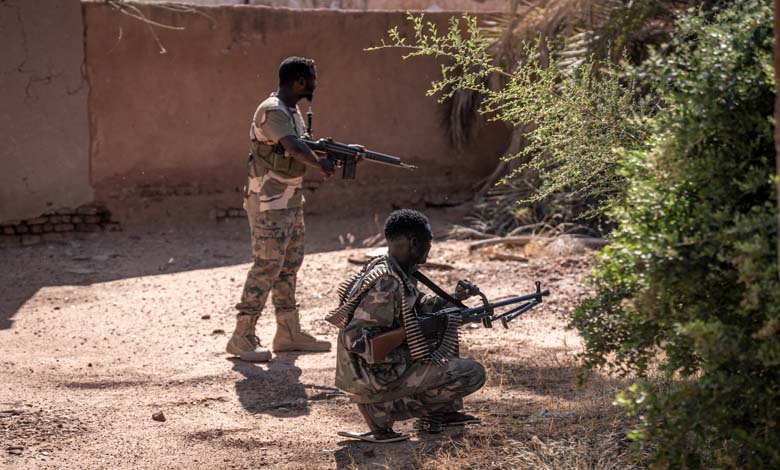
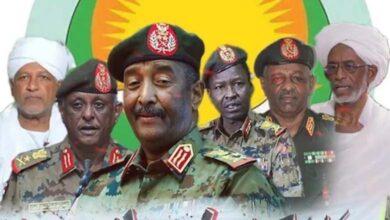
Over the course of the current Sudanese crisis, the conflict is no longer merely an armed confrontation between rival forces; it has turned into a decisive test of the very nature of the state and of the relationship between authority and society. The repeated insistence that the solution can only be military reveals a profound misunderstanding of the roots of the crisis and reflects a mindset that views force as a permanent mode of rule rather than an exceptional tool. This logic does not only narrow politics; it reduces the entire society to a battlefield and turns civilians, who are supposed to be protected, into marginal actors paying the price of a supposed “decisive outcome.”
Presenting a military solution as the only option ignores the fact that Sudan is experiencing a complex crisis in which political, economic, social, and historical factors are intertwined. The war did not arise in a vacuum; it resulted from a long failure to manage diversity, interrupted political transitions, and a preference for domination over partnership. When this failure is reproduced through weapons, the outcome is not the restoration of the state but its gradual dismantling: institutions erode, administration weakens, and violence becomes the daily language governing the relationship between authority and society.
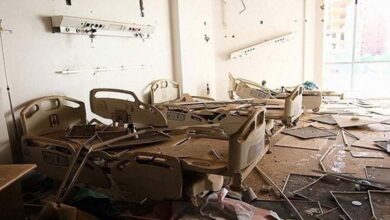
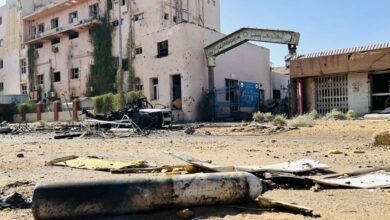
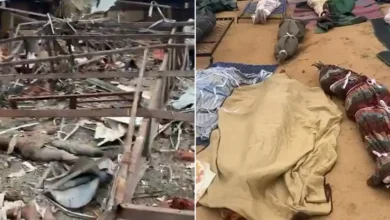
Civilians are the clearest indicator of the failure of this approach. As the fighting expands and moves into cities and residential neighborhoods, the line between the front and living spaces has disappeared. Bombardment, forced displacement, and the lack of basic services have become permanent features of daily life. Speaking of “collateral damage” is no longer convincing, because the scale of human and material losses points to a persistent pattern rather than exceptional incidents. With each new escalation, the space of safety shrinks, and a widespread feeling takes root that civilians’ lives are not a real priority in the calculations of war.
During cease-fire periods, which are supposed to provide humanitarian relief and steps toward de-escalation, the crisis of trust has appeared even more clearly. In many cases, truces have not translated into effective protection of civilians or sustainable facilitation of aid delivery; they have remained fragile and liable to collapse at any moment. This reality reflects a mentality that treats de-escalation as a temporary tactic rather than a political and moral commitment. Instead of being a gateway to dialogue, the cease-fire has become part of conflict management, stripping it of its humanitarian meaning and weakening society’s confidence in any negotiation process.
Politically, insistence on a military solution dries up the public sphere and excludes civilian actors. The louder the guns speak, the fewer the opportunities for discussion, the narrower the space for political initiatives, and the more the issues of transition and civilian governance are postponed indefinitely. Over time, this postponement becomes a policy in itself, and stability is redefined as the temporary absence of protest rather than the product of a new social contract. This path does not produce a strong state but an isolated authority relying on force to control reality instead of building legitimacy.
At the international level, military rhetoric is no longer widely accepted. The growing number of positions stressing the need to protect civilians and stop fighting reflects an awareness that the continuation of war threatens to turn Sudan into a hub of regional instability. Mass displacement, worsening food insecurity, and the spread of weapons are all factors that transcend national borders and place the crisis within a broader international context. Therefore, calls for a political solution are less an expression of external interference than a reflection of genuine concerns about the cost of ongoing conflict for the entire region.
More dangerously, the logic of a military solution opens the door to justifying violations under the pretext of necessity. When the crisis is reduced to a battle for existence, everything is redefined as acceptable in the name of “victory,” including restrictions on humanitarian work or disregard for international law. With serious allegations circulating about the use of prohibited weapons, even if they remain under investigation, the mere emergence of such suspicions reflects a worrying level of decline in the rules governing conflict. States are judged not only on what is proven against them but also on their ability to be transparent, to cooperate, and to respect the standards that protect civilians in times of war.
Economically, the military option cannot be separated from the rapid deterioration of people’s living conditions. Ongoing war means draining resources, paralyzing production, capital flight, and currency depreciation. As poverty spreads, society’s resilience erodes and the vulnerability of the weakest groups increases. Any talk of a decisive military victory under such conditions appears disconnected from people’s daily lives, because real stability is not measured by maps of territorial control but by the state’s ability to provide the minimum of a dignified life.
Socially, war leaves deep effects that go beyond the present moment. Ongoing violence reshapes collective consciousness, imprints relationships with fear and mistrust, and plants seeds of future conflicts. Generations growing up amid displacement and deprivation carry memories burdened with trauma, making future peace more complex. Ending the war thus becomes a social and psychological necessity, not merely a political choice.
Sudan’s historical experience shows that force has never succeeded in building a stable state. All previous wars ended in incomplete settlements or postponed crises because the roots of the problem remained unresolved. Reproducing the same approach today means reproducing the same outcomes but at a higher human cost and in a more complex regional and international environment.
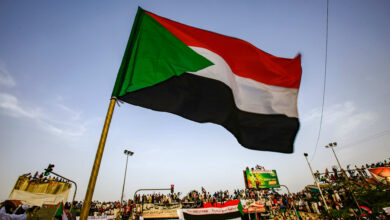
In conclusion, Sudan stands before two clear choices: either to persist on a path that elevates arms as the solution, turns civilians into expected losses, and deepens the country’s isolation and collapse, or to recognize that the military solution has exhausted its purpose and that politics, despite its difficulty and complexity, is the only path capable of saving lives and rebuilding the state. This choice is not theoretical but existential, because every additional day of war does not bring the country closer to stability; it pushes it another step away from a viable future.