Sudan between the ruins of war and the rebuilding of the state: a last-minute race to save the civil administration
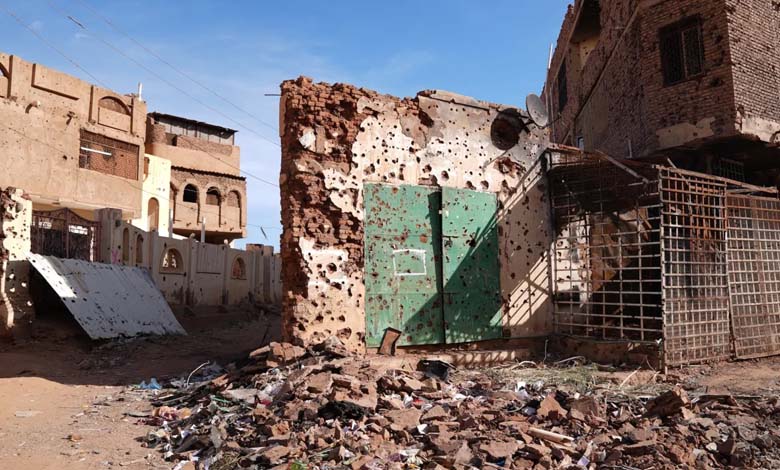
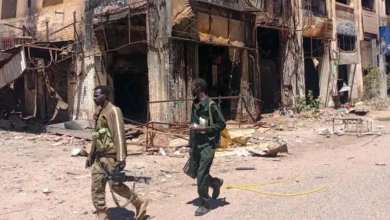
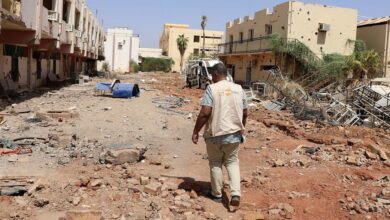
Amid the profound upheavals reshaping Sudan, the country appears to be standing at a decisive crossroads that will define the nature of the state and the future of its society for decades. The ongoing war has not only caused immense human and material destruction but has also created a dangerous administrative vacuum that risks wiping out what remains of state institutions. Observers note that the next battle will not be limited to halting the fighting, but will also involve reconstructing governance structures and reviving the state apparatus eroded by conflict.
-
A Moment of Truth in Sudan: Why Institutional Civil Administration Has Become the Only Option to Save the State and the Economy
-
Institutional Civil Administration: The Only Path to Save Sudan from Collapse and Restore Its Economy
In this turbulent reality, a fundamental question arises: what future awaits the Sudanese state amid this accelerated administrative collapse? The answer is complex, yet clearer today than it was months ago. All indicators show that Sudan cannot overcome its crisis without restoring an institutional civil administration capable of providing public services, regulating the economy and rebuilding public trust. This is not a theoretical luxury, but a realistic assessment based on the situation on the ground and the experiences of countries that endured similar wars and state failures.
Sudan’s recent experience clearly demonstrates that military-driven approaches alone have failed to restore stability. Armed authority may provide security, but it cannot substitute for a modern state built on a civilian apparatus capable of management, regulation and accountability. The absence of civil administration not only undermines services but also enables a parallel economy controlled by de facto powers, discourages investment and traps the country in prolonged instability.
-
Institutional Civil Administration: The Path to Rebuilding Sudan and Ensuring Economic Sustainability
-
The world sets the path for Sudan: no recognition for imposed power… and stability begins with civilians
In key service ministries such as health, education and infrastructure, performance has deteriorated to alarming levels approaching total collapse. Official sources indicate that many state units are currently operating at less than 40% of their staffing capacity. Many employees have abandoned their posts due to the war, others continue working without resources, and some critical departments are left without documents, archives or updated databases. This administrative disintegration cannot be measured solely by the scale of physical destruction, but by its long-term consequences, which will persist long after the fighting stops.
What is most alarming is not the collapse itself, but the attempts by certain actors to exploit it. Field sources report organized efforts to access sensitive state files, particularly those related to land, resources and taxation. These attempts reflect a rapidly intensifying race to consolidate power, not through military force alone, but through control over administrative levers. This underscores the importance of protecting and rebuilding the state apparatus on professional grounds, free from political or military interference.
-
Sudan under global scrutiny: the international community redraws the political rules and closes the door to military coups for good
-
Sudan: Akıncı drone strike on a humanitarian convoy in Zalingei… An army that has lost its compass and a war sinking into total chaos
The international community is also increasingly focused on administrative reform, sometimes more than on political agreements. Financial institutions cannot provide support without a functional administrative apparatus capable of managing funds and implementing programs. Partner countries cannot cooperate with a state lacking reliable data or coherent organizational structures. As a result, several foreign actors are now encouraging civilian-led initiatives aimed at restructuring public administration in preparation for reconstruction.
This shift compels Sudanese actors, whether in power or opposition, to realistically confront the question of the state’s future. The issue is no longer solely about political legitimacy, but about who possesses the capacity to govern after the war. Administrative legitimacy — the ability to operate state institutions and restore services — has become more crucial than political legitimacy. As power struggles intensify, the risk increases that the country may find itself without a functioning administrative apparatus, a scenario feared by all.
-
The world draws a clear line: no legitimacy for coups in Sudan… and a global bet on justice and civilian transition
-
Targeting a Humanitarian Convoy in Zalingei: Political Reading on the Expansion of Drones and Erosion of Red Lines in Sudan
The only viable opportunity lies in launching a comprehensive national project to rebuild the civil administration. This requires a clear vision encompassing workforce training, ministry restructuring, modernization of digital systems, protection of archives and reform of taxation and service mechanisms. It also necessitates the involvement of Sudanese experts abroad, whose knowledge and modern management models can contribute to economic recovery.
The success of this project depends on reducing political and military interference in state institutions. For civil administration to function, it needs legal protection and professional independence, free from the pressures that have hindered its performance for years. If Sudanese actors manage to achieve this, the country will enter a new phase in which the state apparatus becomes a guarantor of stability instead of a party to the conflict.
-
The International Community and the Sudanese Crisis: Supporting Transitional Justice, Not Coups
-
Civilian Transition or Chaos: Sudan’s Final Battle with Itself and the World
In conclusion, Sudan stands today at a historic moment. The war may end and negotiations may resume, but the state will not be restored unless it is rebuilt from
the ground up through a strong institutional civil administration. This is the real challenge and the central stake. A state is not rebuilt through slogans or temporary agreements, but through institutions capable of managing daily life, ensuring service continuity and restoring confidence in the future.
Sudan has the potential to rise again, but this requires the courage to acknowledge the scale of the collapse, the determination to make difficult decisions and a political will that transcends narrow calculations in favor of a modern state project. At the heart of this effort stands the institutional civil administration — the cornerstone and driving force capable of transforming destruction into an opportunity to build a more resilient and stable state model.
-
The world rejects coups d’état and stands with the will of the Sudanese people
-
The Sudanese Army: From National Institution to Killing Machine – Reading the Massacres of El-Fasher