A booming arms market… 3 reasons behind the global surge and a single exception
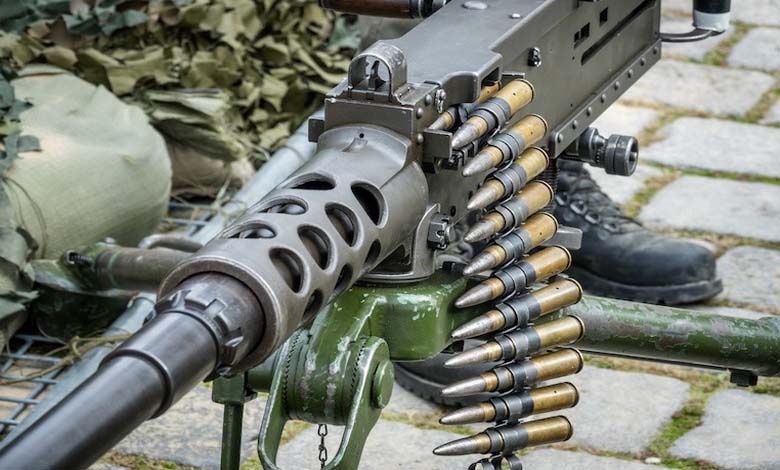
Revenue from arms sales and military services among the world’s top 100 weapons manufacturers recorded a notable increase of 5.9% in 2024, driven by several factors.
According to data from the Stockholm International Peace Research Institute (SIPRI), global weapons revenues rose sharply in 2024, with demand increasing due to:
-
Despite its losses in Ukraine, the US Army upgrades the Bradley
-
From Brooms to Tanks: The Return of Europe’s Largest Military Power
- the wars in Ukraine and Gaza
- global and regional geopolitical tensions
- increased military spending
For the first time since 2018, all five of the world’s largest arms manufacturers reported higher revenues.
Although most of the global increase came from companies based in Europe and the United States, yearly growth was observed across all regions included in the study.
-
United States kills ISIS leader in Syria responsible for terrorism in Europe and the Middle East
-
From Brooms to Tanks: The Return of Europe’s Largest Military Power
A single exception
Asia and Oceania were the only regions to experience a decline, as issues affecting China’s arms industry led to a drop in overall revenues.
Overall, rising revenues and new orders have prompted many arms companies to expand production lines, enlarge facilities, open new branches, or undertake acquisitions.
Lorenzo Scarazzato, a researcher in SIPRI’s Military Expenditure and Arms Production Programme, stated: “Global weapons revenues reached the highest level ever recorded by the institute last year, as manufacturers benefited from rising demand.”
He added: “Although companies are working to expand their production capacity, they still face a range of challenges that could affect costs and delivery schedules.”
-
After Three Decades of Pause, the United States Resumes Nuclear Weapons Testing
-
After battlefield stagnation… Ukraine turns to Flamingo and its counterparts
United States
In 2024, the combined revenues of US companies listed among the world’s top 100 arms manufacturers rose by 3.8% to reach 334 billion dollars. Revenues increased for 30 out of the 39 US companies included.
This group includes major companies such as Lockheed Martin, Northrop Grumman, and General Dynamics.
However, widespread delays and budget overruns continue to hinder several major US-led programs, including the F-35 fighter jet, the Columbia-class submarine, and the intercontinental ballistic missile.
These overruns have affected some of the United States’ largest arms manufacturers, creating greater uncertainty regarding delivery and deployment timelines for new weapons systems and upgrades to existing ones.
-
Drone Fear: Four Armies Deployed to Guard European Leaders’ Summit in Copenhagen
-
Export of maritime drones… Kyiv’s weapon to expand its international influence
Europe
Among the 26 European companies (excluding Russia) listed among the top 100, 23 recorded higher revenues. Their combined revenues rose by 13%, reaching 151 billion dollars.
This increase is linked to demand driven by the war in Ukraine and perceived threats from Russia.
The Czech company Czechoslovak Group recorded the highest growth rate of all companies on the list, with a 193% increase in arms revenues, reaching 3.6 billion dollars.
The company attributes most of its revenues to Ukraine, benefiting from the Czech ammunition initiative, a government-led project to supply artillery shells to Kyiv.
Ukraine’s JSC defence company also increased its revenues by 41%, reaching 3 billion dollars.
Jade Geberto Ricard, a SIPRI researcher, stated: “European arms companies are investing in new production capacities to meet rising demand.”
She added: “However, securing materials may become increasingly challenging. In particular, dependence on critical minerals could complicate Europe’s rearmament plans.”
As an example, Airbus and Safran sourced half of their titanium imports from Russia before 2022, and had to look for new suppliers after the war began.
Moreover, given China’s export restrictions on critical minerals, companies such as Thales in France and Rheinmetall in Germany warned in 2024 about the potentially high costs of restructuring their supply chains.
-
Doomsday Weapons: Who Owns Them and Where Are They Stored?
-
Firestorm: Rafale Tames Enemies and Reassures the Doubters
Russia
The two Russian companies listed — Rostec and United Shipbuilding Corporation — increased their revenues by 23%, reaching 31.2 billion dollars.
Despite international sanctions causing component shortages, domestic demand was sufficient to offset losses from reduced arms exports.
Diego Lopes da Silva, a SIPRI researcher, said: “In addition to sanctions, Russian arms companies face a shortage of skilled labor, which could slow production and limit innovation.”
He added: “However, we should be cautious with such conclusions, as the Russian arms industry has shown resilience during the war in Ukraine, defying expectations.”
-
Camps in Military Bases: The United States Races Against Time in the Migrant Battle
-
Ukraine’s Patriot and Russian Sanctions: A Decisive U.S. Move or a Trial of Frontlines?
Asia and Oceania
Asia and Oceania were the only regions to witness an overall decline in arms revenues in 2024 among the top 100 companies, falling to 130 billion dollars, a 1.2% decrease compared with 2023.
The regional drop is linked to a 10% decline in revenues among the eight Chinese companies on the list, most notably NORINCO, whose revenues fell by 31%, despite being China’s leading producer of land systems.
In contrast, Japanese and South Korean companies continued to see revenue growth, supported by strong demand in Europe and domestic markets.
The five Japanese companies increased their total revenues by 40% to reach 13.3 billion dollars, while South Korea’s four companies saw a 31% increase, reaching 14.1 billion dollars.
-
Submarines, Missiles, and Fighters: A Comparison of Strategic Weapons between China and the United States
-
Washington’s silence confuses allies: Is the U.S. pulling out of Europe?
Middle East
For the first time, nine Middle Eastern companies appeared among the world’s top 100 arms manufacturers, with total revenues of 31 billion dollars.
Regional revenues grew by 14%. The three Israeli companies listed increased their combined revenues by 16% to reach 16.2 billion dollars.
Zubaida Karim, a SIPRI researcher, stated: “The growing backlash against Israel’s actions in Gaza does not appear to have significantly affected interest in Israeli weapons, as many countries continued to place new orders in 2024.”
The 2024 ranking also includes five Turkish companies, whose combined revenues reached 10.1 billion dollars, an 11% annual increase, following the entry of MKE into the list for the first time.
-
Peace Stalled Between Moscow and Kyiv… Accusations Riding on Drone Wings
-
Nuclear Deterrence Outdated… The UK Drowning in Maritime and Aerial Options