“Proteus,” the submarine hunter… the first crewless helicopter in the British Navy
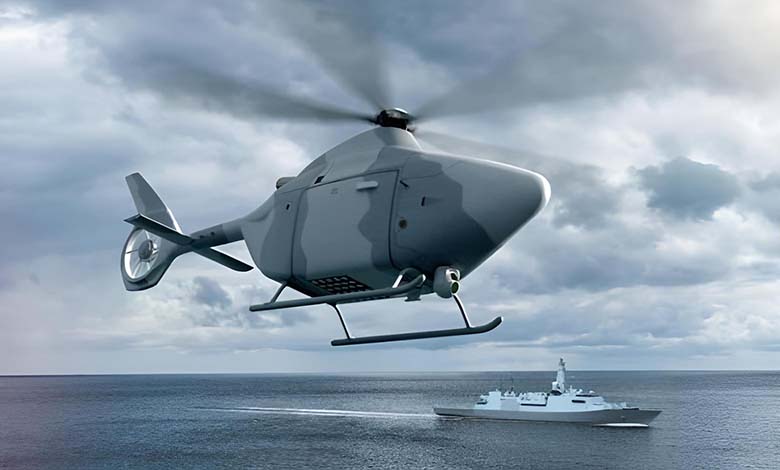
“Proteus” is the latest drone technology developed by the British military to track Russian submarines.
The aircraft, the Royal Navy’s first unmanned helicopter, is expected to make its first test flight sometime next year.
Proteus, which can be remotely controlled and is capable of pursuing Russian submarines, represents the most advanced drone technology currently being developed by the British military.
According to the British newspaper The Telegraph, the construction of this futuristic aircraft took nearly two years as part of a project worth around £60 million, amid hopes that Proteus will play a vital role in detecting Russian stealth submarines.
Senior officials from the Royal Navy and the Ministry of Defence were invited to the Leonardo technology facility in Yeovil, Somerset, to witness the latest tests of Proteus.
The Royal Navy is increasingly seeking to develop drone technologies to strengthen its fleet, and drones have already been tested to transport heavy supplies.
General Sir Gwyn Jenkins, the First Sea Lord, said that the navy of the future will operate “without crew wherever possible, and with crew only when necessary.”
This means deploying hybrid air wings on Queen Elizabeth-class aircraft carriers — a mix of jet aircraft, helicopters, and drones.
The Royal Navy confirmed that its first unmanned helicopter is one step away from taking off after completing successful ground tests.
Using artificial intelligence and its other systems, Proteus will gather intelligence from Royal Navy vessels to determine the possible route a submarine might have taken.
To detect underwater vessels, the helicopter will drop acoustic listening devices, known as sonobuoys, into the ocean to search the depths for characteristic sound signals emitted by submarines. Once located, the system can report its findings to the mission commander.
The aircraft can also perform other missions, such as aerial surveillance, search and rescue, and resupplying ground forces with ammunition and food.
Nigel Coleman, managing director of Leonardo Helicopters in the UK, said that “Proteus is equipped with the most advanced onboard software capabilities and carries a suite of sensors and systems that allow it to sense its environment, make decisions, and act accordingly.”
He added: “All this processing is carried out onboard, even while operating in the harshest environments, including rough seas and strong winds — exactly what the Royal Navy requires.”