Lebanon in 2025: the State Advances and Hezbollah Loses Its Leverage
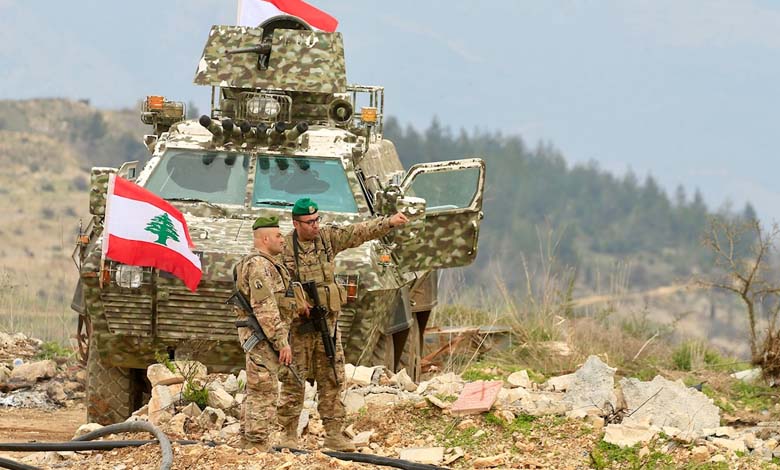
Lebanon is bidding farewell to 2025 as a profoundly different country. After a year marked by pivotal developments, the State has gained ground while Hezbollah, which long imposed its influence on institutions, has experienced a clear retreat.
The year 2025 represented a cornerstone in reshaping internal power balances, from the election of a new president of the Republic to the formation of a government that launched the process of restricting arms exclusively to the State, thereby reclaiming the initiative to free Lebanon from the party’s grip.
-
Lebanese Army Uncovers Israeli Spy Devices Hidden with Precision
-
This is how Hezbollah exploits the infrastructure of the Lebanese army
Election of a New President
At the beginning of 2025, the Lebanese Parliament elected former army commander Joseph Aoun as president of the Republic, ending a presidential vacuum that had persisted since October 2022.
During the parliamentary session held on January 9, Aoun secured 99 votes out of 128, a step that underscored a collective desire to rebuild the State.
The election put an end to years of institutional paralysis and restored hope among Lebanese citizens for the stability of State institutions.
-
Lebanese army reported that 105 soldiers wounded in the anti-government protests in Beirut
-
Drugs in the stronghold of Hezbollah.. Iranian militia exploits Lebanese to prevent the army from reaching it
A New Government
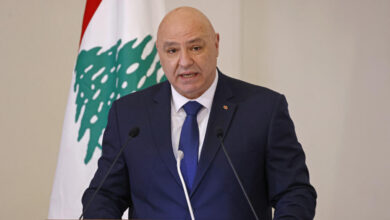
On February 8, a government headed by Nawaf Salam was formed after lengthy negotiations and won parliamentary confidence with 95 votes.
The most notable feature of its ministerial statement was the explicit affirmation that weapons must be held exclusively by the State, alongside the abandonment of the “army, people, resistance” formula, which for years had served as political cover for Hezbollah’s arsenal. This marked a fundamental shift in the political equation.
-
The Mechanism meeting in Lebanon: reaffirming support for the army and entrenching lasting peace
-
Intense Arab and international diplomatic momentum in Lebanon to support the army and enhance stability
Plan to Disarm Hezbollah
In August, the Council of Ministers approved the principle of exclusive State control over weapons and tasked the Lebanese Army with preparing an implementation plan to be completed before the end of the year.
In September, the government officially adopted the plan submitted by the army command to disarm Hezbollah.
This session signaled the start of an intense political confrontation, after the party’s ministers withdrew and Hezbollah rejected disarmament, calling instead for a discussion of a so-called “defensive strategy” for Lebanon. Prime Minister Nawaf Salam dismissed this proposal outright, stating: “There is no such thing.”
-
A warning to Hezbollah: Israel’s largest drill on the Lebanese border since October 7
-
Israeli army announces elimination of two Hezbollah commanders
The plan marked the beginning of a new era defined by State sovereignty, following years of the party’s pervasive influence.
On December 19, Paris hosted a meeting attended by Lebanese Army Commander Rodolphe Haykal to discuss “practical means” to verify Hezbollah’s disarmament.
According to the French Ministry of Foreign Affairs, discussions focused on equipping the ceasefire monitoring committee with concrete tools to assess progress in the disarmament process.
-
Death and injury of Lebanese soldiers in southern explosion: Israel reacts
-
After a Defeat… Hezbollah Now Ties the Decision to Go to War to the Lebanese State
The monitoring “mechanism” overseeing the agreement that ended the war between Hezbollah and Israel a year earlier includes representatives from the United States, France, Lebanon, Israel, and the United Nations Interim Force in Lebanon (UNIFIL).
In the same context, the European Union stated that it is examining options to strengthen Lebanon’s internal security capabilities, enabling the army to focus its efforts on disarming Hezbollah.
Prime Minister Nawaf Salam also affirmed that Lebanon seeks a more effective role for the ceasefire monitoring mechanism, both to verify Israeli claims regarding Hezbollah’s rearmament and to assess the Lebanese Army’s actions in dismantling the group’s infrastructure.
-
Arming and Funding… Is Israel Repeating the Lahad Army Experience in Gaza?
-
Hezbollah’s Violations Rekindle Tensions at the Syrian-Lebanese Border
Decline of Hezbollah’s Influence
A series of incidents indicated that 2025 marked a year of political and operational decline for Hezbollah.
In September, the party waged a fierce political battle to illuminate Beirut’s Raouché Rock with images of its former secretaries-general Hassan Nasrallah and Hashem Safieddine.
The government had issued an official decision banning the use of public property and tourist landmarks for partisan or political activities without written authorization. A party-affiliated group had applied only for a gathering, on the condition that the rock would not be illuminated.
-
Between the North and the South: Thousands of Palestinians and Lebanese Trapped by the Same Obstacle
-
Naim Qassem Pledges Cooperation with Army in Implementing Ceasefire Agreement
The event failed to attract large crowds, while the attempt to light the landmark sparked widespread public, political, and official condemnation.
The mere act of submitting an official request was seen as unprecedented, given the party’s previous reliance on force to assert its presence.
Faced with public rejection and threats of legal action, Hezbollah issued a statement denying any plan to illuminate the rock during the event, marking a clear retreat from earlier announcements.
-
Hezbollah Engages in Violent Clashes with Israeli Army near Border
-
Israel Urges Lebanese Citizens to Immediately Move Away from Hezbollah Sites
Setback on the Ground
Numerous intelligence reports indicated that the party lost a significant portion of its military stockpile and a large number of fighters during the most recent round of fighting with Israel, severely weakening its military and logistical capabilities.
In March, Israel carried out its first airstrike on Beirut’s southern suburbs since the November 2024 ceasefire, targeting a Hezbollah drone facility.
In November, Hezbollah’s chief of staff, Haitham Ali Tabatabaei, was killed in an Israeli strike in Haret Hreik.
-
Washington Post reveals how Lebanese pay the price for Iranian threats and ongoing Hezbollah-Israel clashes
-
Crisis Between Defense Minister and Army Chief Amid Heightened Tensions Between Hezbollah and Israel
Throughout the year, Israel announced additional strikes resulting in the deaths of fighters and the destruction of weapons depots, while Hezbollah confined itself to statements asserting a “right to respond” without taking concrete action.
Israel set the end of the current month as the deadline for the Lebanese government to complete Hezbollah’s disarmament south of the Litani River. This coincides with a planned meeting on December 29 in Florida between Israeli Prime Minister Benjamin Netanyahu and U.S. President Donald Trump, amid fears of a forced disarmament operation that could reignite hostilities.
The Israeli army announced that more than 380 Hezbollah members have been killed since the ceasefire took effect in Lebanon at the end of last year.
-
Hamas Remaining in Power and Ceasefire Demand: Israeli Army’s Requests Anger Netanyahu
-
Lebanese Plan for Deporting Syrian Prisoners
Final Extension of UNIFIL
In August, the United Nations Security Council unanimously approved the extension of UNIFIL’s mandate until December 31, 2026, specifying that this would be the final renewal ahead of an organized withdrawal in 2027.
Lebanon welcomed the decision, with the presidency describing it as an opportunity to reassert State sovereignty over the entire territory, particularly in the South.
UNIFIL forces will thus remain as a temporary security bridge to facilitate the deployment of the Lebanese Army in southern regions, enabling Lebanon to assert full sovereignty and ensuring that peacekeeping responsibilities rest solely with the State.
-
Israel targets Hezbollah on Syrian and Lebanese fronts
-
Salameh freezes his file indefinitely by manipulating the Lebanese jdiciary
Muslim Brotherhood Designated as a Terrorist Organization
The executive order issued by U.S. President Donald Trump designating the Lebanese branch of the Muslim Brotherhood as a terrorist organization further compounded Hezbollah’s losses, given that the Islamic Group and its armed wing, the Fajr Forces, are among its key allies within the Sunni community.
The decision is expected to impose financial sanctions on one of the party’s most important allies in Lebanon.
-
How does Hezbollah seek to threaten the Lebanese people in the face of unity and solidarity against it?
-
After nearing complete collapse.. Is Hezbollah behind the major Lebanese crisis?
A Test of Sovereignty
In 2025, the Lebanese State demonstrated genuine determination to restore its sovereignty, through the election of a president, the formation of a government that does not engage in political balancing acts, the adoption of concrete steps to dismantle illegal weapons, and the establishment of international relations based on equality and mutual respect.
Meanwhile, Hezbollah lost a substantial portion of its military, operational, and political capital. Nevertheless, the road ahead remains long, as full disarmament requires solid internal consensus and the resolution of the country’s severe economic crisis.
The year 2025 thus stands as a pivotal moment in testing the sovereignty of the Lebanese State.
-
What’s behind the Lebanese parliament’s refusal to hold a session to elect a new president?
-
Lebanese analyst: Hezbollah relies on drugs for funding