America, Iran, and the nuclear issue: Who can break the stalemate?
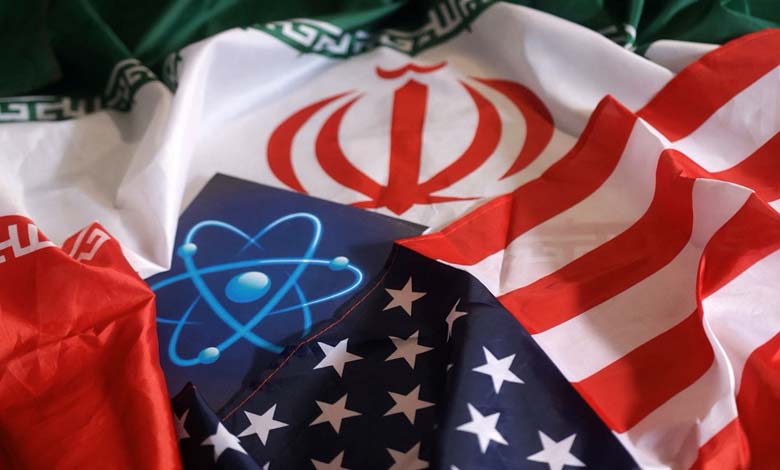
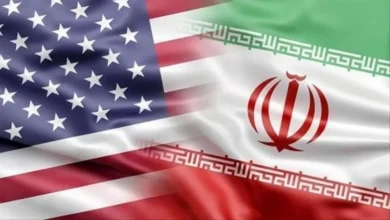
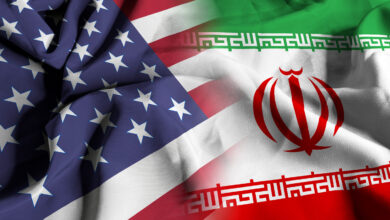
A spiral of hostility and threats has dominated relations between the United States and Iran, creating tensions that require significant effort to overcome.
In an article published by the American magazine Foreign Affairs, former Iranian Foreign Minister Mohammad Javad Zarif, together with Amir Parsa Gharmsiri, a PhD candidate in American Studies at the Faculty of World Studies at the University of Tehran, examined the dilemma of the nuclear deadlock between Washington and Tehran.
The article discusses the concept of “security” and how political scientists use it to describe framing an issue as an existential threat that justifies exceptional measures, rather than as a matter governments can handle through ordinary policy tools.
Over the past two decades, Israel and the United States have tried to persuade the world to stop treating Iran as a normal state and instead regard it as the greatest danger within the international system.
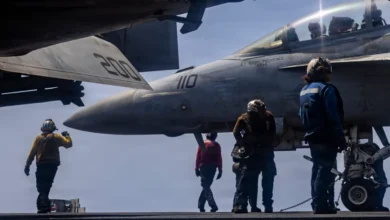
This approach has resulted in continuous condemnations, harsh sanctions, threats of military action, and more recently, military operations carried out against Iran while negotiations between Tehran and Washington were ongoing.
In response, Iran was forced to devote more resources and attention to defense, increase uranium enrichment to signal that it would not bow to pressure, and adopt a tougher approach toward internal social challenges.
The outcome has been a vicious cycle of security escalation — a spiral in which Iran and its rivals feel compelled to pursue increasingly hostile policies.
Breaking the stalemate
Breaking this cycle will not be easy. It requires foreign powers to respect Iran’s rights and dignity, to stop demonizing, threatening, and coercing it.
To help disrupt this cycle, Iran could begin by strengthening domestic support through economic reforms, thereby reinforcing its position in international negotiations.
Tehran could also reconsider its focus on material defensive power — which magnifies perceived threats — and instead prioritize cooperation and coordination, especially at the regional level.
Alongside this, an open dialogue with the International Atomic Energy Agency could address mutual concerns, revive cooperation, and eventually enable engagement with the United States to manage disputes, starting with the nuclear file and sanctions.
For twenty years, Iran has been the target of an intense security campaign led by Israel and the United States. Both actors escalated hostile behavior: Washington imposed exceptional economic sanctions, and actions extended to bombing infrastructure and assassinating military commanders, scientists, and civilians.
Challenge
Consequently, Iran felt compelled to respond with defiant policies, raising uranium enrichment to 60 percent and reducing cooperation with the International Atomic Energy Agency.
Citizens began debating whether nuclear weapons should be incorporated into Iran’s defense doctrine, and calls to close the Strait of Hormuz gained momentum.
The security-centric mindset fostered a sense of siege inside Iran and led to restrictions such as bans on the internet and social media, along with surveillance measures aimed at rooting out spies and saboteurs.
However, these measures are ineffective in addressing economic hardships, the erosion of social capital, and the widening gap between state and society.
These problems stem from external threats that forced Tehran to increase military spending while cutting development and social-welfare expenditures — compounded by economic sanctions imposed by former U.S. President Barack Obama and the “maximum pressure” campaign launched by his successor, Donald Trump.
A way out
Through prudent diplomacy, Iran could find a way out — as it did in the early 2010s when it broke the pattern of security pressure by engaging in dialogue with the United States, culminating in the 2015 nuclear agreement, which altered the international environment toward Iran, even if only temporarily.
Iran managed to reach that deal thanks to strong participation in the 2013 presidential elections, which dispelled illusions in the United States and Europe about an imminent collapse of the country and broke the security spiral by building broad internal consensus.
Iran can rebuild that consensus. This requires a national dialogue between political groups, social segments, and the wider public. The government can strengthen public trust by improving living conditions, combating corruption, and enhancing transparency.
Iran can also work to improve its international reputation and prioritize confidence-building measures focused on dialogue with neighboring states.
Tehran should shift from a narrative of building a “strong Iran,” which may appear threatening, to one centered on building a “strong region.”
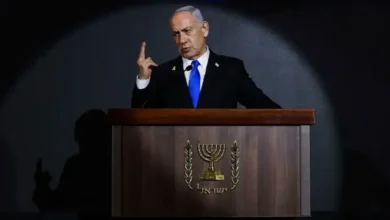
Regional countries, for their part, need to break the cycle of security politicization by isolating the regional figure seen as most responsible for this dilemma — Israeli Prime Minister Benjamin Netanyahu, according to the article.
Iran should deepen relations with countries such as Russia and China, improve ties with Europe, manage disagreements with the United States, and resume direct talks on equal footing.
The goal of talks cannot be to restore friendly relations — deep disagreements will remain — but negotiators can still find ways to prevent these differences from unnecessarily triggering crises.
The United States must recognize that it cannot eliminate Iran’s substantial capabilities — most of which are domestically produced and can be rebuilt — but both countries can agree on two shared objectives: Iran should not develop nuclear weapons, and the United States should not threaten Iran militarily or economically.
How?
To achieve this, Iran could provide transparency, accept limits on enrichment, and explore a possible regional mechanism such as an enrichment union, while the United States should lift sanctions and allow UN sanctions to be removed.
Iranian officials are legitimately concerned that any information they provide to the International Atomic Energy Agency might be exploited for military purposes.
Therefore, Tehran has the right to demand that the Agency fully adhere to its procedures and codes of conduct regarding neutrality, objectivity, confidentiality, and sensitivity to national-security concerns, in exchange for continued cooperation.
If Tehran and Washington reach a new nuclear agreement, they may also be able to address other contentious issues, such as regional security, arms control, and counter-terrorism.
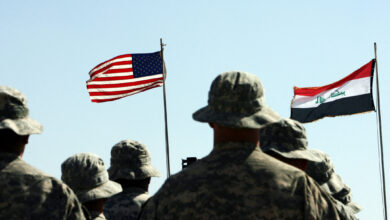
They could further discover opportunities for effective cooperation in fields like education, technology, and foreign policy. Previously, Iran and the United States cooperated in Afghanistan and Iraq in the early 2000s, as well as against ISIS.
Today, Iran and the United States once again face shared challenges involving extremism and freedom of navigation.