Turkey replicates the Libyan scenario by taking control of Somalia’s resources
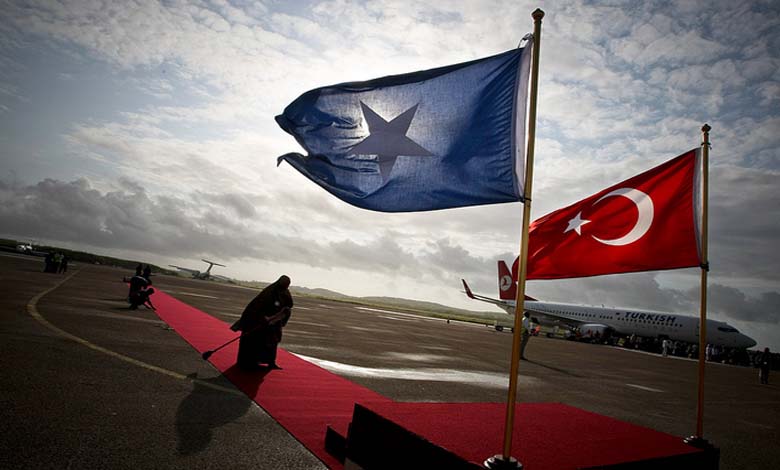
The Turkish exploration vessel “Çagri Bey” will soon sail toward the Somali coast to search for oil and gas.
Ankara’s announcement that the “Çagri Bey” drilling ship will be sent to Somali waters next February represents a major shift in Turkish foreign policy. The country is moving from a phase of building influence through humanitarian assistance to one of “harvesting” investments and exploiting natural resources, echoing the Libyan experience.
-
Turkey Seeks to Fortify Gas Agreement with Somalia Militarily
-
Somalia-Ethiopia Conflict: Turkey Steps into the ‘Port Crisis’
This step crowns the 2024 defense and economic cooperation agreement, which grants Turkey broad rights, including exploration beyond its own territorial waters, while taking advantage of Somalia’s need for technical expertise in extracting oil and gas.
Reports indicate that Turkey will receive a significant share of revenues in exchange for maritime protection and exploration operations, strengthening its energy security and reducing reliance on Russian and Iranian imports.
Turkish Energy Minister Alparslan Bayraktar has not revealed the size of investments nor the exact nature of targeted resources, raising questions about the fairness of these contracts given Somalia’s fragile situation.
-
Continuous Struggle Against Terrorism: The UAE Supports Somalia’s Stability
-
Killing of Emirati soldiers in “terrorist act” in Somalia
Turkey has expanded its presence in this Horn of Africa nation under the umbrella of “humanitarian diplomacy.” Over time, it became clear that aid served as the foundation of a long-term strategy aimed at controlling vital sectors.
Beyond building hospitals, Turkish companies such as Albayrak and Favori took over management of Mogadishu International Airport and the strategic port of Mogadishu, gaining near-complete control over trade and logistics.
Turkey also established its largest overseas military base, “TurkSom,” in Mogadishu to train Somali forces — ensuring a security presence that protects Turkish investments and ties Somalia’s sovereign decision-making to Turkish military and technical support.
-
Ankara covers up the escape of the Somali President’s Son, demanding clarifications
-
Turkish opposition implicitly accuses authorities of complicity in smuggling Somali President’s son
Ankara’s strategy is based on “filling the vacuum” and capitalizing on recurring crises. By highlighting the threat posed by Al-Shabab, affiliated with Al-Qaeda, Turkey positioned itself as Somalia’s exclusive security partner, receiving economic concessions unavailable to others.
Amid Somali-Ethiopian tensions over Ethiopia’s search for sea access, Turkey presented itself as mediator and protector of Somalia’s coastline, legitimizing the presence of its warships and exploration vessels under the pretext of safeguarding Somali territorial waters.
Taking advantage of the weakness of Somalia’s central treasury, Ankara offered loans and aid tied to long-term contracts in mining, agriculture, and fishing.
-
Arab anger at Turkish interference in regional affairs
-
Somalia – The submission of two members of the al-Shabaab movement to the Somali army
Analysts argue that Turkey’s move toward Somali waters is not merely economic cooperation but part of the broader “Blue Homeland” maritime doctrine, through which Ankara seeks to expand its influence.
After years of “aid diplomacy,” Turkey has shifted toward economic exploitation, leveraging Somalia’s sovereignty gaps to entrench itself as a dominant partner. Rather than rebuilding, Ankara appears focused on securing its own energy interests and capturing a major share of regional resources.
These developments recall the “Libyan scenario” pursued earlier by Turkey: a recurring model that trades military and security backing for control over energy wealth and economic sovereignty.
-
Turkey’s ambitions in Somalia
-
With mosques and aid… Erdoğan penetrates Africa and exploits peoples needs