From America First to Manifest Destiny: an ideological shift within the MAGA movement
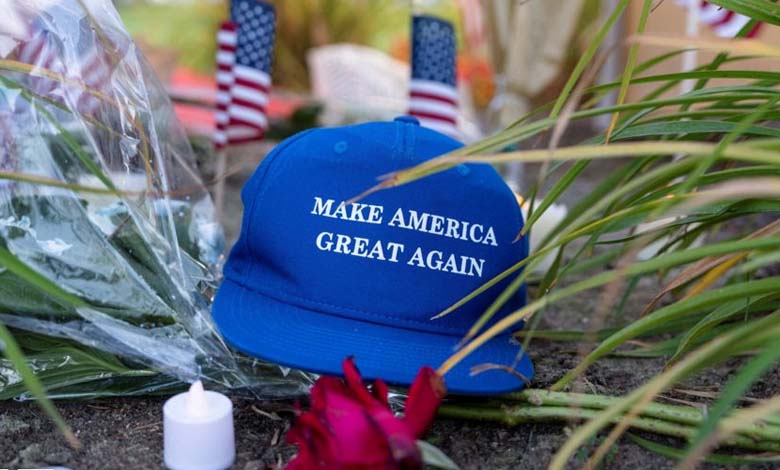
The MAGA movement is pressuring the administration of U.S. President Donald Trump to adopt a new expansionist approach that revives the concept of “Manifest Destiny” by broadening American influence and incorporating new territories and spheres of influence into what some of its supporters describe as a “renewed Western empire.”
-
Surprise 2026… Trump Builds the American Arc de Triomphe
-
Advanced Israeli-American consultations on an independent Palestinian government in Gaza
At first glance, this orientation represents a striking shift for a movement that has long portrayed itself as opposed to “endless wars,” particularly in the Middle East, according to Axios.
However, this transformation appears less contradictory to MAGA ideologues when it is reframed within the concept of “hemispheric dominance,” presenting the United States as a central civilizational power of the West, entitled to impose its will on weaker states within its geographical surroundings.
This vision is gaining increasing traction among populist right-wing circles, which view regional expansion as a means of consolidating American leadership rather than becoming entangled in geographically distant conflicts.
-
The most expensive bomber in history… the B-2 Spirit and the price of American supremacy
-
Icons on tracks: The story behind the names of American tanks
“Legitimate” arenas?
In the days following the unexpected arrest of Venezuelan President Nicolás Maduro, prominent voices within the movement—including figures traditionally associated with non-interventionism—began promoting the idea that strategic areas in the Western Hemisphere, such as Venezuela, Cuba, and Greenland, constitute “legitimate” arenas for expanding U.S. influence.
Steve Bannon, host of the program War Room, told NBC News: “What could embody the slogan ‘America First’ more than ‘Manifest Destiny 2.0’?” Manifest Destiny is a nineteenth-century term referring to the belief that the United States was destined—indeed divinely mandated—to expand across the North American continent from the Atlantic to the Pacific.
-
Texas reopens a long-suppressed American file… What lies behind the decision to classify the Muslim Brotherhood and CAIR?
-
Merops versus Shahed: the American drone-killer proves its effectiveness
This rhetoric follows a clear historical trajectory. Matt Walsh wrote in The Daily Wire that “expansion has been the American path since the very first moments of the nation’s founding,” arguing that hesitation in this regard runs counter to the historical experience that carried the United States to the shores of the Pacific Ocean in the nineteenth century.
In the same context, Mike Cernovich, one of the most influential figures within the MAGA movement, stated during his appearance on Tucker Carlson’s podcast that “the United States must continue striving for an orderly governance of the world through American imperialism.”
-
The American Decision Fuels the Ukrainian Summer Fire… What to Do?
-
Nautilus: The American Beast That Wages War Beneath the Waves
Movement intellectuals start from the conviction that the United States is the natural heir to the great European empires and the principal guarantor of the continuity of Western power.
Despite ongoing popular caution within the movement regarding prolonged foreign engagements, particularly in the Middle East and Eastern Europe, a clear distinction is drawn between those theaters and regions such as Venezuela or Greenland, which are viewed as part of America’s natural sphere of influence.
-
Stealth Fighter V: A European Birth Beyond the American Umbrella
-
American Airstrikes on Houthis Expose the Double Standard of Yemen’s Muslim Brotherhood
This distinction is based on several considerations, including the long-standing perception of the Western Hemisphere as a strategic U.S. domain and the fact that displays of power there are less likely to provoke strong opposition, especially as rival powers such as China and Russia seek to expand their regional presence.
This current also emphasizes the importance of natural resources, arguing that oil, rare minerals, and strategic materials must be leveraged to strengthen American influence and safeguard its economic and military superiority.
-
The Mystery of the American Military Plane… An Unfinished Secret Mission 63 Years Ago
-
Europe’s Decisive Test: 10 Steps to Navigate without the American Captain
Supporters of this approach maintain that hegemony itself serves as a deterrent and argue that the decline of the United States’ global image has become a growing source of frustration within the movement. They also point out that the military risks associated with expansion in areas such as Venezuela or Greenland remain relatively limited, as these regions do not border major rival powers, thereby reducing the likelihood of uncontrolled escalation.
Seeking to frame this vision beyond the binary choice between isolationism and imperialism, Andrew Kolvet of Turning Point USA told Axios that portraying U.S. options as a choice between complete withdrawal and reckless foreign adventure is a “misleading simplification.” He emphasized that Trump has consistently pursued a pragmatic approach to foreign policy.
-
NGAD: The American Sixth-Generation Fighter between Domination and Financial Drain
-
2025… How Do Americans View the New Year?
Kolvet added that the exercise of American influence, whether military or economic, must be carried out “with wisdom and precision,” stressing that if the United States decides to use its power, it should do so “with decisive, lethal, and focused force.”
This discourse reflects the contours of an ideological shift within the MAGA movement, moving from “America First” as an isolationist slogan toward an expansionist influence project aimed at redefining America’s role in the world.
-
Washington Accuses Two Individuals of Supplying Weapons to Iran That Killed 3 Americans
-
“Drone” and American Forces: Behind the Attack on “Kharab al-Jabir” in Syria
-
Blinken’s Call: Is Sudan climbing the Swiss Mountains under American pressure?