Saudi intervention in southern Yemen: reshaping power between influence and chaos
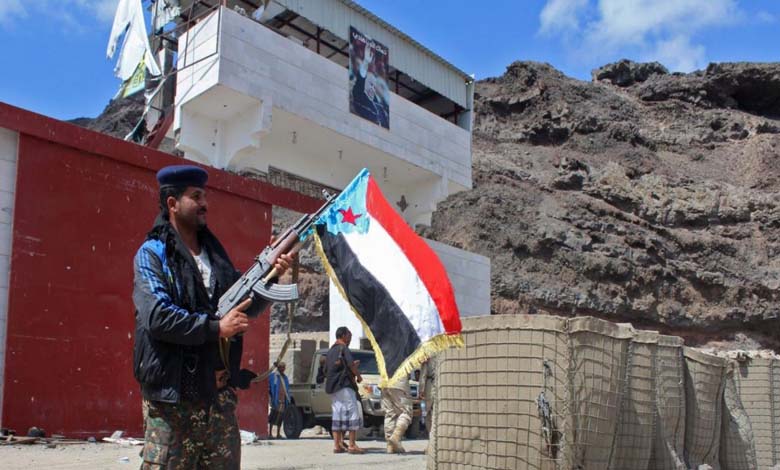
The southern Yemeni arena is undergoing profound and far-reaching upheavals rather than temporary fluctuations. In the final weeks of January 2026, interventions and frictions between local and regional actors intensified, transforming what had long been viewed as a limited internal conflict into an open arena of rivalry for influence between Saudi Arabia and the United Arab Emirates.
-
Southern Yemen between Saudi airstrikes and support for the Muslim Brotherhood: an open wound threatening civilians
-
When security turns into coercion: Southern Yemen between the failure of force and the absence of politics
These dynamics have had direct repercussions on the structure of power in southern Yemen and on its political and security stability. Recent shifts in the eastern and southern governorates reveal that Saudi intervention has evolved from simple support for the internationally recognized government into direct involvement with long-term strategic dimensions, extending beyond the war against the Houthis in the north and toward the reordering of power relations in the South.
In the final months of 2025, Saudi-backed Yemeni government forces regained control of the governorates of Hadramout and Al-Mahra after they had fallen under the influence of the UAE-supported Southern Transitional Council.
-
The sky turns into a killing field: investigation into Saudi airstrikes on civilians in southern Yemen
-
Security and the social fabric under Saudi airstrikes in southern Yemen
The Council’s control over these areas represented a significant achievement, particularly given their proximity to the Saudi border and their strategic importance. This advance had been interpreted as a decline in Saudi influence in favor of Emirati support for southern separatist trajectories. Recent developments, however, indicate that Riyadh decided to alter the rules of engagement by leading a combined ground and air military operation through which the Yemeni army and its allies recaptured vital positions in the east of the country, with backing from the Saudi-led coalition, thereby weakening the Transitional Council’s ability to maintain its territorial gains.
Saudi intervention has not been confined to the military sphere, but has extended to efforts to impose a comprehensive political approach aimed at reintegrating the South within the framework of the internationally recognized Yemeni state.
-
Security-disguised invasion: How Saudi intervention in southern Yemen became a project of chaos and terrorism empowerment
-
War of Rumors… Muslim Brotherhood Lies Shatter on the Rock of Southern Yemen
Saudi Arabia invited the southern parties to a dialogue conference in Riyadh, bringing together multiple factions to discuss what it described as “fair solutions” to the southern question within a broader vision rejecting both secession and violence, according to a statement by the Saudi Ministry of Foreign Affairs, under the supervision of the internationally recognized Yemeni Presidential Council.
This shift in Riyadh’s policy carries clear implications. First, it reflects a firm refusal to allow the establishment of an independent entity in the South under Emirati or other external backing. Second, it demonstrates an attempt to reassert state authority in a way that prevents the emergence of a security vacuum in strategic areas along Saudi Arabia’s southern border.
-
Houthis recalibrate their military compass toward southern Yemen
-
The Triangle of Death: How Al-Qaeda Militarized the Borders of Central and Southern Yemen
Nevertheless, these policies, while appearing coherent from the perspective of consolidating a strong central authority, face serious challenges on the ground. Their narrative encounters widespread popular resistance in the South, manifested in large demonstrations recently held in Aden and other southern cities, where protesters voiced support for the Transitional Council and rejected what they described as “Saudi interference,” affirming their commitment to political goals that cannot be overridden by external decisions or imposed agreements.
At the same time, these developments highlight the emergence of open disagreements between Riyadh and Abu Dhabi, which had long been traditional allies in Yemen against the Houthis in the north.
-
The Triangle of Death: how Al-Qaeda militarized the borders of central and southern Yemen
-
Southern Yemen Moves Beyond the Conventional Framework: A New Diplomacy Confounds the Muslim Brotherhood and the Houthis
In late December 2025, the United Arab Emirates announced the withdrawal of its official forces from Yemen, a move widely regarded as unexpected after years of military support for southern separatist forces, particularly the Transitional Council. Observers suggest that this step reflects a broader regional repositioning and a redefinition of the Emirati role beyond the Yemeni theater. However, the withdrawal created a security and political vacuum that Saudi Arabia moved to fill by strengthening its presence in the South under the banner of governmental legitimacy.
In this context, the United Arab Emirates has not been a neutral actor in the crisis. It played a central role in the earlier escalation by supporting the Transitional Council’s forces, which triggered Saudi sensitivities related to national security, especially when those forces advanced into strategic border areas such as Hadramout and Al-Mahra, vital to Saudi Arabia’s southern strategic depth. This divergence in perspectives between Riyadh and Abu Dhabi has created a new challenge for Gulf policy toward Yemen, where interests intersect but methods and priorities increasingly diverge.
-
Southern Yemen Launches New Online Campaign against the Brotherhood… Details
-
Residents of Southern Yemen Pay the Price of a Sinister War Led by the Muslim Brotherhood and Houthi Militias
On the ground, airstrikes carried out by the Saudi-led coalition against Transitional Council positions in Al-Mukalla and surrounding areas sparked widespread anger among southern communities and resulted in human casualties, further intensifying polarization between local forces and the externally backed authority. Military sources have confirmed that the Saudi-supported Yemeni government continues to view the restoration of control over southern territories as a core component of its effort to build a central authority capable of confronting diverse security challenges, including extremist groups that previously exploited periods of chaos.
In light of these strikes and military movements, sources within the Transitional Council clarified that it had not been dissolved, contrary to some media reports referring to “hasty announcements” published in Saudi newspapers. They pointed instead to internal disagreements over how to respond to Saudi pressure, reflecting the depth of the crisis and the clash of interests between local and international actors.
-
Southern Yemen: The Devastation Caused by the Diabolical War Led by the Muslim Brotherhood and Houthi Militias
-
Southern Yemen: Secession or liberation from the Muslim Brotherhood and the Houthis?
For its part, Riyadh maintains that its primary objective is to secure its southern borders and that addressing the situation in the South is an integral part of a broader state strategy aimed at enhancing Yemen’s ability to confront multiple threats, whether from armed groups or from competing regional influence. This Saudi vision emerges amid growing concerns that any southern secession could create a new model of political fragmentation in the region and become a persistent source of instability if not managed within a comprehensive political framework.
Nevertheless, this Saudi policy, despite its security and political justifications, has faced widespread criticism in the South. Many argue that direct intervention in southern political affairs does not guarantee long-term stability, but may instead entrench conditions of prolonged disorder. In areas such as Aden and the forward regions of Hadramout and Al-Mahra, communities express their rejection of efforts to bypass local will, while questions accumulate regarding legitimacy and accountability for casualties and direct military presence. Under these circumstances, any political solution that does not fully involve local society remains inherently fragile, regardless of the level of external support it may enjoy.
-
Attempts by the Houthi Brotherhood to Infiltrate the Arab Coalition and Legitimacy and Seize the Wealth of Southern Yemen
-
Dead and wounded in another Al-Qaeda terrorist attack in southern Yemen
These dynamics also raise strategic questions about Riyadh’s ability to reconcile its political ambitions in Yemen with the requirements of security stability in the South, particularly in light of divergent interests with former partners such as the United Arab Emirates and the absence of a strong internal consensus in favor of a return to centralized authority. Persistent threats from extremist groups in neighboring areas add another layer of complexity, as the failure of a political settlement could enable their resurgence within any expanding security vacuum should the crisis continue.
Ultimately, recent developments demonstrate that Saudi intervention in southern Yemen is not a transient action, but an attempt to reshape the political and security landscape in line with its strategic interests. At the same time, the need for a comprehensive political solution that respects local will and takes regional complexities into account remains essential. Questions surrounding the outcome of this approach and the prospects for achieving genuine stability and a credible political process in such a complex environment remain open, amid intense competition among regional and local actors over power, identity, and the future.
-
Southern Transitional Council in Yemen calls for a million-man march on Saturday in Aden and Al-Mukalla
-
Yemeni Report Exposes Muslim Brotherhood Plot to Plunder Southern Wealth via Shabwa: Details
-
Southern Forces Storm Al-Qaeda Hideouts in the Abyan Mountains, Yemen