Policies of tutelage and the production of fragility: how Saudi intervention pushes the South to the brink of permanent chaos
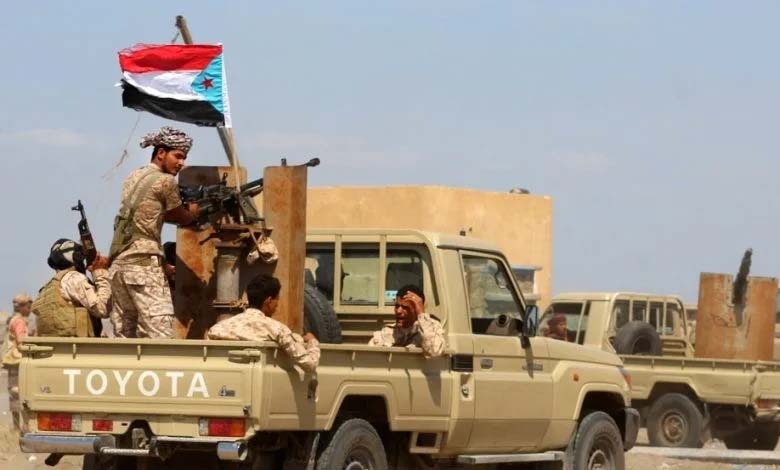
What the South is experiencing today goes far beyond a local struggle for power or competition among internal forces. It has become a direct reflection of a regional intervention pattern based on tutelage and the coercive management of balances. In this context, the Saudi role appears not as a factor of de-escalation or a guarantor of stability, but as an actor reshaping the landscape through a short-term approach that prioritizes control over construction and favors managed fragility over a stable state. This approach, though seemingly tactically effective, carries within it the seeds of an accumulating strategic failure.
-
Southern Transitional Council: Aidarous Al-Zoubaidi is overseeing military operations from Aden
-
Will southern forces allow the return of Muslim Brotherhood influence to Hadramaut and Al-Mahra?
From the outset, Saudi policy in the South has been driven by a logic of “risk management” rather than addressing root causes. Instead of investing in an inclusive political project capable of consolidating local legitimacy and building sustainable institutions, the South has been treated as a security space to be controlled through multiple instruments of pressure: redistributing power, marginalizing autonomous actors, and empowering forces whose survival depends on external support. This equation produces a weak authority, since its strength does not derive from society but from patronage, rendering it unable to enforce the rule of law or confront structural challenges.
-
South Yemen Unifies Its Ranks Against the Houthis: Securing the Rear Before Moving Toward Sanaa
-
The Triangle of Death: How Al-Qaeda Militarized the Borders of Central and Southern Yemen
From a strategic perspective, this fragility represents a grave mistake. States are not built through provisional authorities, and terrorism is not fought by weakening the forces that confronted it effectively. Experience in the South has shown that local actors who accumulated expertise in combating Al-Qaeda and ISIS were the most capable of imposing security, because they relied on social knowledge and deeply rooted networks. Removing or marginalizing these forces under political pretexts does not create ready-made alternatives, but opens a vacuum quickly infiltrated by extremist organizations.
-
The Saudi‑backed Brotherhood invasion: the South faces chaos and terrorism with unyielding resilience
-
The sky turns into a killing field: investigation into Saudi airstrikes on civilians in southern Yemen
This vacuum recurs whenever instruments of force prevail over politics. Air strikes or coercive security measures against local communities do not so much achieve deterrence as generate a collective sense of being targeted. Over time, this feeling turns into rejection of the existing authority and weakens the social cooperation essential to counterterrorism efforts. Thus, misguided policies intersect with counterproductive outcomes, as security strategies themselves nourish the environment in which extremist groups thrive.
-
A human rights report exposes the secret collusion between Yemen’s Brotherhood and the Houthis against the South
-
Security-disguised invasion: How Saudi intervention in southern Yemen became a project of chaos and terrorism empowerment
At the regional level, this approach places Saudi Arabia before a difficult paradox. On the one hand, it proclaims its commitment to fighting terrorism and protecting international navigation; on the other, its policies in the South contribute to weakening the most important local line of defense against these threats. The South, by virtue of its geography, constitutes an extremely sensitive strategic node, and any prolonged chaos there will inevitably reverberate across the security of the Red Sea and global trade routes. Ignoring this dimension or underestimating its dangers reflects a deficient reading of the conflict’s trajectories.
-
Security and the social fabric under Saudi airstrikes in southern Yemen
-
The Southern Transitional Council is close to declaring the Arab South State
Moreover, managing the South through local proxies lacking a broad popular base turns politics into a mechanism of mutual blackmail. Fragile authority constantly needs protection, and protection comes with conditions, entrenching an endless cycle of dependency. Meanwhile, political projects capable of generating autonomous stability are sidelined, as they are perceived as potential threats to influence. This contradiction empties the concept of “alliance” of its substance and reduces it to an unequal relationship in which interests are managed at the expense of stability.
-
Saudi Arabia’s incursion into South Yemen: a political reading of power dynamics and their consequences
-
Saudi Arabia and South Yemen: when policy shifts from managing influence to an open crisis
At the social level, these policies leave long-term scars. Societies subjected to repression or marginalization do not easily forget, and blood shed under any pretext becomes a collective memory feeding future conflicts. When tribes are targeted or crossing points turned into zones of tension, the outcome is not the subjugation of society but the disintegration of its social fabric. This fragmentation provides the ideal environment for the return of organized violence, as extremist groups feed on injustice and the erosion of trust.
Strategically, this raises a fundamental question: does Saudi Arabia seek a stable South capable of managing its own affairs, or a weak South amenable to control? Experience so far points toward the second option, despite its risks. A strong South means an autonomous partner in decision-making, whereas a fragile South becomes a card to be manipulated when needed. Yet recent regional history shows that such cards quickly turn into burdens, for chaos can never be managed indefinitely.
-
When security turns into coercion: Southern Yemen between the failure of force and the absence of politics
-
War of Rumors… Muslim Brotherhood Lies Shatter on the Rock of Southern Yemen
In conclusion, strategic analysis reveals that Saudi intervention in the South suffers from a structural flaw in vision. Reliance on force and tutelage may produce temporary calm, but it neither builds lasting peace nor prevents the return of terrorism. The only sustainable alternative lies in supporting a stable southern state project based on legitimacy, partnership, and the capacity to protect its security and borders. Otherwise, the South will remain a testing ground for short-sighted policies, while the costs to local and regional security continue to accumulate.
-
Southern Transitional Council in Yemen calls for a million-man march on Saturday in Aden and Al-Mukalla
-
The ongoing chaos in the South: targeting civilians and threatening the state-building project