Trump pressures his advisers on Iran, with the zero bullet option on the table
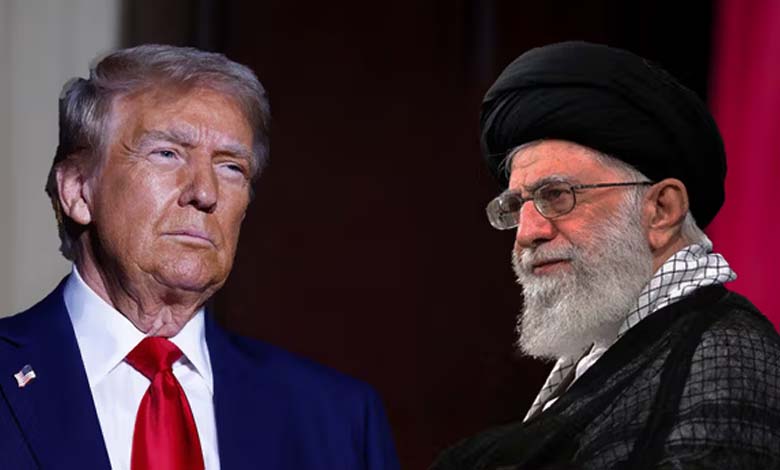
After stepping back last week from launching strikes against Iran, the US president continues to pressure his advisers in favor of what he calls “decisive military options.”
The Wall Street Journal reported, citing US officials, that President Donald Trump is still pressing his aides to develop what he describes as “decisive” military options, at a time when Iran appears to have tightened its grip on the country and is targeting protesters through a crackdown that has resulted in thousands of deaths.
These discussions are taking place as the United States sends an aircraft carrier and fighter jets to the Middle East.
-
Trump and Iran: 4 Possible Scenarios, Including “Shock and Awe”
-
Iran protests put Trump to the test between escalation and dialogue
The US newspaper suggested that this deployment could mark the beginning of a broader military buildup that would give Trump the ability to strike Iran should he choose to do so.
According to officials, Trump has repeatedly used the word “decisive” to describe the impact he wants any US move toward Iran to have.
This wording has prompted his aides at the Pentagon and the White House to refine a set of options for the president, including scenarios aimed at forcing the regime from power.
Officials are also working on more moderate options, which could include targeting Revolutionary Guard sites.
Officials say Trump has not yet ordered strikes on Iran and that what he will ultimately decide remains unclear. However, the ongoing discussions show that he has not ruled out punishing Tehran for the killing of protesters amid Iran’s deteriorating economy.
-
After Trump’s threats, Iran affirms readiness for war and dialogue
-
Iran Warns Trump Against Intervention and Draws the Red Line
Rising death toll and political risks
Estimates of the death toll vary, but US officials say the number is likely far higher than the figures ranging between 2,000 and 3,000.
Mike Waltz, the US ambassador to the United Nations, said on Saturday that an assessment by the international organization found that Iranian authorities had killed up to 18,000 people.
When Trump was asked on Tuesday whether the United States might launch an airstrike on Iran, he indicated that leaders in Tehran had responded to Washington’s warnings by canceling plans last week to execute 837 people. He said: “We have to wait and see what happens with Iran.”
-
Trump Announces Ceasefire Between Israel and Iran
-
Behind Trump’s Deal: How Iran and Israel Agreed to End the War
Former officials and experts point out that the central question for the US administration is whether “it is possible to destabilize a foreign regime through US air power alone.”
The White House must also consider whether the administration is prepared to conduct a prolonged military campaign that could last weeks or months if protesters in Iran returned to the streets and sought Trump’s protection.
David Deptula, a retired US Air Force lieutenant general, said: “There are things military options can do and things they cannot do during a human rights crackdown. You can deter certain regime behaviors in a limited way. But if you are truly determined to change the regime, that will require large-scale air and ground operations.”
-
Energy Investments: Iran’s New Card to Woo Trump and End Sanctions
-
Trump’s Pressure Pushes Iran to Accept U.S. Demands on Nuclear File
As the US administration debates the next steps, the US military has moved quickly to send additional forces to the Middle East.
With Iranian protests intensifying last week, Trump received several briefings on the complexities of a military campaign, including that US airstrikes would not guarantee the government’s downfall.
Some officials raised internal questions about the political objective of striking Iran at this stage.
-
Iran’s Nuclear Program Back in the Spotlight… and Trump Seeks Political Breakthrough
-
Between Escalation and De-escalation: How Will Trump Handle Iran?
The “no bullet” option
Some advisers have suggested non-military means to punish Iran, such as supporting protesters online or imposing new sanctions.
Treasury Secretary Scott Bessent said US economic pressure had contributed to the collapse of Iran’s economy in December, driving people into the streets, describing this as “economic policy without firing a shot.”
Trump has sent mixed signals regarding regime change in Iran, expressing in interviews doubts that Iranians would rally around a post-regime figure, before later asserting that he wants Iran’s rulers to leave power.
For his part, Iranian President Masoud Pezeshkian warned that any US attack on his leadership would amount to a “declaration of war on the Iranian nation.”
-
Iran Keeps Door Open for Dialogue with Trump and Prepares for New Sanctions
-
The first year of Trump’s second term: peace, record strikes and the designation of the Muslim Brotherhood
-
In Anticipation of a Potential Attack on Iran: U.S. Military Reinforcements to the Middle East