From supporting allies to managing chaos: a critical reading of the Saudi role in southern Yemen

The Saudi role in southern Yemen has undergone notable transformations, shifting from an openly proclaimed supporter of stability to a manager of complex balances. These changes were not sudden but rather the outcome of cumulative political and security developments that have turned the South into a sensitive file within regional calculations.
-
When security turns into coercion: Southern Yemen between the failure of force and the absence of politics
-
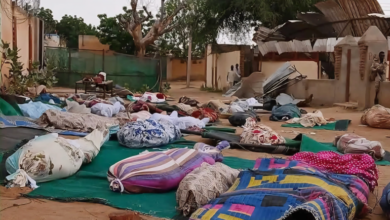
The sky turns into a killing field: investigation into Saudi airstrikes on civilians in southern Yemen
In the early stages of the intervention, the Saudi role was associated with notions of support and partnership. However, the increasing complexity of the scene and the proliferation of actors pushed Riyadh to adopt a more cautious policy, based on regulating the tempo rather than driving toward final solutions. This shift altered the nature of relations with local forces and plunged them into a sphere of doubt and uncertainty.
The current situation reflects crisis management more than the building of stability. The absence of strong institutions and the continued reliance on temporary security arrangements have made the South vulnerable to fluctuations. Whenever regional priorities change, this is immediately reflected on the ground, without sufficient regard for the social cost.
-
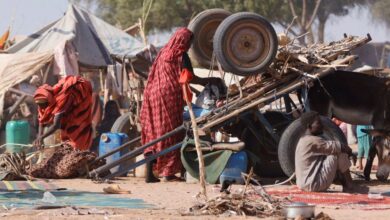
Security and the social fabric under Saudi airstrikes in southern Yemen
-
Security-disguised invasion: How Saudi intervention in southern Yemen became a project of chaos and terrorism empowerment
The regional dimensions of this role cannot be overlooked. Due to its geographical position, the South constitutes a strategic anchor point, making it part of broader equations that transcend its borders. Yet tying its fate to these equations without strengthening it internally weakens its resilience and turns it into a proxy battlefield.
Even more problematic is that current policies may undermine genuine efforts to combat terrorism. Fighting this phenomenon requires a stable environment and strong local forces, not a volatile reality that is easily penetrated. The longer this disorder persists, the greater the chances for security threats to re-emerge in new forms.
-
War of Rumors… Muslim Brotherhood Lies Shatter on the Rock of Southern Yemen
-
Southern Yemen Moves Beyond the Conventional Framework: A New Diplomacy Confounds the Muslim Brotherhood and the Houthis
Ultimately, the South stands at a decisive crossroads. Either the nature of the intervention is reconsidered so that it becomes genuine support for a clear political process, or the current mode of management continues, with all the risks it entails. Experience has shown that stability is not imposed from outside but built from within, and any policy that ignores this truth is doomed to reproduce the crisis.
-
Southern Yemen Launches New Online Campaign against the Brotherhood… Details
-
Southern Yemen: Secession or liberation from the Muslim Brotherhood and the Houthis?